
Shirakawa-go lies deep in the mountains of Gifu Prefecture, where its iconic Gassho Zukuri farmhouses, recognisable by their steep triangular thatched roofs, form one of Japan’s most distinctive and well known rural landscapes. While visibly most visitors come to take in the scenery and photograph the houses, or enjoy the snow in winter, if you want to learn more about the traditional houses and way of life, you can visit several museums to understand the history of the village.
As it takes 30 minutes walk from the observation viewpoint in the far north of the village to the famous Three Houses in the south, it’s better to plan ahead how to make the most of your time there, especially if you are hoping to fit it into a day trip from Kanazawa to Shirakawa-go, or from Takayama or Nagoya.
When I traveled to Shirakawa-go all the way from Nagoya, I expected the village would be busy but I was surprised just how crowded the main road was. That said, by moving away from these areas, you can find relatively tourist free spots where things felt calmer and less rushed. In this guide, I will go through the best things to do in Shirakawa-go during a day trip based on my experience, where I navigated strict time constraints, but had time to sample authentic street food. I’ll also explain why you should take the time to cross the river and check out the Gassho Zukuri Minka En Museum on the other side.
How to Get to Shirakawa-go from Kanazawa, Takayama, and Nagoya: The Ultimate Route Guide
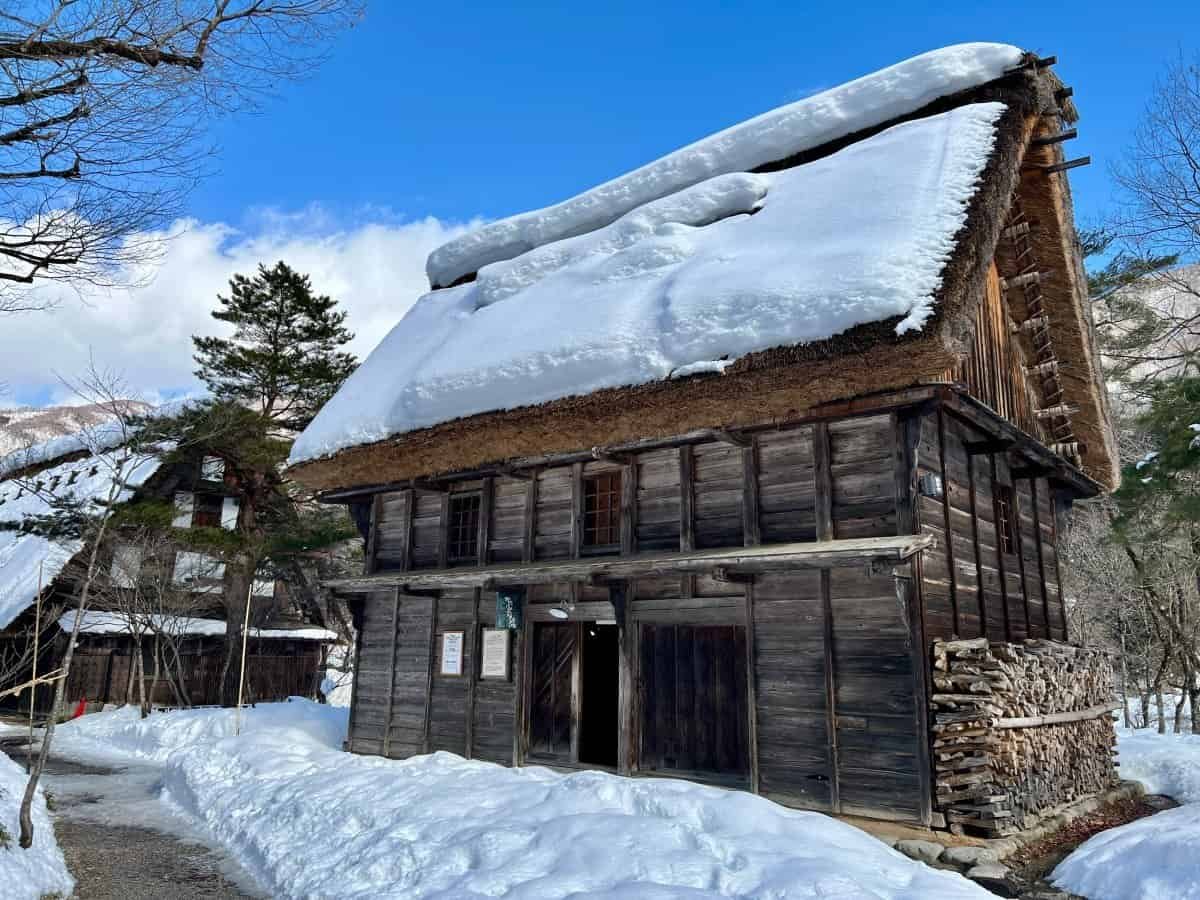
Depending on what your trip itinerary looks like and where you will be staying, it’s likely you will head to Shirakawa-go from one of three gateways. To make planning easier so you can prioritise your time for when you’re in Shirakawa-go, I have broken down each route below with key points to know for budgeting and timing.
🚌Bus from Kanazawa to Shirakawa-go (1 hour 15 minutes)
For travelers already exploring the Hokuriku region, the journey from Kanazawa to Shirakawa-go is efficient and fits into an itinerary well.
- Direct express highway buses operated by Nohi Bus and Hokutetsu Bus depart daily from the West Gate of Kanazawa Station (from bus terminal 4), and the drive takes roughly between 1 hour and 15 minutes to 1 hour 25 minutes.
- Cost & Booking: The ticket fare is 2800 yen for a one-way adult ticket which you need to make a reservation for. I would recommend booking your ticket a month in advance via the Japan Bus Online website to avoid not being able to travel.
- Best Departing Time: While the first bus leaves at 8am you may want to take the bus departing at 9:10 which arrives in Shirakawa-go at 10:35am.
- Return Journey Options: On the way back from Bus Stop 1 at Shirakawago, while there are several afternoon options, you will probably want to take one of these ones. I would not suggest the last bus and have included this for reference.
- 15:55 Bus: Arrives in Kanazawa at 17:20.
- 17:30 Bus: Arrives in Kanazawa at 18:45.
- The Last Bus Out: Leaves at 17:55 and arrives at 19:10.
🚌Bus from Takayama to Shirakawa-go (50 minutes)
Takayama is the closest major city to the Japanese Alps, which makes the route from Takayama to Shirakawa-go the quickest one taking just 50 minutes. As with the Kanazawa to Shirakawa-go route, you can take the same direct highway express buses operated by Nohi and Hokutetsu Bus, which depart from Bus Stop 4 outside the Takayama Nohi Bus Centre.
- Cost & Booking: Like from Kanazawa, the ticket fare is 2800 yen for a one-way adult ticket and you need to make a reservation on Japan Bus Online in advance for most of the bus services, however there are a couple during the day that do not require a reservation.
- Best Departing Time: While the first bus leaves at 7:50am you may want to take the bus departing at 8:50 which arrives in Shirakawa-go at 9:40 am. The next bus after that leaves at 10:50am so it’ll be up to whether you want an early start and more time in the village.
- Return Journey Options: On the way back from Bus Stop 3 at Shirakawa-go, while there are several afternoon options, you’ll probably want to take the bus departing at 15:45 which arrives in Takayama at 16:35 or the one after departing at 16:15 which gets into Takayama at 17:20. The last bus leaves Shirakawa-go at 17:30 but try to aim for one before that.
🚌From Nagoya to Shirakawa-go (2 hours 40 minutes)
If you are spending time in Central Japan or not planning to travel to Kanazawa or Takayama, you’ll likely want to take the highway express bus I took, or take a combination of a train and then a bus from Takayama. If you’re looking for convenience and no transfers, the direct highway bus is a nice option to rest and relax before getting to Shirakawa-go.
- Cost & Booking: Adult one-way ticket fares range from 3600 yen to 4000 yen depending on the day you travel, with weekends being more expensive. The buses are operated by Gifu Bus and Meitetsu Bus, and you can book in advance online using Kosoku (Highway) Bus site.
- Best Departing Time: The first bus leaves at 7:50am from the Meitetsu Bus Centre (3rd floor), which arrives in Shirakawa-go at 10:35 am. The next bus after that leaves at 8:50am and arrives at 11:35am. I took the 8:50am bus but would recommend taking the earlier option so that you have more time to explore the village more leisurely.
- Return Journey Options: On the way back from Bus Stop 2 at Shirakawa-go, there are several afternoon options, and you’ll probably want to take the bus departing at 15:55 which gets into Nagoya at 18:40. The last bus leaves Shirakawa-go at 17:15 and arrives back in Nagoya at 20:00.
How to Fit in the Best Things to Do in Shirakawa-go
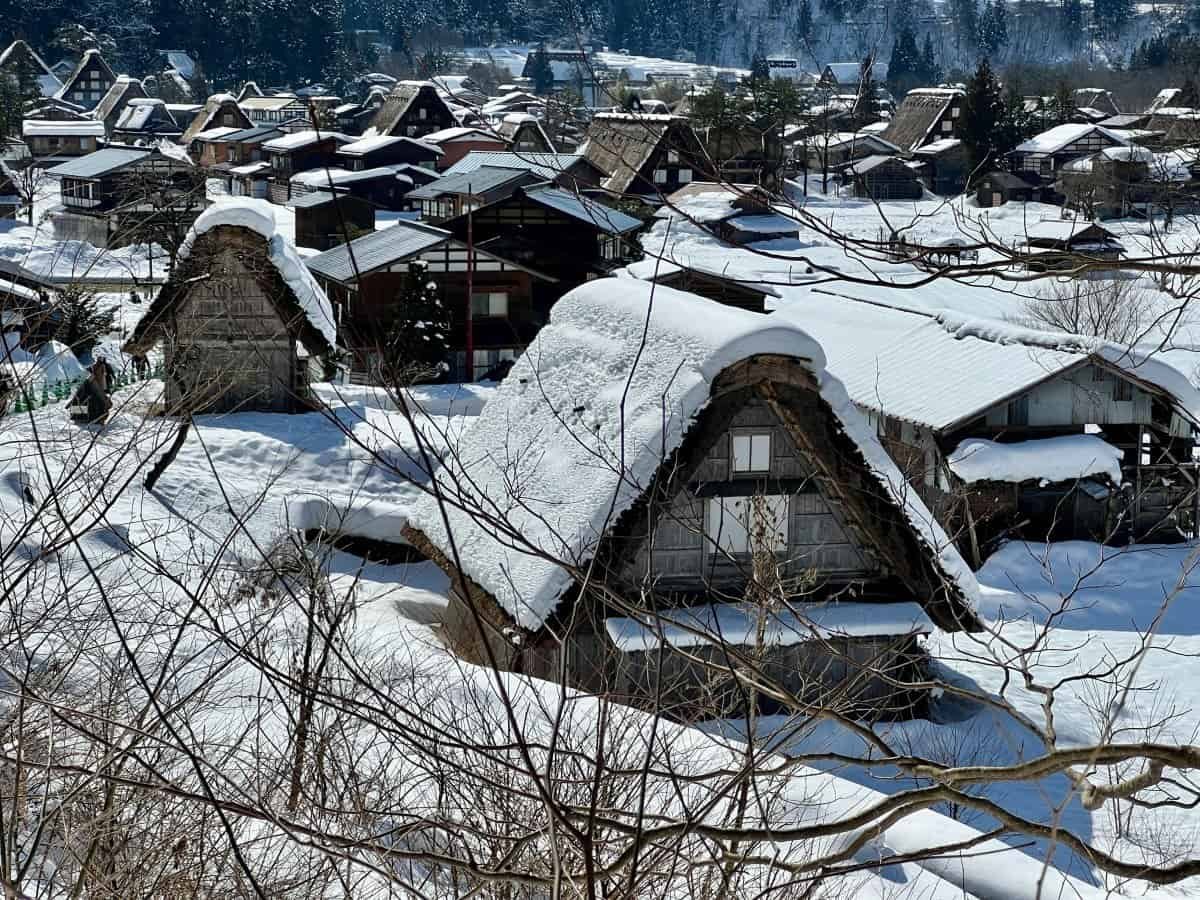
Not all day trips to Shirakawa-go are created equal. If you are hopping over from nearby Takayama, just fifty minutes away, or making your way from Kanazawa to Shirakawa-go at around an hour and fifteen minutes, you’re going to have more spare time during your day trip. You can take the morning slowly and go on walks exploring the village before queueing up for a sit down restaurant. Just keep in mind that a twenty or thirty minute wait for a table is not unusual, which reduces time for checking the museums and sightseeing in the afternoon.
However, if you are journeying all the way from Nagoya like I did, you are on a stricter time clock since the earliest you can arrive in mid-morning and you are realistically looking at probably 4 or 5 hours in the village. Because of this your time in Shirakawa-go will be more limited.
Regardless of where you start your day, the same basic rule applies once you get there. Shirakawa-go has its busy spots, and you tend to notice them pretty quickly. The biggest thing to think about in advance is lunch. It sounds simple but it genuinely shapes your whole day, as you don’t want to spend half an hour or more just waiting for a table, since before you know it a big chunk of your time has gone. So my advice is to make a decision early. Either skip the sit down restaurants and pick up some street food along the way, or set aside a proper lunch break and build your day around it.
Which Shirakawago Houses Should You Go Inside?
Most visitors come from Takayama or Kanazawa to Shirakawa-go for the scenery, and that makes sense. But some of the most interesting things to do in Shirakawa-go are actually inside the buildings themselves. Apart from Tajima House which is a 15 minute walk away, the main 5 houses and temples are within ten minutes walk of the main bus terminal and each shows a different side of the village.
All five are worth considering, and only cost 300 or 400 yen to enter. Due to time constraints, you may want to choose two or three, depending on whether you’re more interested in the traditional silk farming or you want to see the house of the village leaders.
| Historic Site | Role & Industry Focus | Unique Feature | Visitor Info |
| Wada House (Largest) | Wealthy village leaders; trade & saltpeter production | National Important Cultural Property; grandest scale. | • 9:00 AM – 5:00 PM • Entrance Fee: ¥400 |
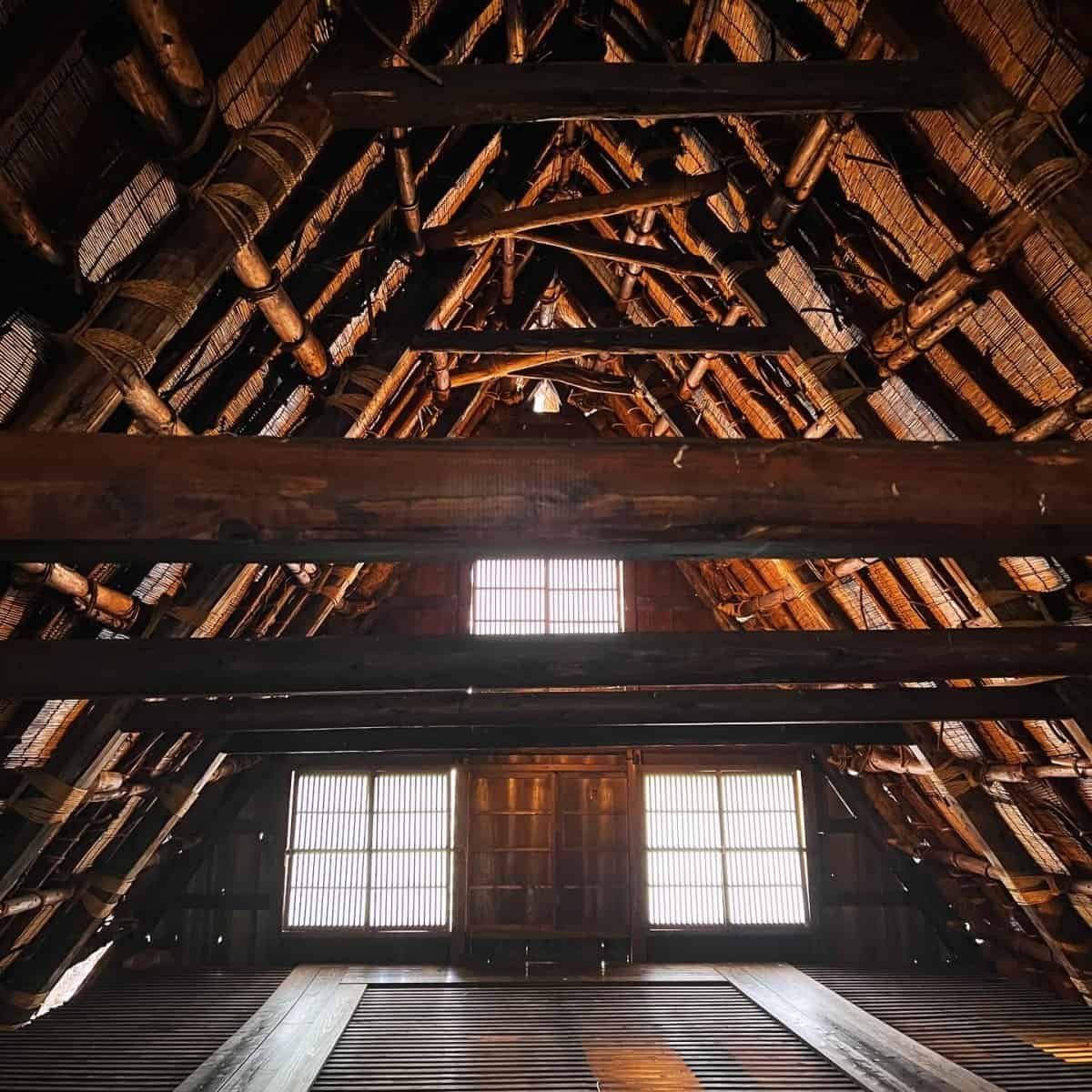
| Kanda House | Everyday working mountain family; sake brewing | Original, visible carpenter notes on the roof frame. | • 9:00 AM – 5:00 PM • Closed Wed • Entrance Fee: ¥400 |
| Nagase House | Specialist medical household; traditional doctors | Highest building in the village (5 floors); medical tools. | • 9:00 AM – 5:00 PM • Entrance Fee: ¥300 |
| Tajima House | Dedicated entirely to sericulture (silk farming) | Active displays showing how attics raised silkworms. | • 9:00 AM – 4:00 PM • Closed Thu & Winter (November to April 28th) • Entrance Fee: ¥200 |
| Myozenji Temple | Main Buddhist sanctuary since 1748; spiritual hub | Architecturally unique temple hall built in gassho style. | • 9:00 AM – 4:00 PM • Entrance Fee: ¥300 |
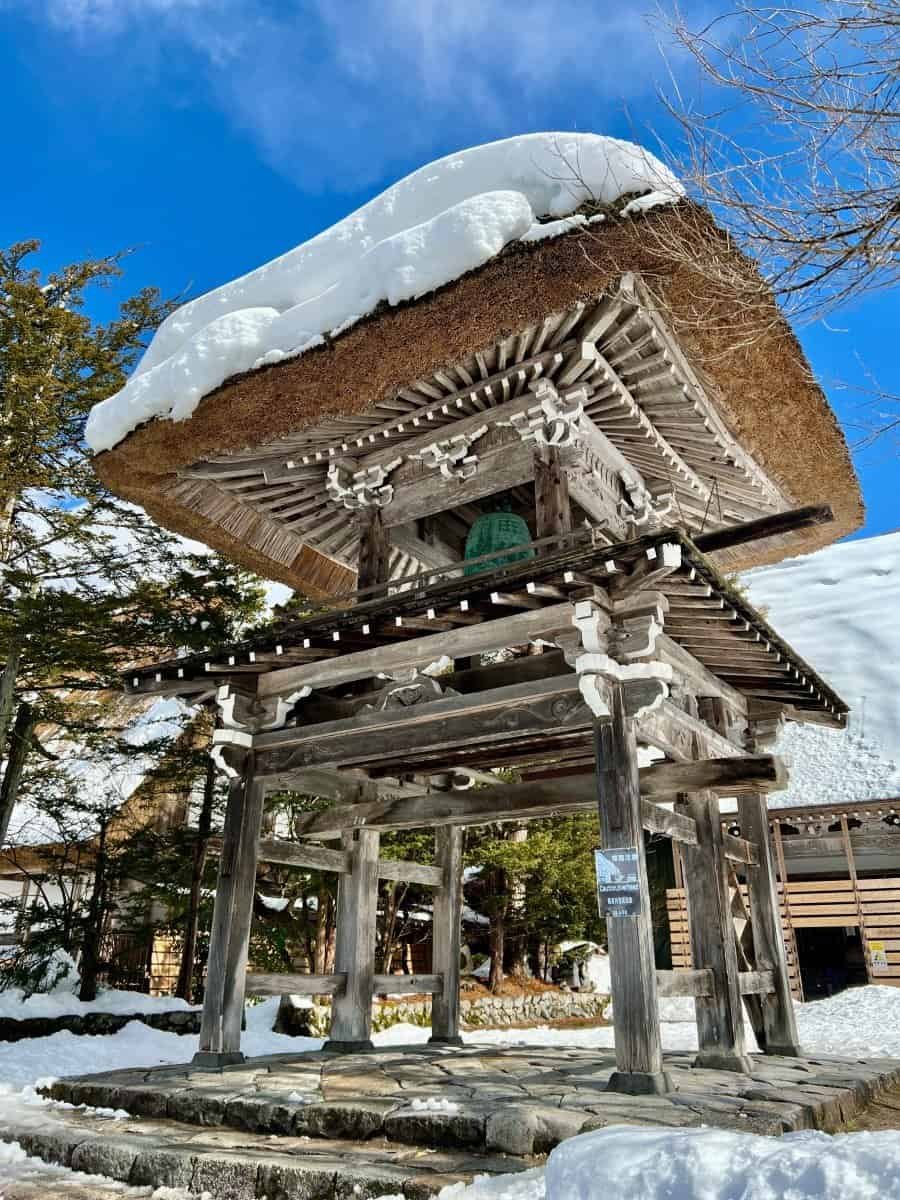
Myozenji Temple is worth singling out. Its bell tower and gate are among the only examples in Japan built in the same thatched roof style as the surrounding farmhouses, and you can see this without entering the temple.
How Crowded is Shirakawa-go? The Main Street Reality Check
Stepping onto the main street, Shirakawa-go Kaido, for the first time can be a bit of a reality check. A lot of travel content out there paints the village as this fairy tale looking wonderland, and in the early morning it genuinely can be. But arrive at midday and it is a different story. The main road gets really busy with tour groups, families and fellow folks on a day-trip. It can be a shock to the system to see this but the good news is that you’re never more than a few steps away from a completely different experience.
Duck down any of the side paths and what you find are quieter roads and gradually less crowded areas. You’ll get to see the original version of the valley with its steep thatched houses that actually feels like somewhere people have lived and worked for centuries.
🚨 Insider Travel Survival Strategy Avoid waiting for an indoor table at a restaurant along the main road. Instead head to cafes, stalls and soba restaurants towards the south of the village with shorter waiting times.
Skip the Restaurant Lines: The Two Best Main Street Snacks
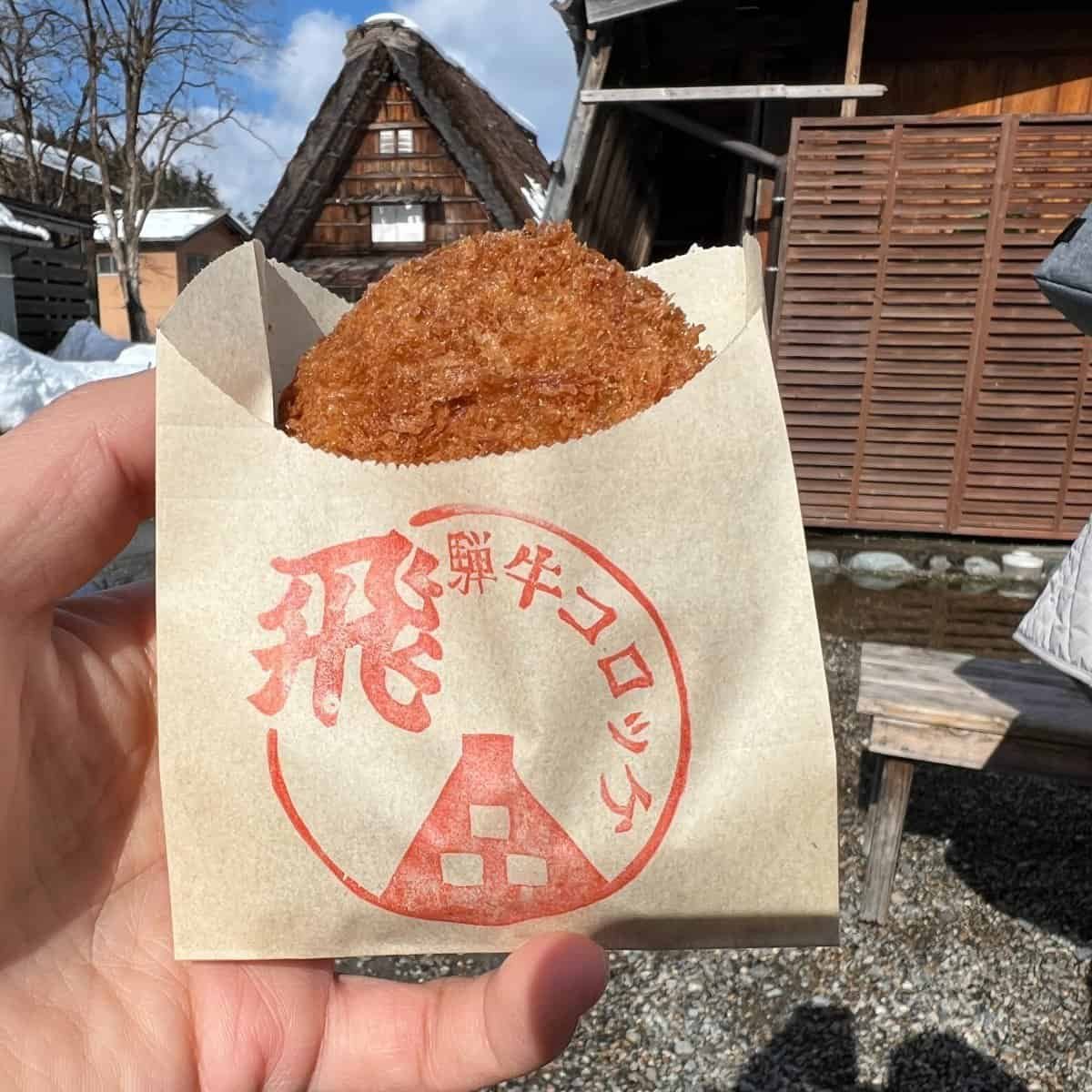
If you want to completely bypass the midday restaurant rush to spend more quality time on sightseing, look out for these two locally sourced street food specialties available from small window-service stalls or cafes:
1. Gohei Mochi (五平餅)
Gohei Mochi is a staple across the Hida region and definitely one of the most hearty and satisfying things you can eat here. Forget the sweet, dessert mochi you might be used to back home. This is dense, pounded rice sometimes put on a skewer, coated in a thick paste of mountain miso, crushed walnuts and toasted sesame. It’s often grilled over a flame right in front of you until the outside is sticky and charred, with a lovely caramelised smell.
2. Hida Beef Croquettes (Hida-gyu Korokke)
If you are in Gifu Prefecture, Hida Beef is something you really should not leave without trying. It is the region’s prized Wagyu beef, and if you’re short on time, you can tick this off your box by eating a beef croquette in Shirakawa-go. Like other croquettes, the Hida Beef version comes in a crispy breadcrumbed shell, creamy potato filling, and enough rich minced Hida beef to feel the indulgence. It comes in a little paper bag, costs very little, and is ready within a minute. Honestly this will be one of your better bites of the trip!
The Best Things to Do in Shirakawa-go (Away From the Crowds)
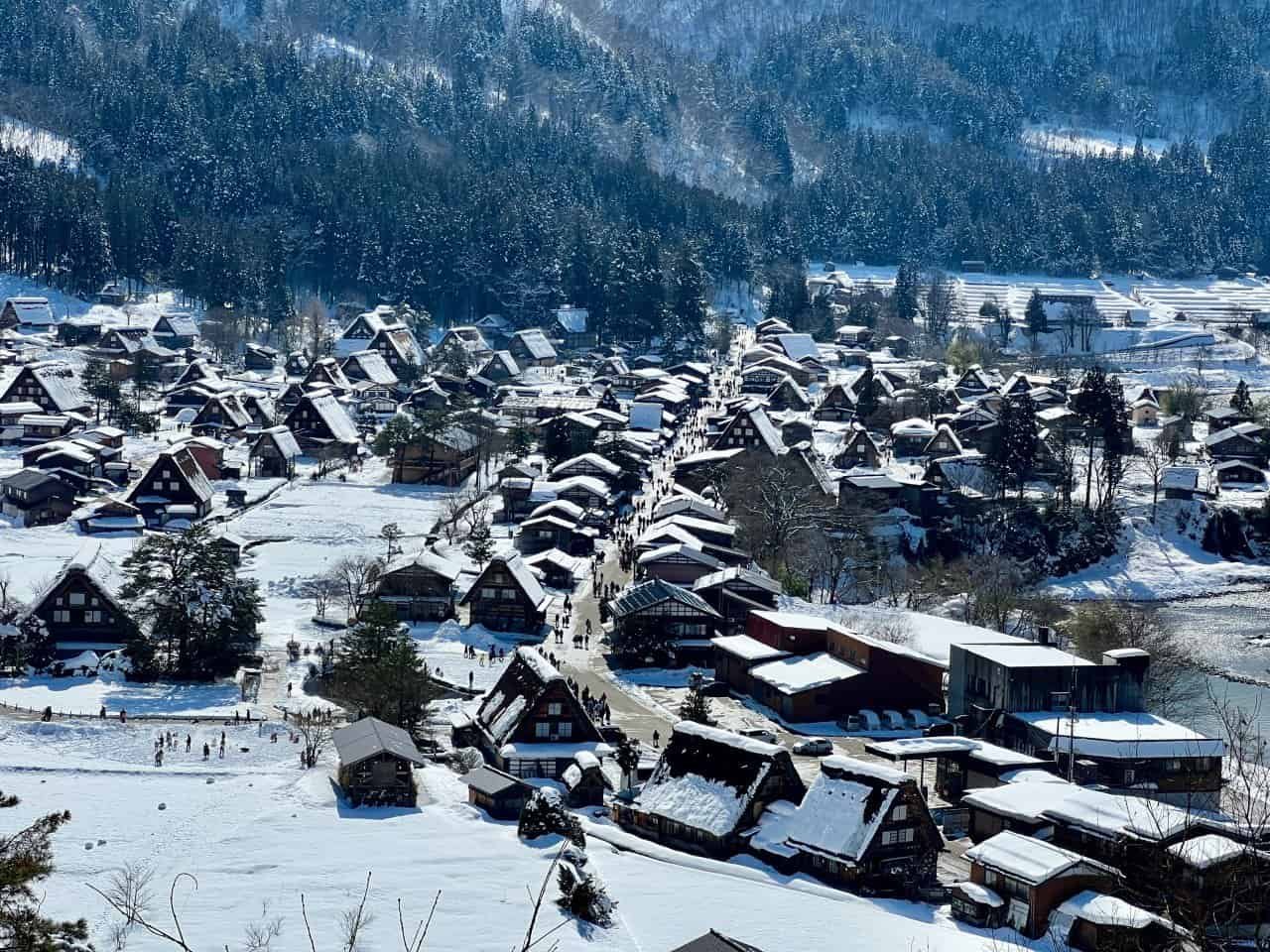
Taking the later morning bus from Nagoya meant less time in Shirakawa-go, so I had to be a bit selective about what I did and in what order. I made the decision to skip the busier areas and sights such as Wada and Kanda houses, but I still managed to cover most of what the valley has to offer. That meant crossing the suspension bridge, enjoying the Gassho Zukuri Minka En open air museum pretty much to myself, and then looping back to the three famous farmhouses.
Before any of that though, I wanted to get the main viewpoint ticked off first.
1. Capture the Postcard Panoramic View from Ogimachi Castle Observation Deck
The panoramic view that you can see from the observation deck is stunning. It’s one that you likely will have already seen on travel ads or posters for Japan, as you look directly down on the valley floor, and can admire the unique steep thatched roofs clustered together covered in snow in winter, or among bright green rice paddies in spring.
- The Crowding Reality: Because it is the single most famous spot in the region, it gets busy, however if you wait a few minutes, the groups in front of you will move away, allowing you to take it all in and to get some incredible photos or video. You can then survey where you’ll be walking soon and the houses you want to visit.
- The Strategy: Tackle this viewpoint first thing when you exit the bus terminal via the shuttle bus which comes every 20 to 30 minutes. Or rather than waiting around for the shuttle bus, which tends to fill up quickly, take a scenic fifteen minute walk up the hill instead like I did. It is obviously steep in some places but manageable if you don’t mind a quick hike.
2. Serenity at Shirakawa Hachiman Shrine
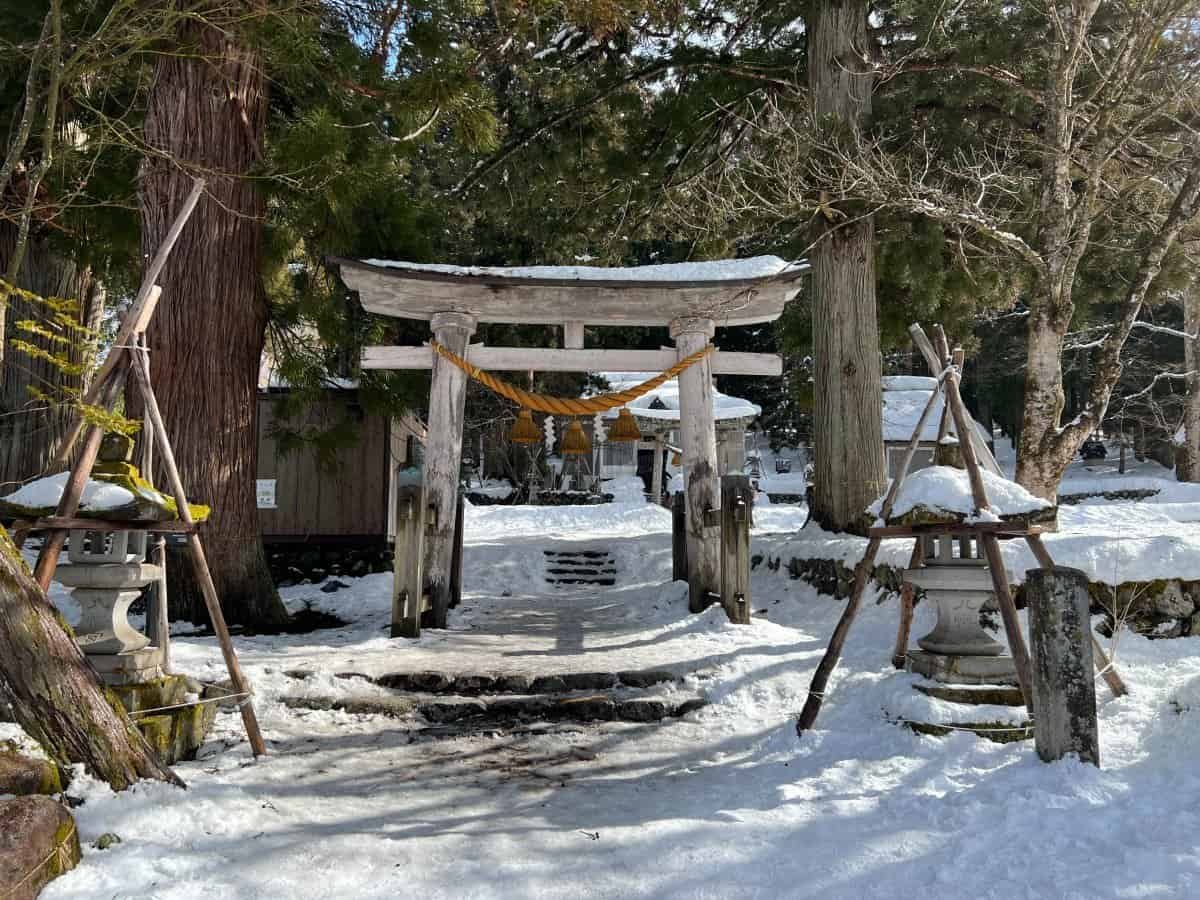
After taking the trail down the hill, take the immediate path to your left as this leads away from the main street. As you follow this quiet back street, you can appreciate the craftsmanship of the farmhouses. Continue until you hit a fork in the road and I’d recommend taking the middle track. This path leads you past Nagase House and you’ll come to the beautiful bell tower gate of Myozenji Temple. Here it’s likely you will meet with a flock of people taking selfies but it’s only to be expected.
Just past the temple, you will reach the first gate of Hachiman Shrine. Most people stop at the first gate to snap photos, but you can go inside the grounds. What’s unusual about the Shinto shrine is that there are statues of the Buddha in one of the buildings (the Shakado Hall), and because the shrine is famous for sake, it also has a Sake Hall, which is home of the autumn Doburoku Festival.
3. Step Inside History at the Gassho-Zukuri Minka-en Museum
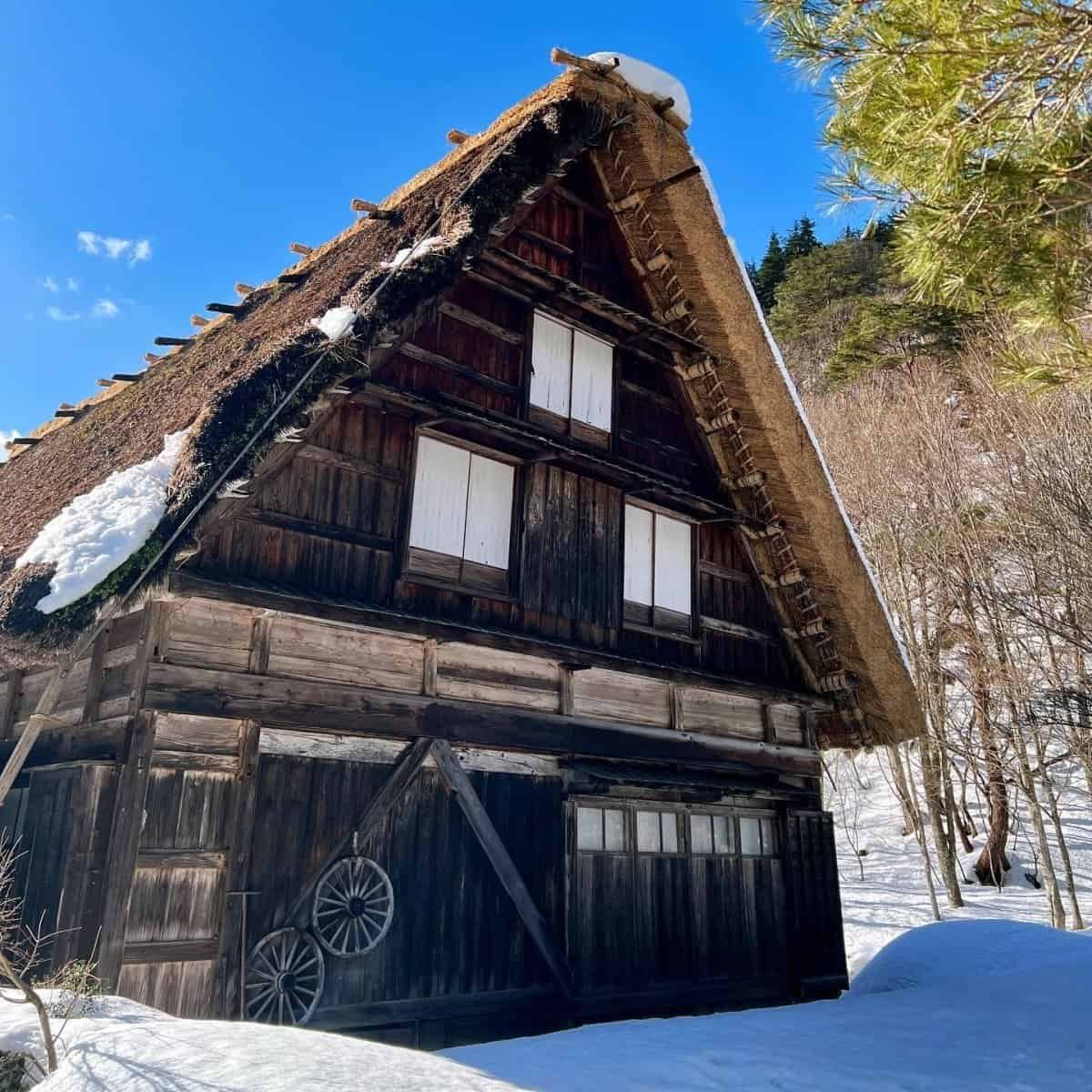
Honestly this was probably my favourite part of the whole visit, and my main reason to cross the Deai Bashi suspension bridge over the Shogawa River. This open air museum preserves more than twenty authentic gassho zukuri structures, including a watermill and a temple hall, which were all relocated to protect them from developments. Because it sits across the river and charges a small separate admission fee of 600 yen, the big commercial tour groups tend to skip it entirely!
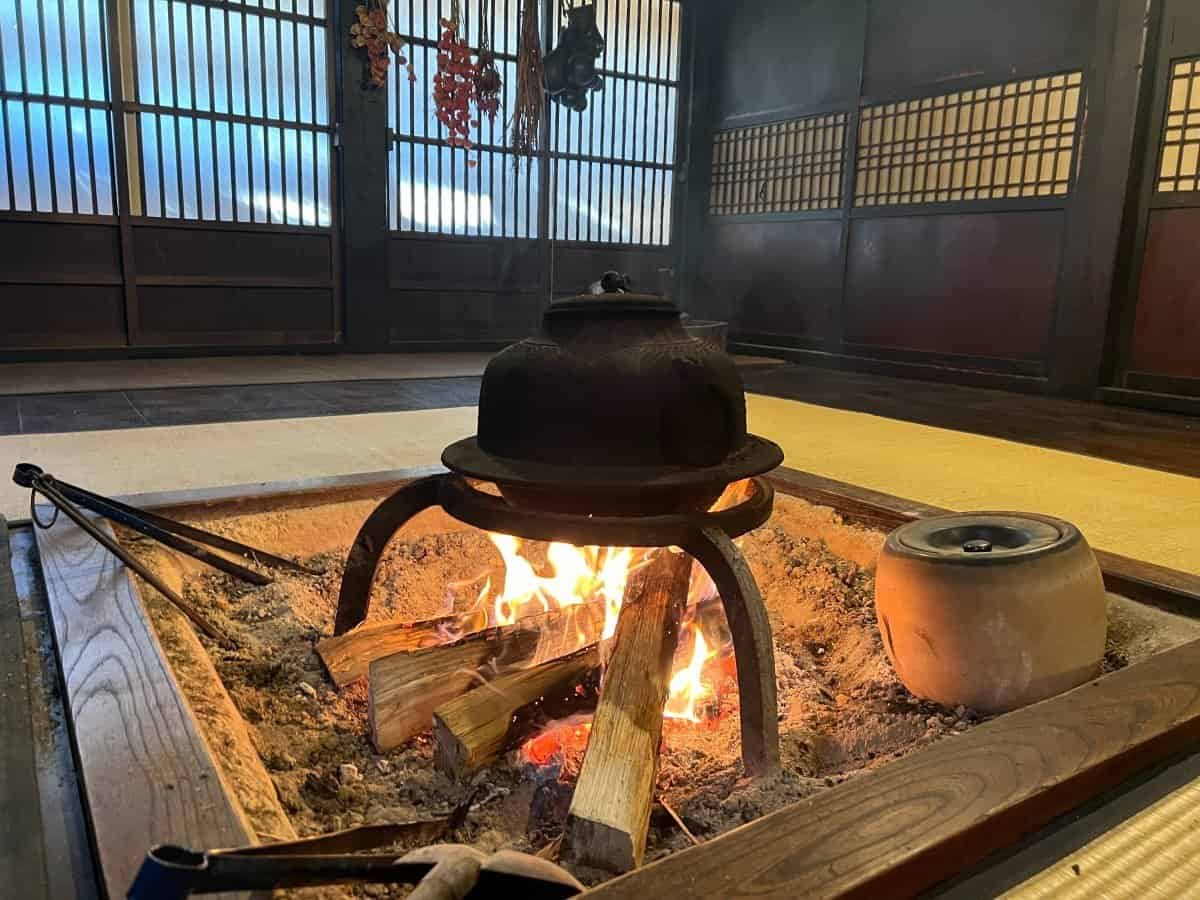
Which means you get the whole place largely to yourself. You can wander through multiple farmhouses, climb up into the attic lofts (these attic steps are quite steep) and look at tools or displays explaining silkworm cultivation without anyone rushing you along. The houses are beautiful especially some with Irori fire hearths in winter, and there is something really special about sharing them with only a handful of other people. You actually get to slow down and take it all in, and image how it used to be to live in them.
4. Where to find the Shirakawago Three Houses?
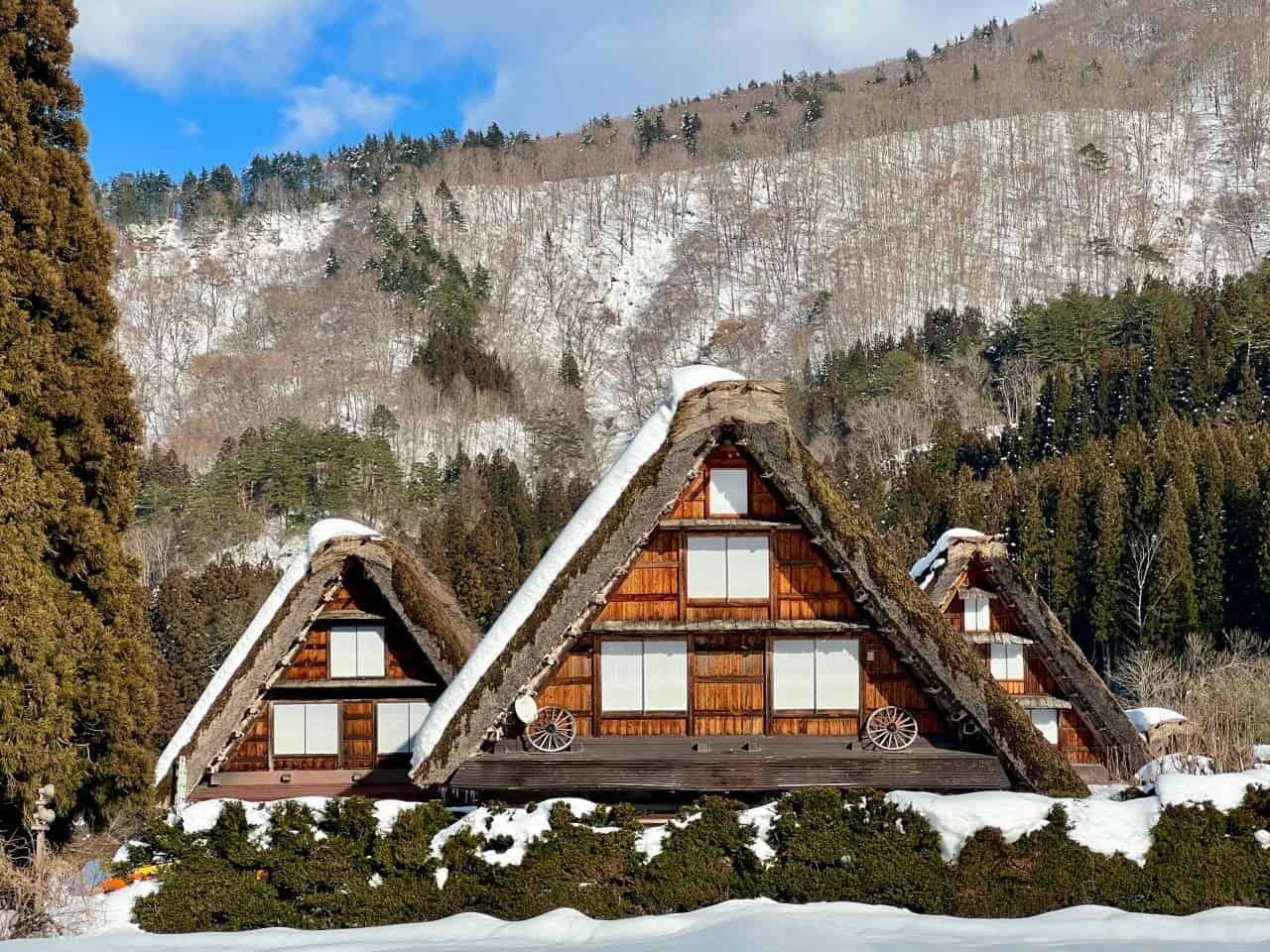
Tucked away in the very southern end of the village is one of the best photo spots in the whole village. You may have already seen this image of three traditional thatched farmhouses sitting in a row with the mountains behind them, and no signs of modern buildings or power lines. You will find others taking their selfies and you may come across some more serious camera equipment, but it’s still relatively calm compared to the observation deck viewpoint.
- Where are the Shirakawa-go Three Houses: These three farmhouses can be found at the very southern end of the village, completely on the opposite side of the observation deck, and 17 minutes walk from the bus terminal. They also face away from you as you walk towards them, so may not immediately see them.
- Seasonal Reflections: Aside from other nearby houses, you’re right by the rice fields, so depending on when you visit, you will see a different scenery. When I went in winter, I saw the steep roofs covered with snow, but during the spring you may find the fields flooded, which gives the opportunity to take a photo of the houses with a mirror reflection.
As the Three Houses are close to the Tajima House museum, if you’re interested in sericulture and learning more about Shirakawa-go, I’d recommend including a visit to both if you have time.
Is it worth going on a day trip from Kanazawa to Shirakawa-go, or from Takayama or Nagoya?
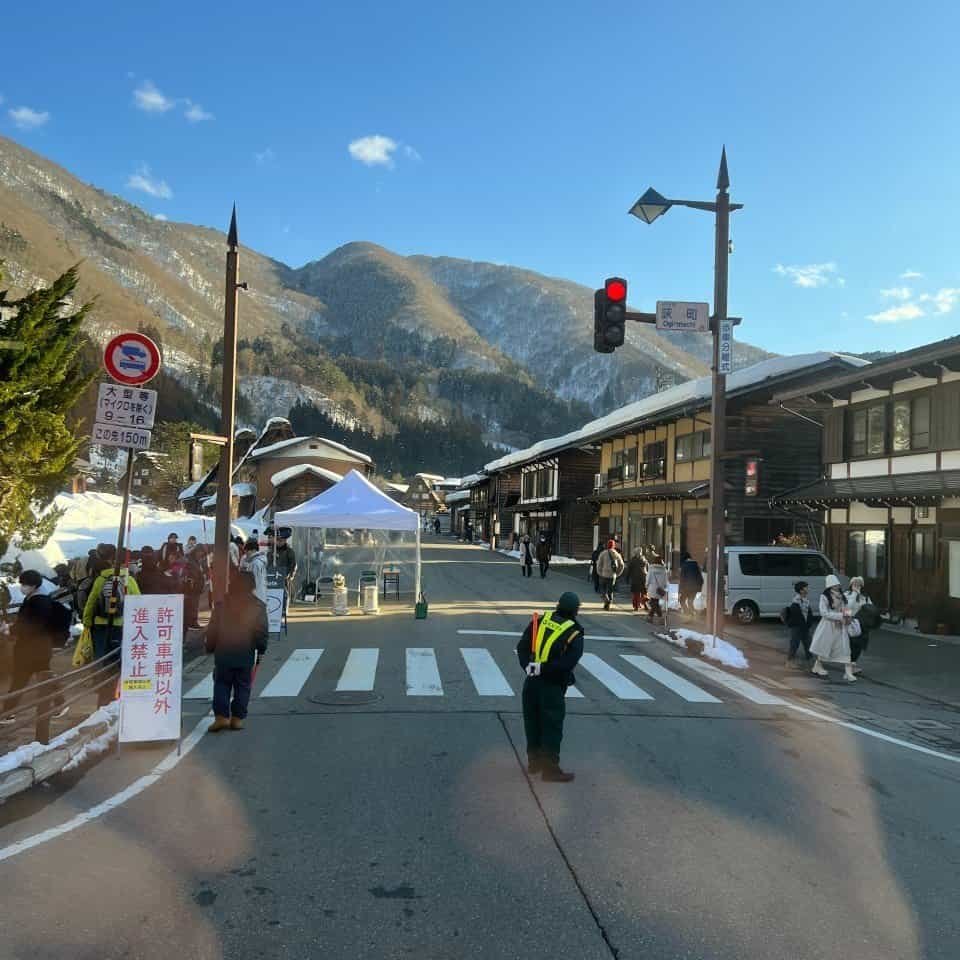
If you are expecting a quiet fairytale-like mountain village, the huge number of tourists at Shirakawa-go that you will come across will disappoint you. However, if you adjust your expectations and plan ahead how to spend your time, you’ll want to visit this UNESCO World Heritage site, especially if you’re staying in nearby Takayama or Kanazawa. Even for me, coming from Nagoya which is over 2 hours and a half away, it was well worth the day trip, and one of the highlights of my February trip.
Where to stay in Shirakawago?
If a day trip feels too rushed and you want to experience the village when it is completely empty, the ultimate travel experience is booking an overnight stay in an authentic, family-run gassho-zukuri guest house such as Koemon. However to be frank, these are not always easy to book and the websites may be in Japanese. Alternatively, there are other Japanese inns or modern hotel options in Shirakawago which can be found on the Shirakawa-go site accommodation page, or on websites like Booking.com or Expedia.
We hope you get a chance to travel from Kanazawa to Shirakawa-go, or take a bus from Takayama or Nagoya, and this guide of things to do in Shirakawa-go will be helpful for you.
If you’re looking for more travel related post, check out our travel section. For those who are interested in Japanese food, why not explore our food section. Or you can head to our Instagram account for posts of fantastic restaurants, festivals, and travel experiences.
All the information and details are correct at the time of publishing. Please check the relevant bus & Shirakawa-go websites for the latest timetables, opening times and prices.
FAQ: The Story Behind the Houses: What is a Gassho-Zukuri?
You may be wondering what Gassho-Zukuri means. In Japanese, Gasso translates to ‘palms pressed together’ and Zukuri refers to the design of a building. So putting them together you have building designed like palms together as if in prayer. The other thing you likely are curious about is why the roofs are so steep. You may have guessed this one from the winter photos or if you’ve seen the snow on the roofs there yourself. As the region gets some extremely heavy snow, the steep angles of the roofs allow the snow to slide off before the weight of snow on top causes any damage.

