
Getting that clear, unobstructed postcard-perfect shot of Mount Fuji after coming halfway across the world to Japan is unforgettable. Even while I was living in Japan and came to Kawaguchiko with a group of friends, seeing Mt. Fuji after the clouds lifted brought a massive smile to all our faces.
It is true that luck plays a role in whether you catch the iconic peak on any given day, but knowing when to visit, how long to stay in the area, and which destination to go will increase your chances. Along with sharing my experiences of the best Mt. Fuji views, this guide explains the routes to get there, along with my tips on where to take photos, and backup plans in case the mountain stays hidden.
Where are the Best Views of Mt. Fuji?
For the postcard shots head to Chureito Pagoda or Lake Ashi in Hakone. The best water reflection shots are at Lake Kawaguchiko, or Lake Tanuki if you prefer somewhere quieter and off the beaten path. For skyline views without leaving Tokyo visit the Tokyo Metropolitan Government Building.
| View Style | Top Location | What to Expect |
|---|---|---|
| The Iconic Postcard View | Chureito Pagoda or Honcho Street (Fujiyoshida) | Pagoda landmark & retro street framing. |
| The Best Lake & Reflection Shots | Northern shores of Lake Kawaguchiko or Lake Tanuki | Pristine water mirroring the snow-capped summit. |
| Best Urban Views from Tokyo | Tokyo Metropolitan Government Building or Shibuya Sky | High-rise and skyline vantage points for city-bound travelers. |
| Best Views on the Move | The Hokusai Special Train | An art-themed scenic train journey between Mishima and Fujinomiya. |
Here is how the top viewpoints compare, and if they are worth visiting, starting off with Lake Kawaguchiko.
Viewing Mt. Fuji from Lake Kawaguchiko & Fuji Five Lakes
Having visiting several of these spots during my 18 years living in Japan and then designing Japan itineraries as a travel consultant in the UK, I recommend starting with the Fuji Five Lakes area. It’s easily the most popular spot for classic postcard views, which you’ll have likely seen online, but expect to share the viewpoints with other travellers trying to capture a photo of Mt. Fuji.
How to Get to Kawaguchiko from Tokyo
Before getting into the best viewpoints around the lake and wider area, let’s cover the two easiest ways to get to Kawaguchiko Station from central Tokyo.
- By train: Hop on the JR Chuo Line Limited Express (it’s called Fuji Excursion or Fuji Kaiyoku) straight from Shinjuku to Kawaguchiko Station. Takes about 1 hour 55 minutes and runs around ¥4,130. If you fancy the scenic route, you can take a regular JR Chuo Line train to Otsuki Station and get on the local Fujikyuko Line from there.
- By bus: This is good value if you don’t have a JR Pass. Direct highway buses leave from Busta Shinjuku, Shibuya, and Tokyo Station and get you to Kawaguchiko Station in under 2 hours for about ¥2,000 to ¥2,200 one way. Do reserve your seat ahead of time though, as they will fill up fast on weekends and during peak travel seasons.
What to Expect at Chureito Pagoda (Arakurayama Sengen Park)
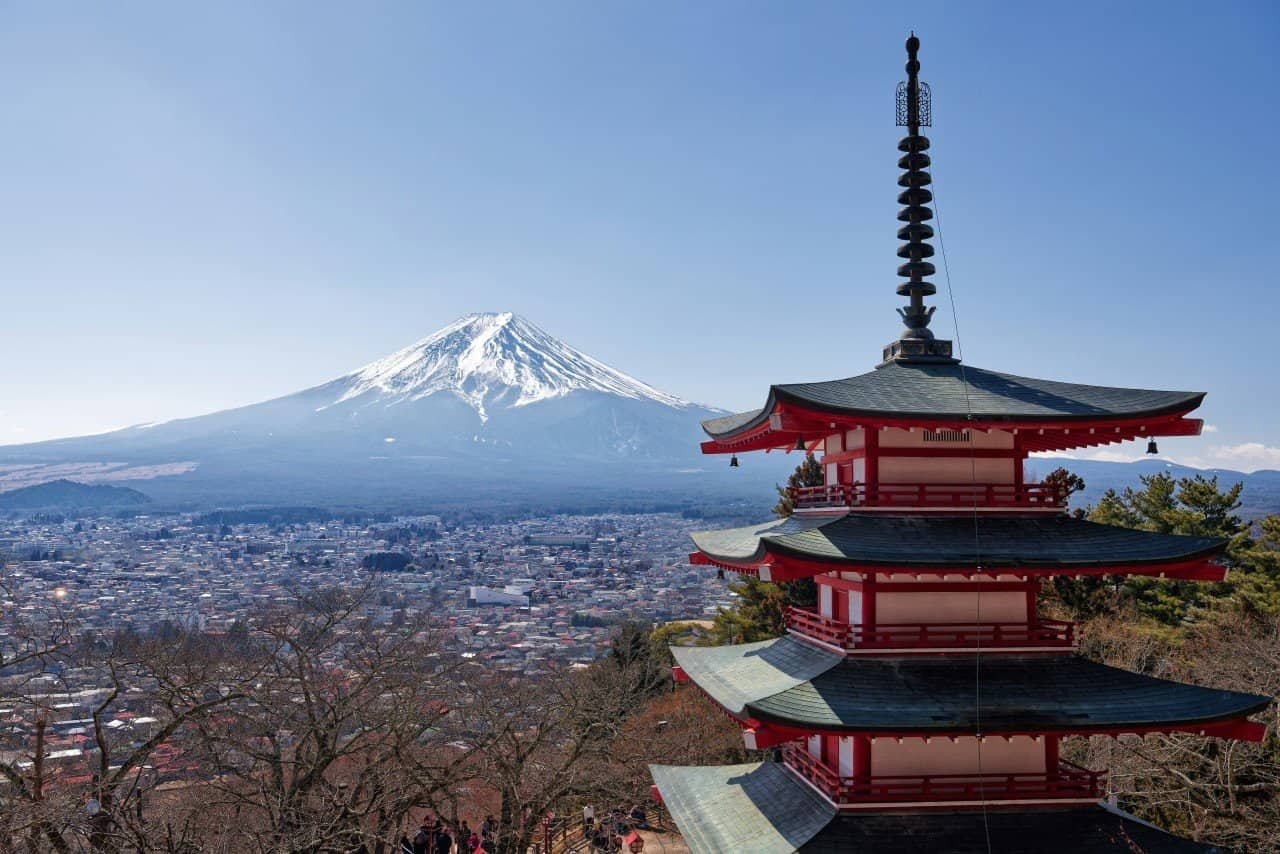
This five-story red cenotaph called Chureito Pagoda has a fantastic Mt. Fuij view with Fujiyoshida City stretching below. It gets especially crowded during cherry blossom season where you get Mt Fuji, the pagoda, and the blossoms all in one frame. Most people probably are unaware before visiting but it’s actually a modern peace memorial built in 1962. As it’s on top of a hill, you either need to take the steep 398-step staircase, or winding paths through Arakurayama Sengen Park to get there. Admission is free and the park is open 24/7.
How to Get to Chureito Pagoda
By Train: Take the Fujikyuko Line from Kawaguchiko Station to Shimo-Yoshida Station (4 stops away, costs between ¥300 and ¥370, and takes 13 minutes).
On foot: It’s a 15-minute walk from Shimo-Yoshida Station where you’ll be walking through local neighbourhoods, and under a highway bridge before you get to the park entrance. From there you have the climb to the observation deck.
Pro Tip
Aim to get there before 8:30 AM to beat the crowds and for the best chances of clear Mt. Fuji views. On weekends and after 9:00 AM, expect queues for the observation deck to reach up to an hour.
Is Chureito Pagoda Worth It?
Yes, if getting this quintessential photo is high on your priority list. However, remember that visibility may be poor on the day you go, meaning you would only get the picture of Chureito Pagoda. The observation deck is also small so you may not be able to stay long. If you really want to visit, I’d strongly recommend making it part of an overnight stay in the local area rather than taking a day trip. This gives you more options should Mt. Fuji be hiding the day that you go.
Oishi Park, Kawaguchiko: What Makes the View Special?
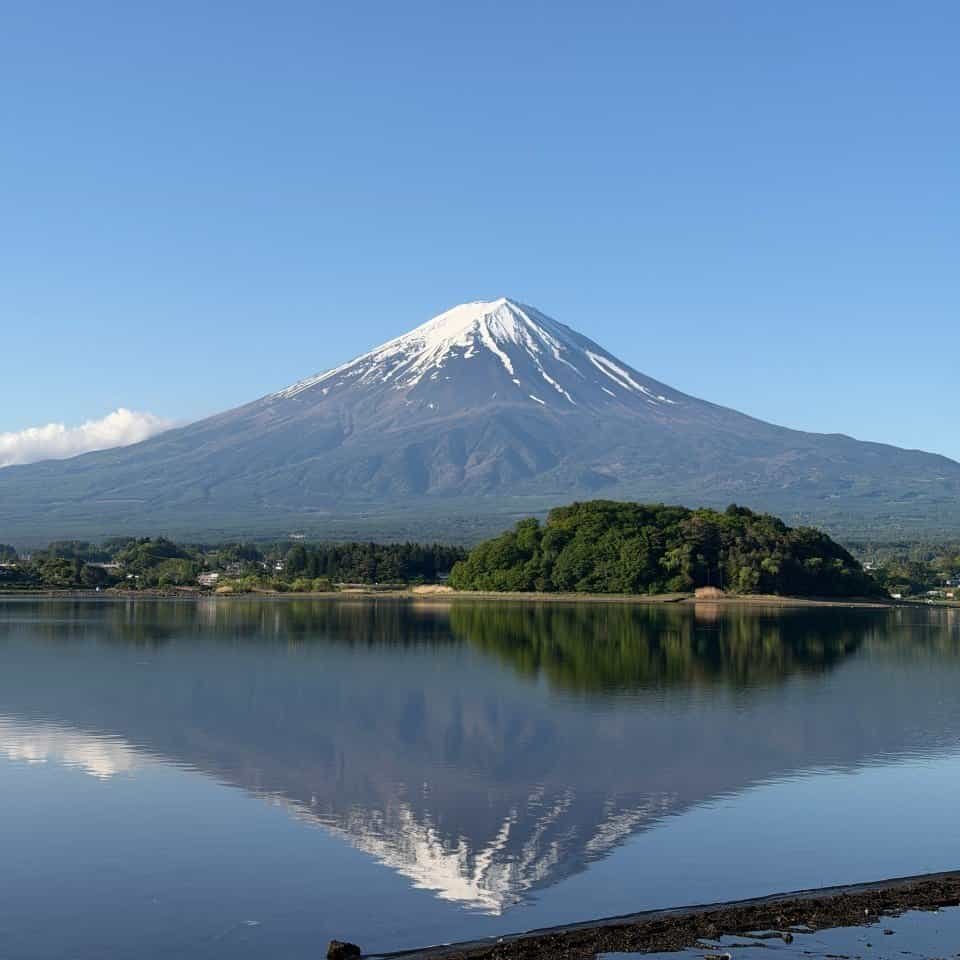
From the north shore of the lake you can get a clean shot of Mt. Fuji across the water, with few buildings in your photo, and if the water is still you can capture a double-Fuji reflection mirrored on the lake surface.
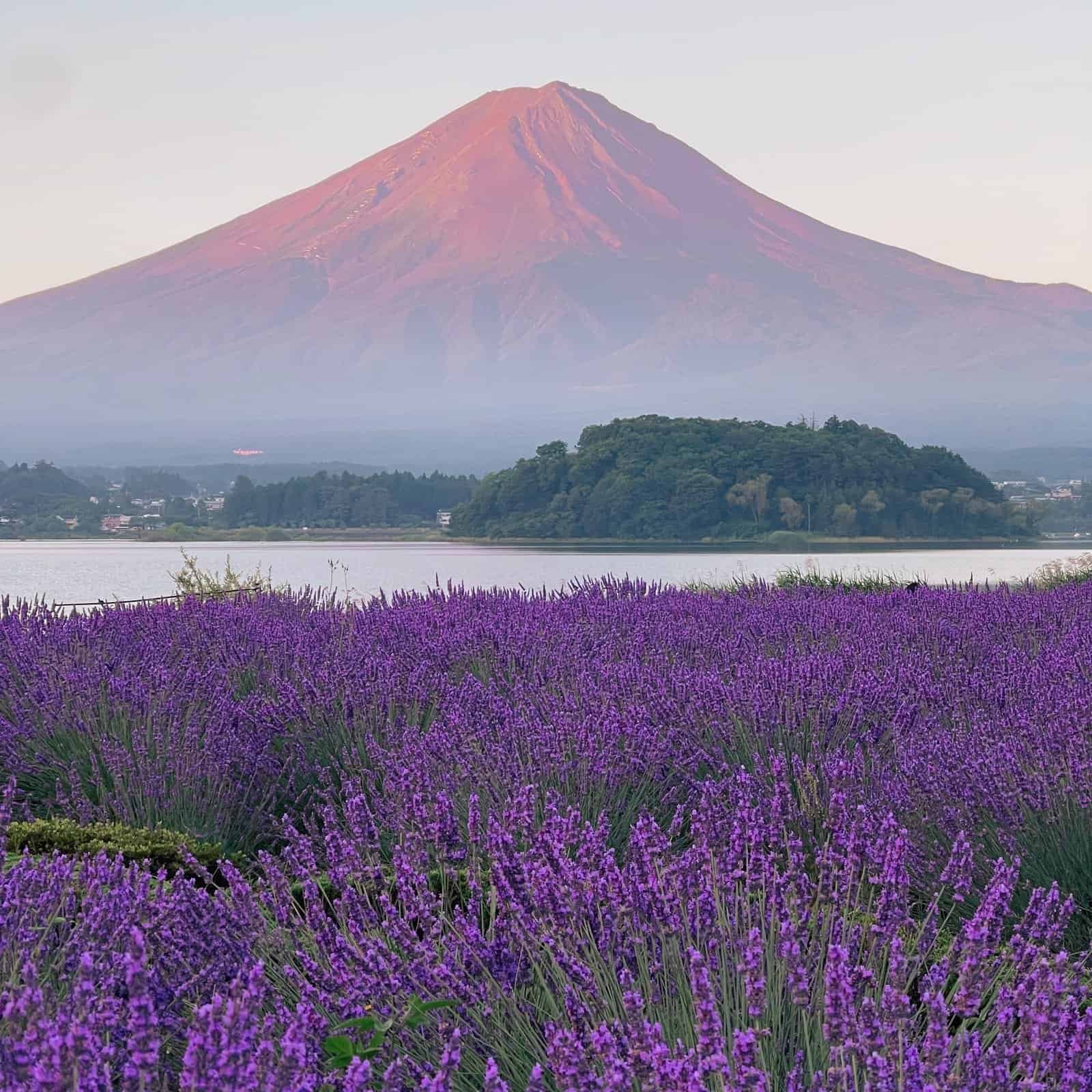
The park also features the beautifully well-kept Oishi Hana Terraces, with seasonal flowers that create a beautiful foreground. In spring, there are often nemophila, in summer there are lavender fields, then in autumn you may catch bright chrysanthemums or fiery red kochia. A personal favourite of mine by the flower beds and around the area is the tall susuki pampas grass which you’ll see bloom silver in autumn. Entrance to the park is free and it’s open 24 hours daily.
How to Get to Oishi Park
By Bus: Board the Fujikyuko Bus Red Line from Kawaguchiko Station and get off at the final stop, Kawaguchiko Natural Living Centre. It will take just under 30 minutes and costs ¥490 one-way. You can also buy the ¥1500 unlimited-ride sightseeing bus pass.
Is Oishi Park Worth It?
Yes, if your main goal is to take a photo of Mt. Fuji and to get a mirror-image reflection on the lake. Keep in mind there are going to be many other international tourists, and the flower beds are not endlessly stretching into the distance. If you are in the area, a benefit is the other viewpoints of Fuji around Kawaguchiko, such as Ubuyagasaki, which is much closer to Kawaguchiko Station.
Mt. Fuji Panoramic Ropeway (Mt. Tenjo): What’s the View Like?
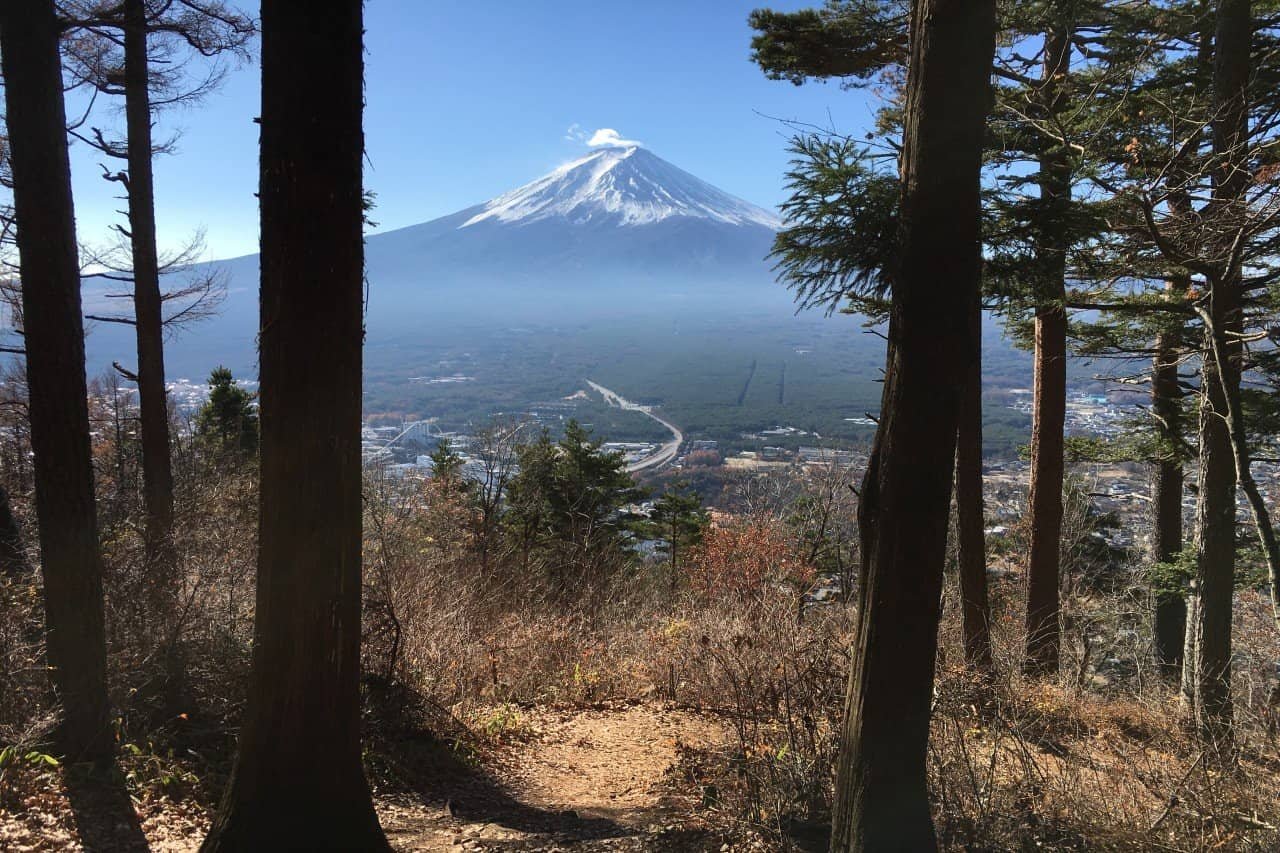
Once you take the cable car up to the 1,075-meter observation deck, you’re rewarded with a decent high-angle view of Mt. Fuji, which will be snow-capped if you’re visiting in the colder months. You’ll get sweeping views of Lake Kawaguchi too on the way up and when walking around the deck.
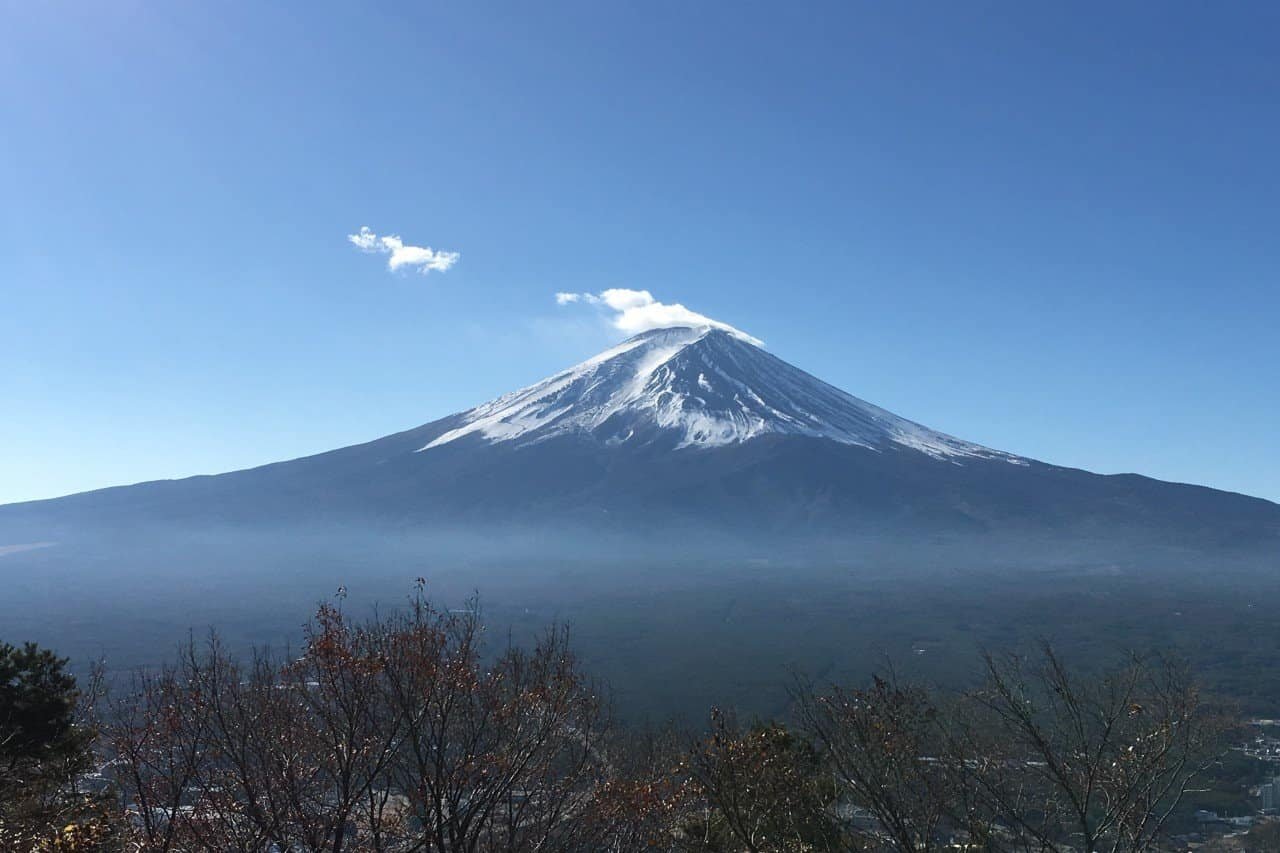
If you’re up for it, the hiking path toward the summit takes you through a forested stretch, where you can get some really nice shots of Fuji framed between the cedar trees.
How to Get There?
By Bus & Ropeway: Board the Kawaguchiko Sightseeing Bus from Kawaguchiko Station and get off at the Sightseeing Boat / Ropeway Entrance stop. From there, take the Mt. Fuji Panoramic Ropeway cable car to the observation deck: The ride takes roughly 15 minutes and costs ¥180. The cable car on the ropeway is fast, and it takes only about 3 minutes to reach the observation deck, but there can be queues of 30 minutes. It costs ¥1000 round trip or if you prefer to walk down, the one-way ticket is ¥600.
Is Mt. Fuji Panoramic Ropeway Worth It?
Yes, overall but it depends on your schedule, and whether you like the idea of hiking down. From this viewpoint you do see some of the urban landscape below including some roads and car parks, but the cedar trees help frame it out. If you are on a tight day trip from Tokyo, you may want to consider the lakeside viewpoints instead.
Viewing Mt. Fuji from Fujinomiya & from Lake Tanukiko (Best for Mirror Reflections)
Want to dodge the tour buses at Kawaguchiko and see Fuji from a quieter, more peaceful location? If so, consider heading west into Shizuoka Prefecture to Lake Tanuki. You can also see a unique view of Fuji with a beautiful waterfall at Shiraito Falls.
How to Get to Fujinomiya from Tokyo
- By train: Take the JR Tokaido Shinkansen from Tokyo Station to Mishima Station, swap to a local train to Fuji Station, then catch the JR Minobu Line into Fujinomiya. The journey time is roughly 2 hours, it costs ¥4,070 for a non-reserved Shinkansen seat from Tokyo to Mishima, and then ¥680 to take the train from Mishima to Fujinomiya Station. Note that during the peak travel periods (Golden Week and Obon) ticket prices are going to be slightly higher. However both train fares are covered if you have the JR Pass.
- By bus: Direct highway buses run from Tokyo Station (Yaesu South Exit) to Fujinomiya Station. It’s a hassle-free option that takes about two hours and a half, and the cost is around ¥2,750 one way. Remember to book early as seats fill up fast!
What to expect at Lake Tanukiko
Lake Tanukiko is far less visited by international tourists, but boasts a relatively still surface on calm mornings, allowing you to catch a Sakasa Fuji (double Fuji) reflection on the water. Twice a year, it does get busy on the days in spring and autumn where you can see the Diamond Fuji phenomenon, where the sun appears on the summit of Fuji just like a jewel. Admission to the Observation Deck and paths around the lake is free.
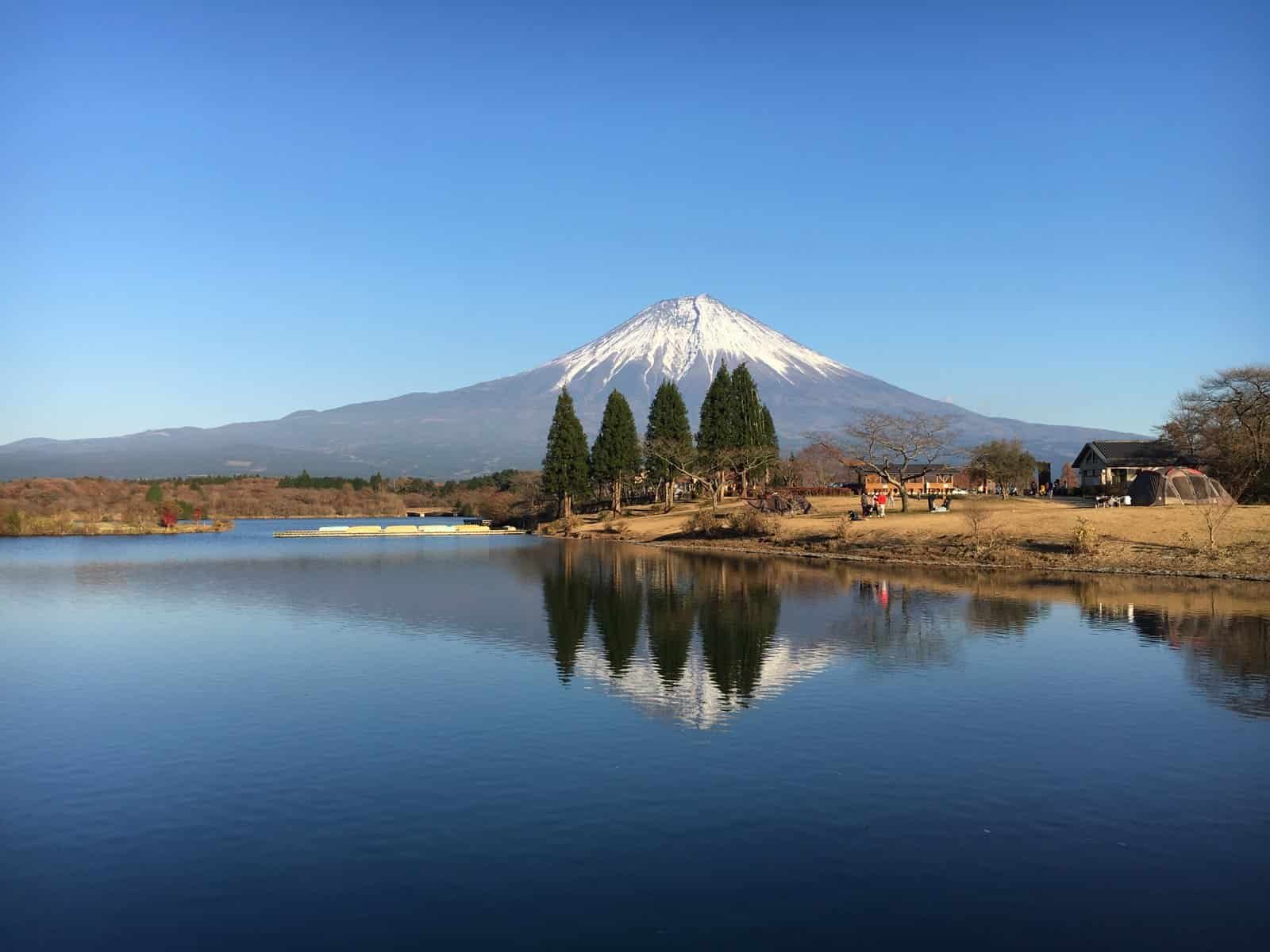
The lake has a hiking trail all around, and by walking to the recently built Fugaku Terrace, you can get some incredible double reflections of Mount Fuji and the treelines on the water surface.
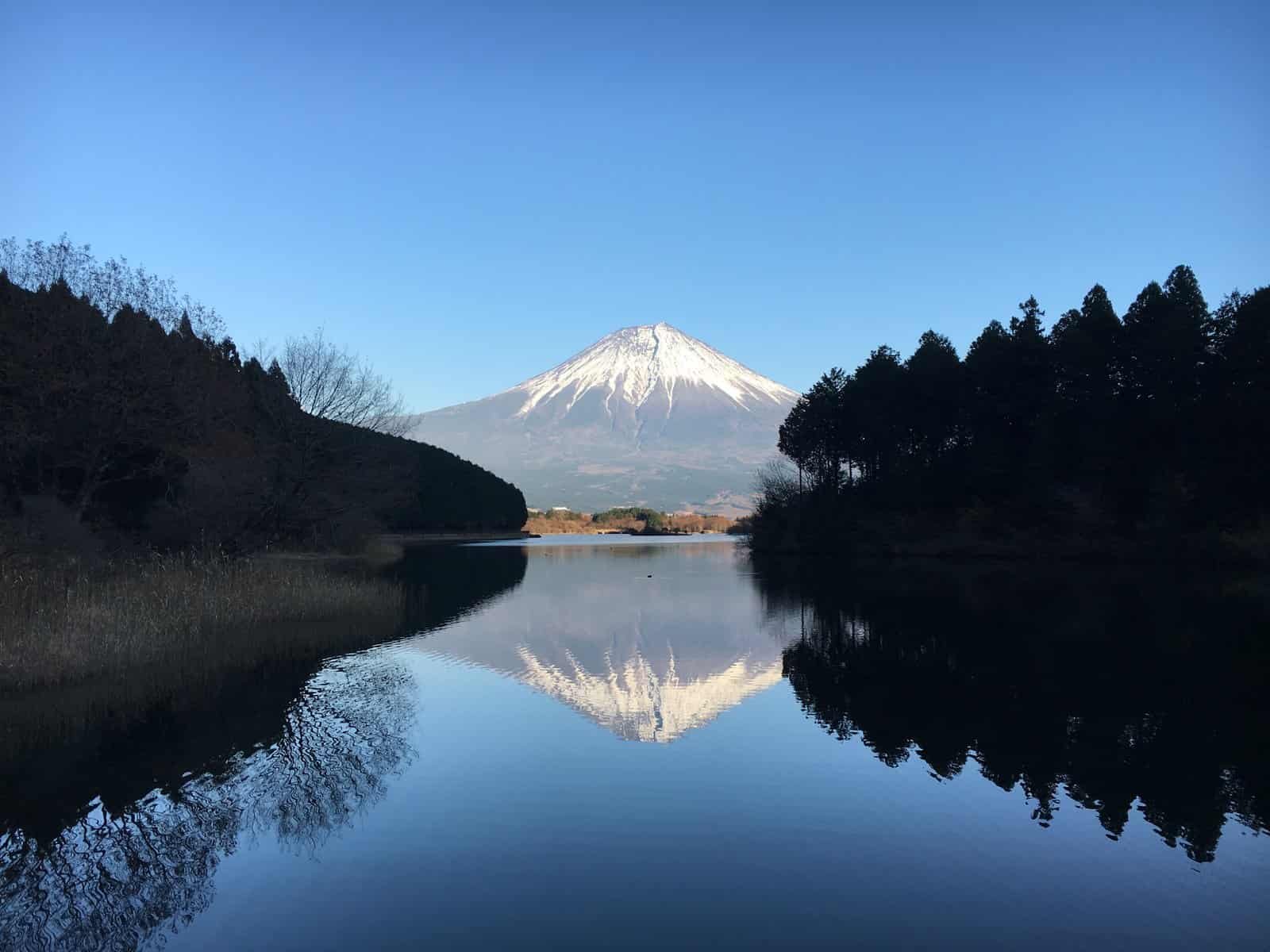
How to Get to Lake Tanuki
By Bus: From Fujinomiya Station, take the Fujikyu Shizuoka Bus to Lake Tanukiko Camp Ground (田貫湖キャンプ場). The journey will be around 45 minutes and costs ¥990 one way. It’s a five-minute walk to the first viewpoint on the lake path.
Is it Worth Visiting Lake Tanukiko?
Absolutely if you can fit it into your schedule. While it is deep in the countryside, if you’re already visiting Shiraito Falls, continue onto Lake Tanukiko. There is also a campsite ground there for those looking for a good place to camp in the area.
What’s the view like at Shiraito Falls
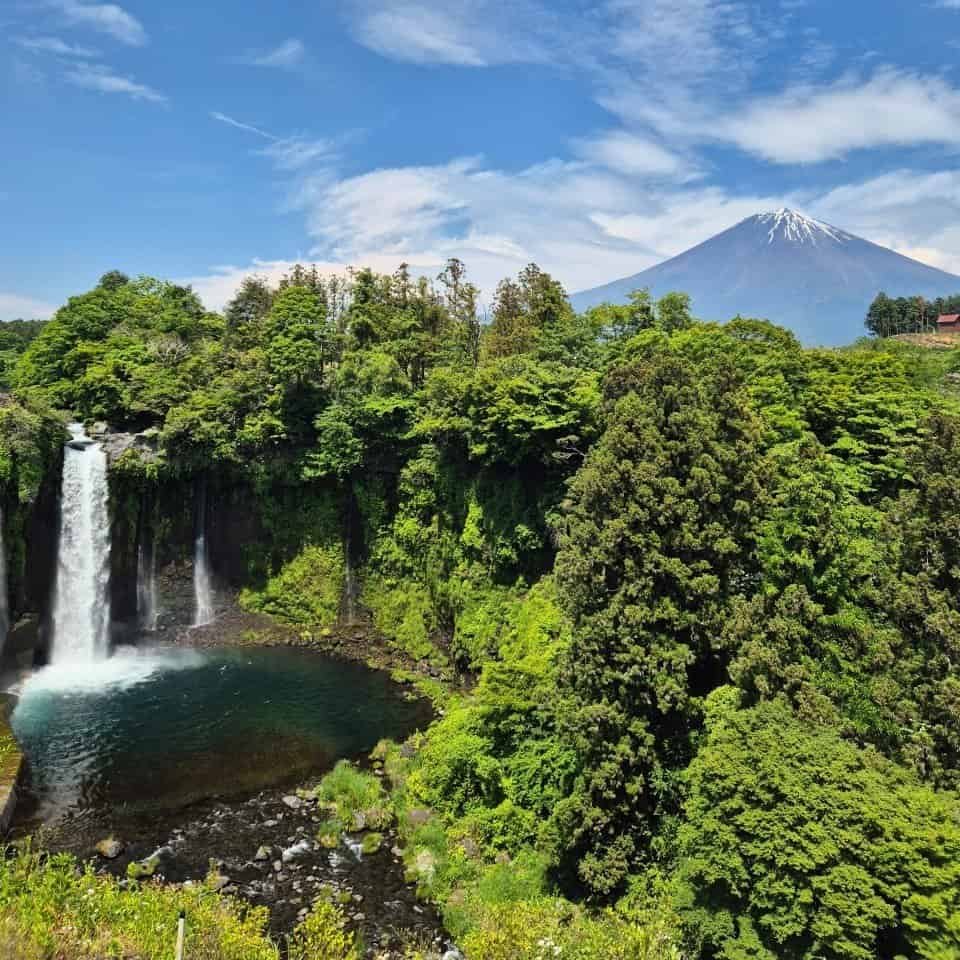
Fed by Mount Fuji’s snowmelt and spanning 150 meters across a 20-meter curved cliff, Shiraito Falls is a beautiful spot to take a photo. Even on cloudy days, the thread-like streams cascading into the turquoise plunge pool make a striking photo. On clear days, Mount Fuji in the background makes it one of Shizuoka’s most stunning natural viewpoints. It’s completely free to visit and open 24/7.
How to Get to Shiraito Falls
By Bus: From Fujinomiya Station, take the Fujikyu Shizuoka Bus to Shiraito Falls Iriguchi (白糸の滝入口). The journey will be around 20 minutes if you take the faster bus which leaves every two hours, or 28 minutes using the bus that leaves every hour, and the bus ride costs ¥710 one way. It’s a five-minute walk from the bus stop to the falls.
Is Shiraito Falls Worth Visiting?
If you’re looking for natural spots with viewpoints of Mt Fuji, then yes it is. There are going to be some coach tours here so expect it to be slightly busier than Lake Tanukiko. You can also visit Otodome Falls which is a short walk away.
Mt. Fuji World Heritage Centre: What’s the view like?
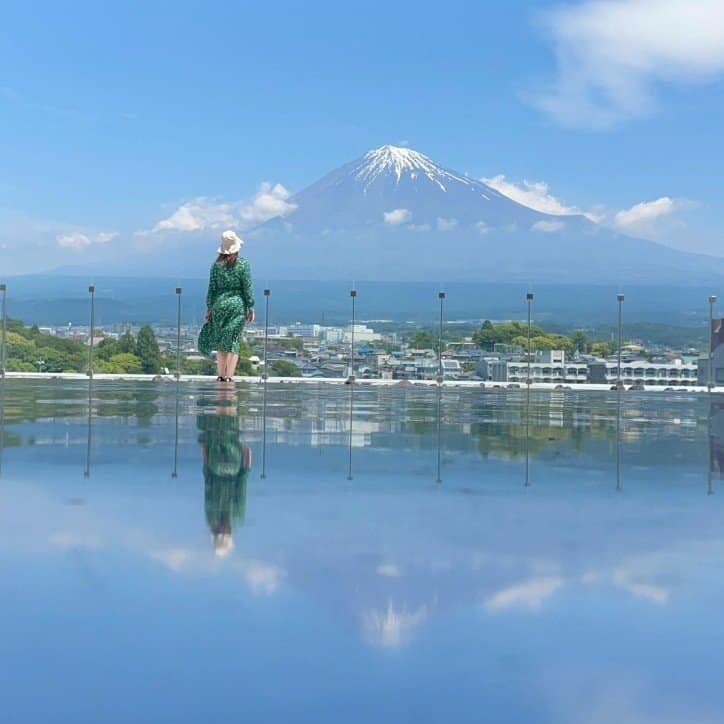
The inverted wood lattice cone of the Mt. Fuji World Heritage Centre is easy to spot! It’s designed by architect Shigeru Ban, and inside there a spiral ramp with interactive exhibits. Right at the top, you can get a perfectly framed view of the mountain from the observation deck or a reflection on the floor inside. Admission is ¥500 for adults and it’s open from 9am to 5pm.
How to Get There?
On Foot: It’s an easy 8 to 10-minute walk (650m) from JR Fujinomiya Station’s North Exit. Head west toward Fujisan Sengen Taisha Shrine. Once nearby you can’t miss the giant red torii gate and wood-lattice cone right beside it.
Is it Worth It?
Yes, if you’re looking for a unique Mt. Fuji view especially with the indoor floor reflection alongside the regular view from the deck. It’s a great place to head to if Mt. Fuji views are not visible, as you can check the exhibition inside. Plus, with the historical Fujisan Sengen Taisha Shrine so close by, you can visit both places in the same trip.
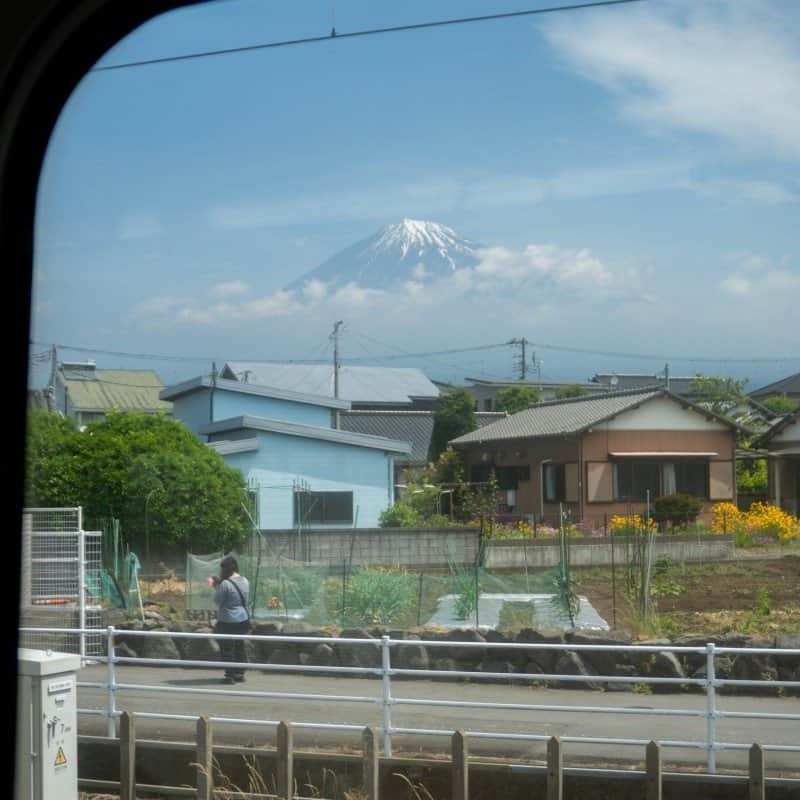
What to Expect on The Hokusai Special Train
For those looking to get a unique view of Mt. Fuji on more leisurely speeds than while on the Shinkansen, you may want to check out the Hokusai Special Train, which runs between Mishima and Fujinomiya. The train is no ordinary one, as the carriages are decorated with ukiyo-e artwork from the legendary artist Katsushika Hokusai, who created the Thirty-Six Views of Mount Fuji.
How to Book & Access
Tour-Only Experience: You cannot purchase individual train tickets to take the Hokusai train. Riding the train requires booking onto a designated JTB tour package such as the Mt. Fuji & Shizuoka Wasabi Farm Tour day trip from Tokyo, which costs 28,000 yen per person and is run by Sunrise Tours. The meeting point for the tour is at Tokyo Station and you can find full tour details on the JTB Sunrise Tours website.
Is the Hokusai Special Train Worth It?
Yes, if you are looking for a fun day excursion from Tokyo that combines ukiyo-e culture and Mt. Fuji views from the train. With the included trip to a local Wasabi farm, it makes for a memorable experience! Although please note this is not an option if you just want to book the train once you’re already in Shizuoka.
Hakone & Mishima: Volcanic Valleys, Hot Springs, & Fuji Viewpoints
If you want to combine Mt. Fuji views with traditional hot spring (onsen) stays and volcanic landscapes, Hakone is hard to beat. Just keep in mind that weather across Lake Ashi shifts rapidly, so flexibility is key to catching a clear view. For cloudy days, I personally enjoyed checking out the artwork from Picasso and Henry Moore at the Hakone Open-Air Museum. You can also take the bus down to Mishima Skywalk for sweeping panoramas from Mt. Fuji to the coast.
By train (Romancecar direct): Jump on the Odakyu Romancecar from Shinjuku straight to Hakone-Yumoto. It takes about 80 minutes and costs ¥2,470 one-way.
By JR Pass: Take the JR Tokaido Shinkansen from Tokyo Station to Odawara (~35 mins), then make a quick 15-minute swap onto the local Hakone Tozan Railway to Hakone-Yumoto (~¥320).
What to expect at Lake Ashi?
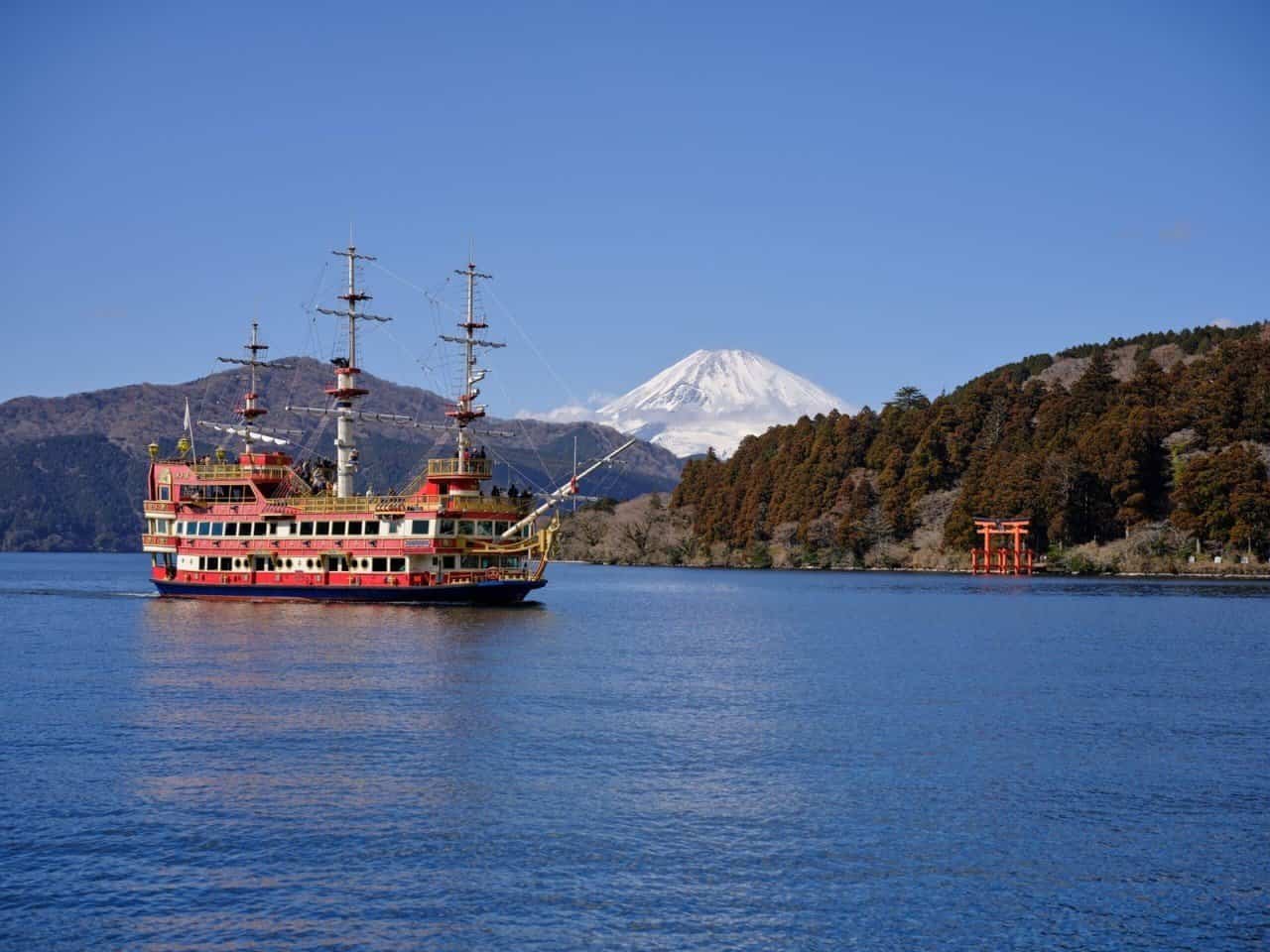
Hopping aboard the kitschy pirate-style Hakone Sightseeing Cruise between Togendai and Moto-Hakone allows you to capture Mount Fuji over the lake. As the boat approaches Moto-Hakone Port, look out for the iconic Heiwa no Torii (Torii of Peace), which is the bright red shrine gate sitting directly in the water at the edge of Hakone Shrine. A one-way boat ticket is ¥1700 and the cruise lasts around 25 to 40 minutes.
How to Get to Lake Ashi
Take the Hakone Tozan Bus (Line H) from Hakone-Yumoto Station to the Moto-Hakone-ko stop. The ride takes around 35 to 40 minutes and costs ¥980 one way (fully covered by the Hakone Freepass).
Pro Tip
There is often a long queue at the Heiwa no Torii that can stretch to 30 to 45 minutes or more during peak hours. Since you can’t see Mt. Fuji from behind the shrine gate, a better shot is from aboard the pirate ship, or from the Motohakone-Ko Pier in the early morning.
Is it Worth It?
For anyone visiting Hakone, yes. The view across Lake Ashi is one of the main Hakone experiences, along with a traditional hot spring stay.
What’s the view like at Hakone Motomiya Shrine?
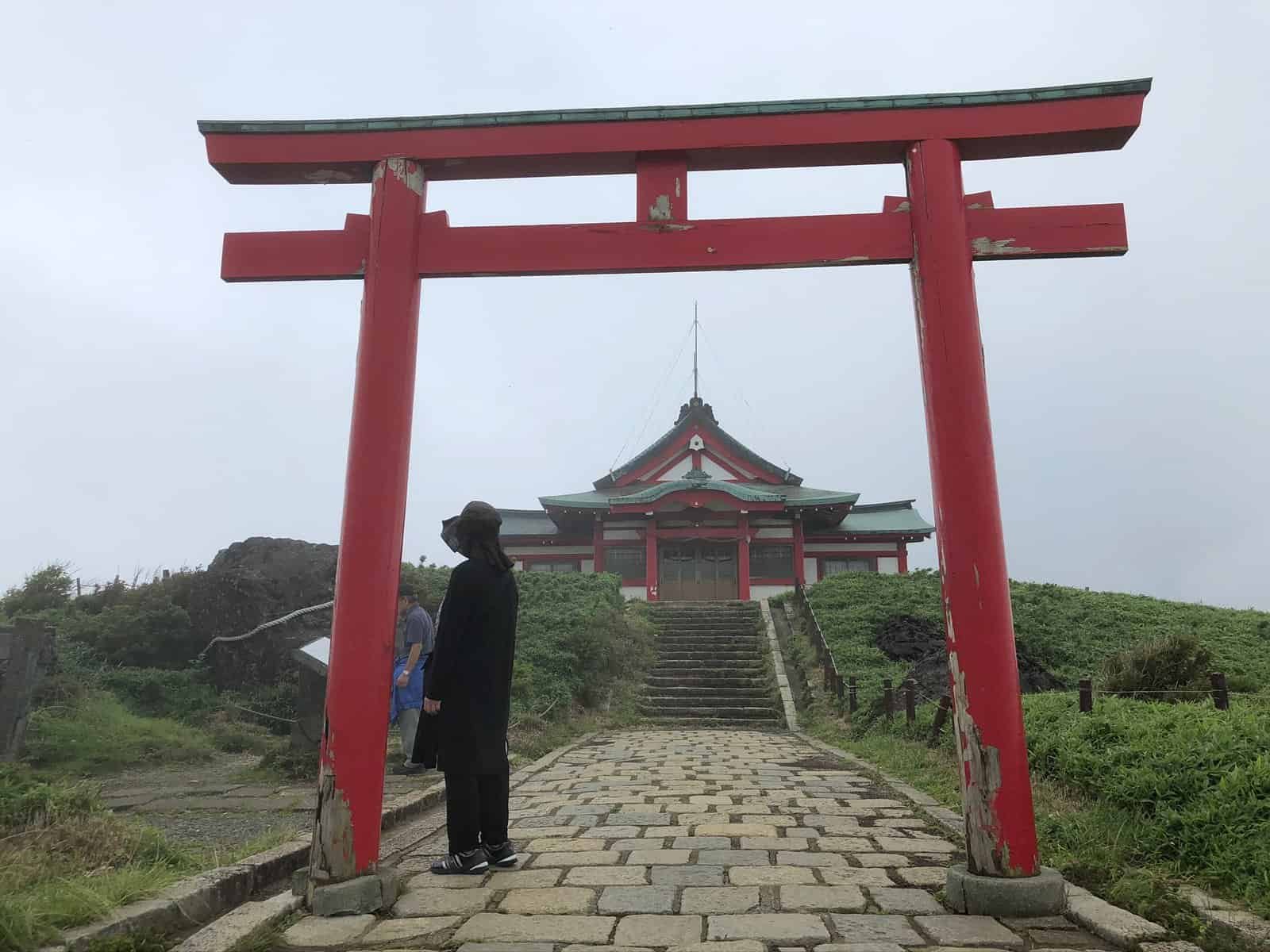
This solitary mountain shrine, marked by a bright red torii gate, sits on top of a windy, grassy plateau. On clear days you get sweeping views across Hakone all the way to Mt Fuji. On overcast days, thick mountain mist rolls in and wraps the peak in a mystical atmosphere you won’t forget, although you still wish you could have seen Mt. Fuji.
How to Get There?
Going from Hakone Yumoto Station, take the J04 Izu Hakone Bus for 50 minutes to Hakone-en bus stop. It costs ¥1,600 one-way. From Hakone-en bus stop, take the Hakone Komagatake Ropeway up to Komagatake Chojo Station. This takes about 7 minutes and runs from 9am to 4:30pm every day. Tickets are ¥1,000 one-way or ¥1,800 for a round trip. Good to know: Neither this bus or the Ropeway is covered by the Odakyu Hakone Freepass.
Is it Worth It?
Even when the Mt. Fuji view from Lake Ashi is blocked by clouds, there are days when taking the Ropeway to the summit of Mount Komagatake at 1,357 metres, you can get a second chance to see Mt. Fuji. You won’t always get lucky, as we experienced during our trip. However, the swirling mists at the top make for some interesting photos as visibility can be only several metres ahead.
Mishima Skywalk: The Ultimate Southern Fuji Perspective
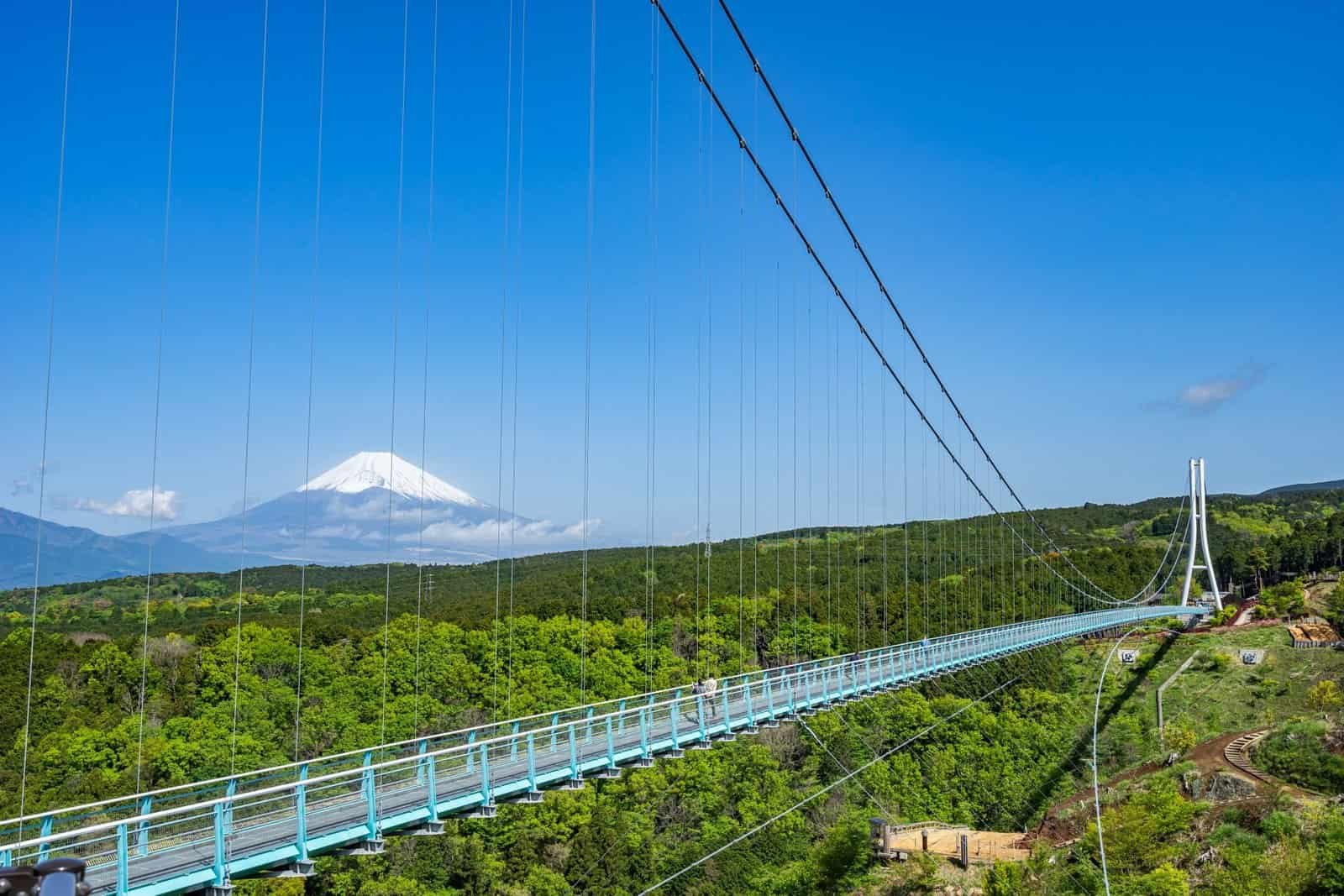
Spanning 400 metres, Mishima Skywalk is Japan’s longest pedestrian suspension bridge. Positioned on Mount Fuji’s southern slopes, it’s a great stopover when travelling between Hakone and the Shinkansen line at JR Mishima Station, as it offers a dramatic, wide-angle panorama from the peak down to Suruga Bay. Admission is ¥1,100 for adults.
How to Get to Mishima Skywalk
From Lake Ashi: Take the Tokai Bus (Route N65) from Moto-Hakone-ko to the Mishima Skywalk stop. The ride takes roughly 20 minutes, costs ¥770, and is covered by the Hakone Freepass.
Is Mishima Skywalk Worth It?
Yes, if you’re looking for more panoramic photos of Mt. Fuji, especially on a clear morning before you head back to the Shinkansen. There’s also a zipline course that runs parallel to the bridge if you’re looking for a bit more action!
Catching the Best View of Mt. Fuji From Tokyo
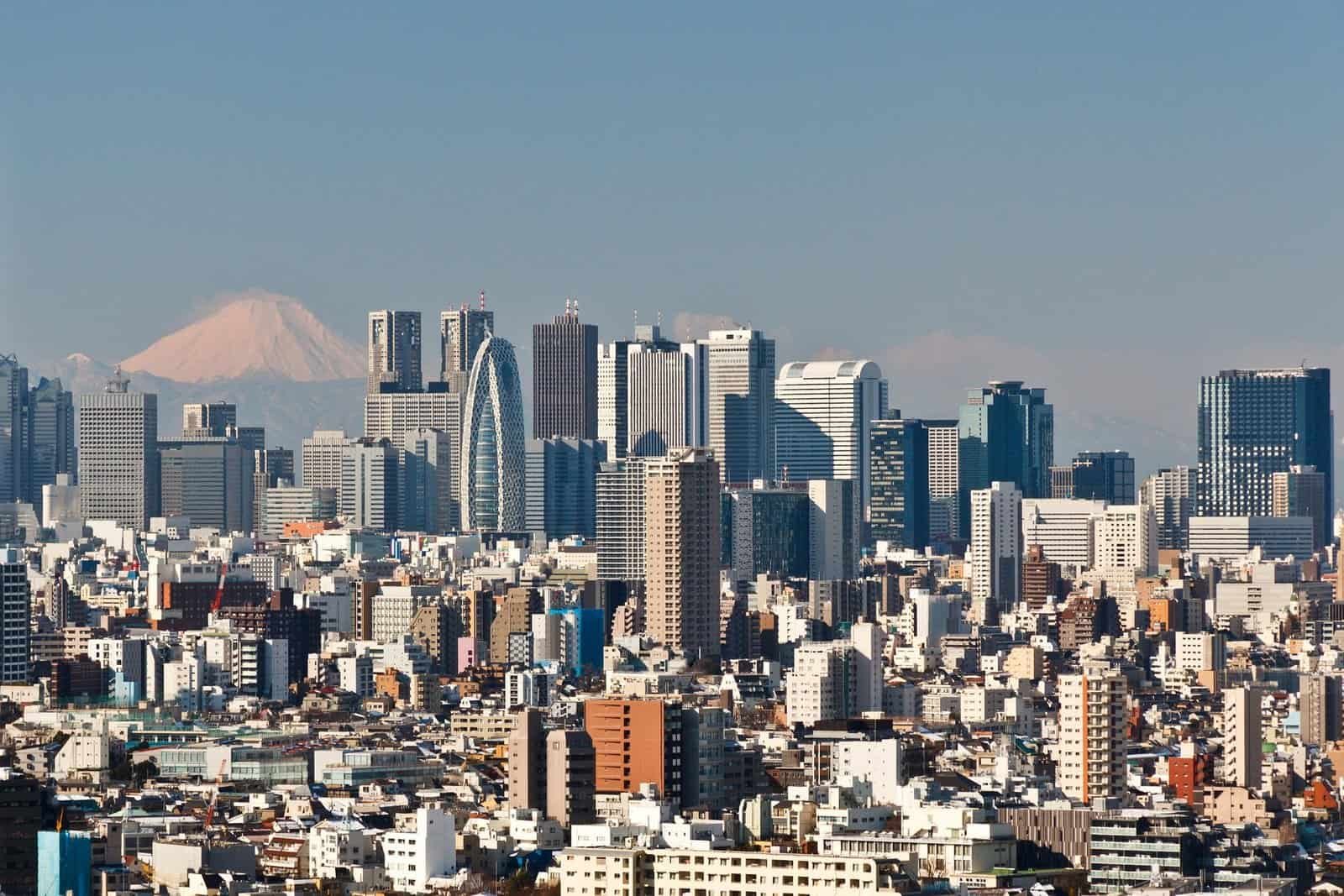
On clear days (especially between November and February), you can spot Mount Fuji from several high-rise buildings in Tokyo. Here are two observation decks where you can get a dramatic skyline view with Fuji standing tall in the distance.
Tokyo Metropolitan Government Building (Shinjuku)
For a high-angle view in Tokyo that is easy to access, the Tokyo Metropolitan Government Building (TMGB) in Shinjuku is the go-to option. Rising 202 metres above the city, the observation decks from the 45th floor, you’ll see skyscrapers and the city stretching out toward Mount Fuji to the west.
How to Get There
- By Train/Subway: Take the Toei Oedo Line directly to Tochomae Station, or take a 10-minute walk through the underground concourse from JR Shinjuku Station’s West Exit.
- Admission & Hours: Completely Free. The South Deck is open daily from 9:30 AM to 10:00 PM (last entry 9:30 PM).
Is It Worth Visiting?
Yes. Because it costs nothing and sits right in Shinjuku, it is an effortless addition and even if there is haze, you’ll still get to enjoy a fantastic view of the city.
Shibuya Sky (Shibuya Scramble Square)
High above the Scramble Crossing, Shibuya Sky provides an open-air, 360-degree rooftop view that comes in a modern setting. From the western edge of the open-air deck (SKY STAGE), you can get a good view of Mount Fuji on clear days.
How to Get There
By Train: Head to Shibuya Station (JR Lines, Tokyo Metro, or Tokyu Lines). The entrance connects directly to the station via the Shibuya Scramble Square building elevators up to the 14th floor.
Admission & Hours: Open daily from 10:00 AM to 10:30 PM. Adult tickets cost around ¥2,700 to ¥3,400 depending on the time slot and booking channel.
Is It Worth Visiting?
Yes, if you book in advance. It offers one of the best open-air photography experiences in Tokyo, though you do have to pay for entry and plan your time slot ahead, especially for the golden-hour sunset tickets.
The 25th-floor observation lounge at the Bunkyo Civic Center is famous among landscape photographers for framing Mount Fuji directly behind the Shinjuku skyscraper cluster. However, the deck is currently undergoing major renovations through late 2026, so stick to TMGB or Shibuya Sky for urban viewing until it reopens.
Planning Your Timing & Insider Strategies
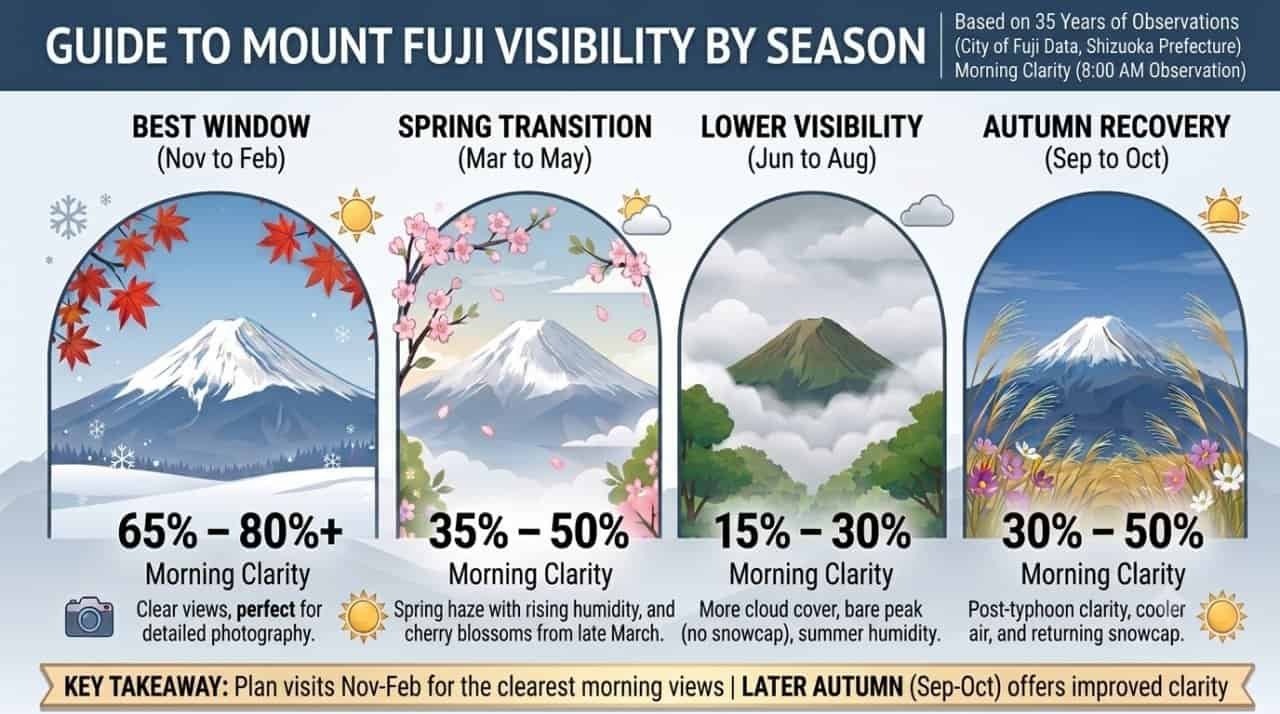
Which Months is Mt. Fuji Most Visible?
When it comes to spotting Mount Fuji, season is everything. Fuji City Hall has been logging daily visibility data for 35 years, and the numbers are clear. Trying to see Fuji in winter (December to February) is your best bet, with clear morning views on 70-80% of days. Makes sense when you think about it, as the cold, dry winter air strips the moisture out of the atmosphere, so you get crisp blue skies and Fuji’s snow-capped peak standing out in full view.
- Best Window (November to February): Late autumn through winter is the gold standard. October and November bring colorful autumn foliage paired with rising visibility as the weather cools, while December and January provide near-guaranteed clear conditions.
- Transitional Months (March to May): Spring brings beautiful cherry blossom views, but rising humidity and spring haze reduce full visibility to around 30–40% of days. You can still catch incredible views, but getting the morning timing becomes critical.
- The “Vanishing” Months (June to August): Summer is the most challenging time to view Mt. Fuji. The rainy season (Tsuyu) and higher humidity mean the mountain is hidden in clouds or haze up to 80% of the time. If important to your photo, remember that the snow cap melts completely by mid-summer.
Key Takeaway: If seeing Mount Fuji is something you really want during your Japan itinerary, aim to plan your visit between November and February.
Beating the Clouds and Crowds for the best Mt. Fuji Views
Even during months with expected higher visibility, remember that Mount Fuji has its own microclimate, and you’ll often see clouds forming around the mid-slope area by late morning. We give a few tips below on how to improve your chances of getting a better photo of Fuji from your trip.
The Early Bird Catches the Worm: In every season, early morning (between 6:00 AM and 9:00 AM) is when there is more likely to be less or zero cloud cover. The air is still cool and stable, and the early light hits the peak before clouds develop.
Stay Overnight in the Area: Day-trippers from Tokyo usually arrive in Kawaguchiko between 10:30 AM and 11:30 AM. So along with more clouds, you have a lot more people in the same locations all trying to take their own perfect photo or selfie. By staying overnight, you can shoot at sunrise with better visibility and fewer crowds. It also means you get a second chance if Mt. Fuji remained hidden the first day.
Check Live Cams & Visibility Forecasts Before Traveling: Don’t travel without checking local conditions first. Even if the weather in central Tokyo is bright and clear, the Fuji Five Lakes region may be completely overcast. Check real-time webcams (such as the Fujigoko Live Camera Network) or visibility forecasting tools like SeeMtFuji, the night before and in the morning before leaving your hotel or accommodation.
Have a Pivot Plan: Remember that Mount Fuji is visible from multiple sides. So while there may be clouds blocking the view at Lake Kawaguchiko on the north side, there may be good visibility from the south side in Fujinomiya or Hakone. By being flexible and adjusting where you go, you may still have a good chance to still see Fuji that day.
Where to Stay to Get the Best Views of Mt. Fuji
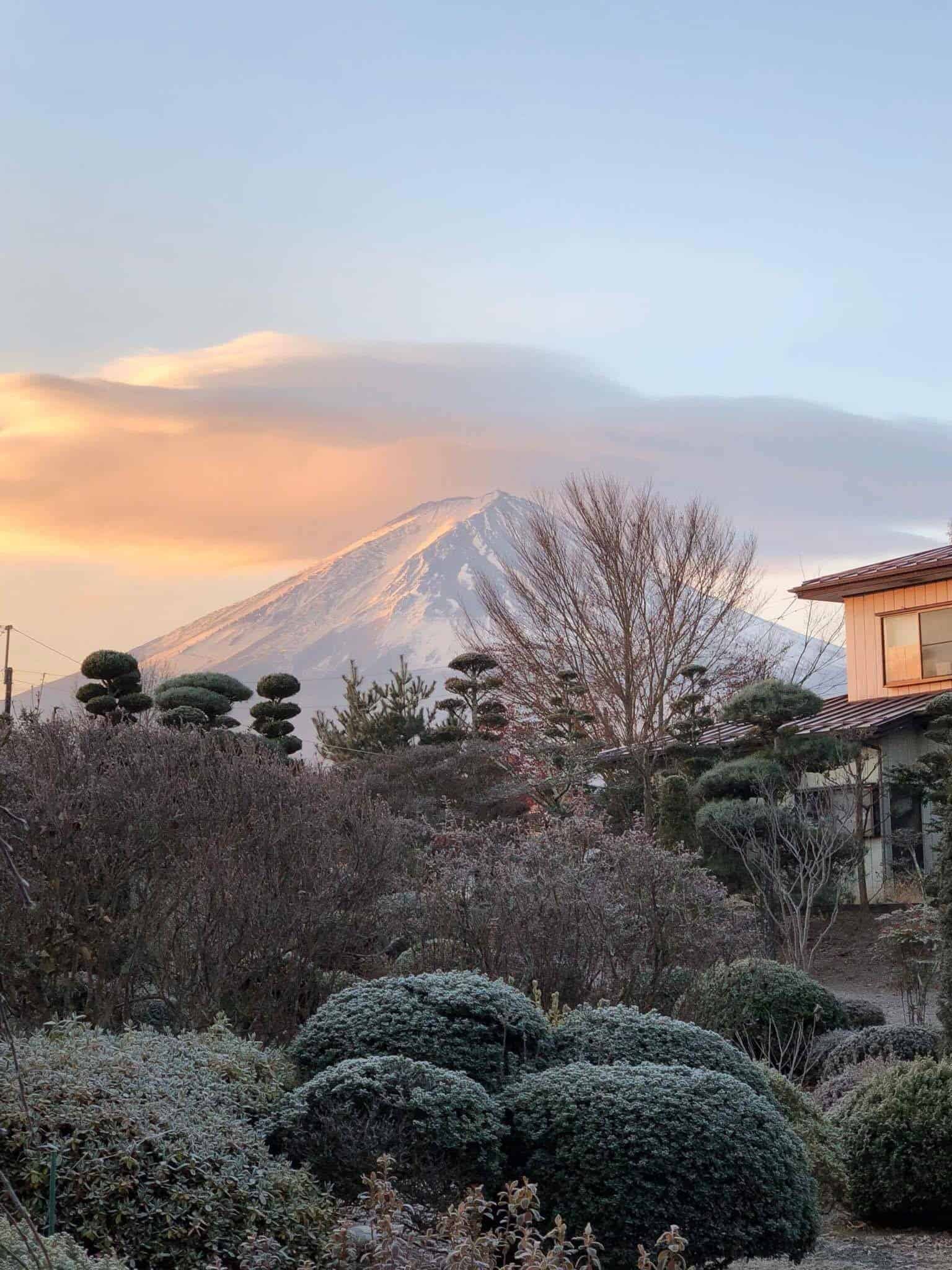
Private holiday rentals like Kawaguchiko Superba Vista Annex are ideal for families or groups who want to stay together instead of splitting into separate hotel rooms. If you are searching for where to stay to get the best view of Mt. Fuji, this spacious multi-bedroom home offers fantastic, direct Mt. Fuji views from the property. About ten-minutes walk from Kawaguchiko Station, it has full self-catering facilities so your group can cook, socialise, and unwind in comfort. We visited in December and found it a convenient, and comfortable base for exploring the Fuji Five Lakes region.
Honorable Mentions & Photo Etiquette
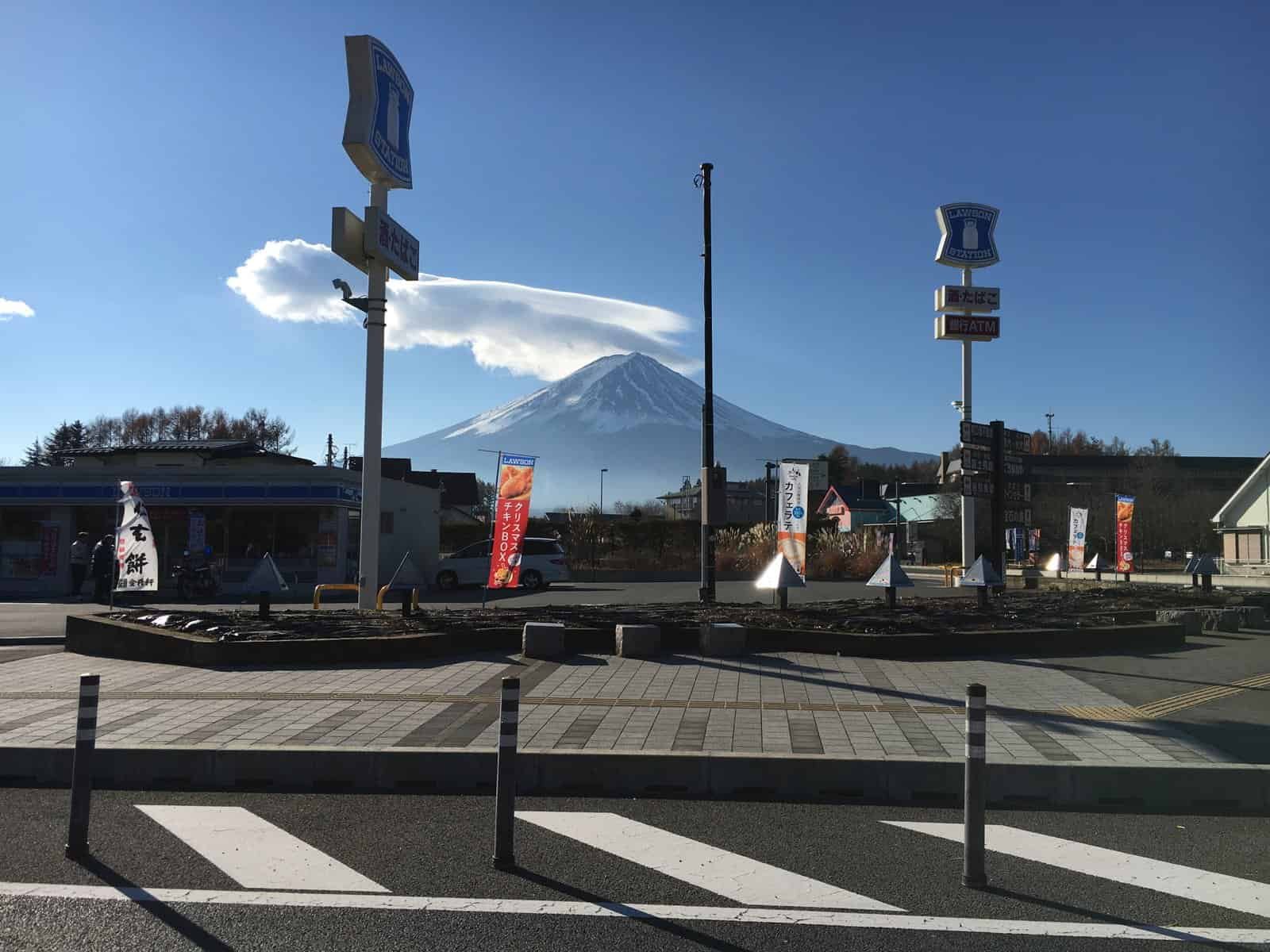
These three locations have gone viral for their Mt. Fuji views, however I advise skipping the second two. If you choose to visit the first one, please take care to respect local residents and businesses, and don’t step onto the road for photos.
1. Fujiyoshida Honcho Street (Hikawa Clock Shop)
- The View: Retro Showa-era storefronts and lanterns framing Mount Fuji straight down the avenue.
- Safety Notice: It’s on a narrow road with traffic. Never step into the street for photos.
- Pro Tip: Stay on the pavement and use a telephoto lens (85–200mm) to safely compress the background, making Fuji look massive.
2. Lawson Convenience Store (Kawaguchiko Station)
- The View: The shot of Mount Fuji looming over a blue Lawson storefront has been both on socials and then in the press due to overtourism complaints.
- Etiquette Notice: Heavy overcrowding led to several measures to stop people from trying to take photos at the Lawson.
- Pro Tip: For a nearly identical shot without crowds, walk 10 minutes to the Lawson Fujikawaguchiko Yakubamae branch.
3. Oshino Hakkai
- The View: Mt. Fuji with traditional thatched-roof cottages and quaint waterwheels in the foreground.
- Best For: A stop-off on day tours between Kawaguchiko and Yamanakako.
- What to Expect: So many sightseeing coaches offloading international tourists it looked like a theme park. We even got asked if our photos could be taken!
Frequently Asked Questions
Is it better to stay overnight or attempt a day trip from Tokyo?
While day trips via highway bus or Shinkansen are entirely feasible, staying at least one night on the north shore of Lake Kawaguchiko or in a traditional Hakone ryokan drastically increases your odds. A multi-day stay gives you multiple consecutive morning windows to catch clear weather if your first day gets clouded out.
Do I need to rent a car to see Mount Fuji?
No. The primary viewing hubs, (Lake Kawaguchiko, the Fujinomiya area, Hakone, and Mishima), are exceptionally well-connected by express trains, highway buses, and local sightseeing transit networks. Renting a car can be more stressful due to regional traffic especially on the weekend and navigating unfamiliar Japanese parking rules.
Which season offers the highest chance of a clear view?
Late Autumn and Winter. Specifically the months between November and February consistently offers the clearest atmospheric conditions, lowest humidity, and most picturesque snow caps. Summer (July and August) is statistically the worst season for visibility due to heavy haze and persistent cloud cover.
To discover more local highlights and Mt Fuji Views, our full Mishima City and Hakone travel itinerary covers these areas in more detail, plus touches on Shuzenji. For those who would like to see more of our travel related posts in Japan, we’ve got you covered in our Travel section.
All information is accurate as of the date of publishing the article, but we would recommend checking all the relevant websites for the latest information.
For disclosure, this is sponsored content, however the opinion given here are entirely our own from our experience in Japan.

