
Of all the seasons observed in Japan, the Sakura blooming period is the most captivating, and Tokyo Sakura provides the best experience of this phenomenon.
Every spring, the cherry blossoms cover the parks and gardens of the busy city in delicate layers of pale pink and white hues. This is more than just a spectacular sight; it is an integral part of Japanese culture, which goes beyond sightseeing spots where you’re more likely to come across overcrowded areas with many tourists.
This article is not just a list of locations but insights gathered by someone who has truly weathered the ‘Sakura Chaos’ and discovered the secret Tokyo Sakura magic within Hanami.
Whether you are a first-timer or a repeat visitor, these tips will help you navigate Tokyo’s most beautiful but busiest time of the year like a local.
Tokyo Sakura Predictive Planning: Timing is Everything
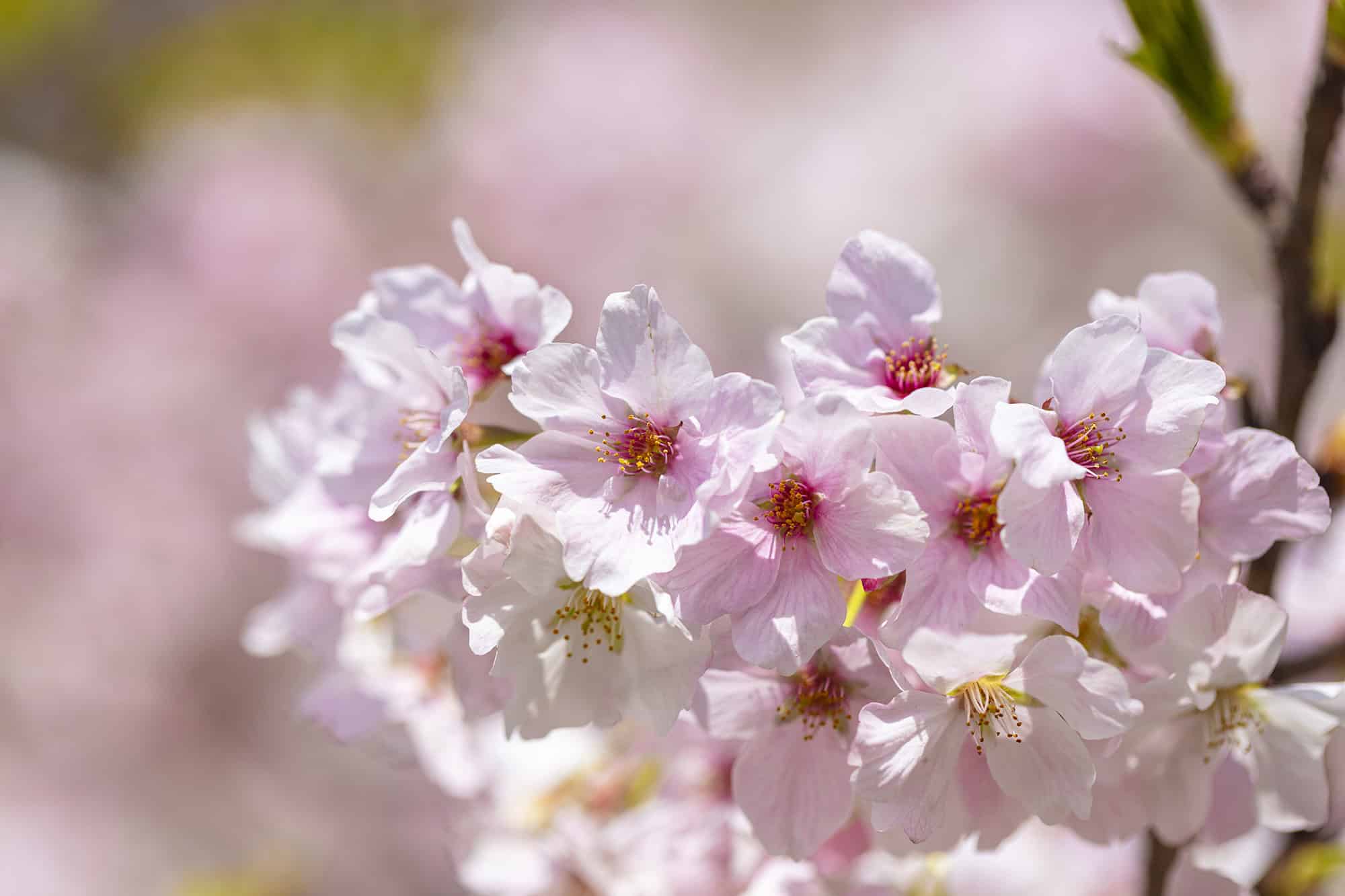
The most important element of any successful adventure is timing. In my experience of living in Japan, I’ve found that blooms certainly have no regard for human schedules.
The Tokyo Sakura season is remarkably short, usually lasting about two weeks from opening to the actual drop of the blossoms.
- Tokyo Sakura Forecast: The flower petals normally start being revealed in late March and reach their peak in the first week of April. I recommend regularly checking the Japan Meteorological Corporation’s updated cherry blossom forecast.
- Peak Bloom vs. Full Season: “Mankai (full bloom)” usually lasts a week. During the Mankai period, you’ll be astonished at how different it is from the early stages of sakura bloom. Note that the rain can shorten the season.
- Flexibility in Your Travel Plans: One time, I arrived too early and saw only the beginning of the sakura bloom. If possible, try to have flexibility in your schedule to give yourself the best possible chance to view the peak.
- Early Bloomers vs. Late Bloomers: Some trees are early bloomers, while others tend to bloom late, such as the Kawazu-zakura, which starts blooming in early February, whereas the Yaezakura is typically in bloom from mid-April to late April.
The Heart of Hanami: Culture & Etiquette
What is Hanami Really About?
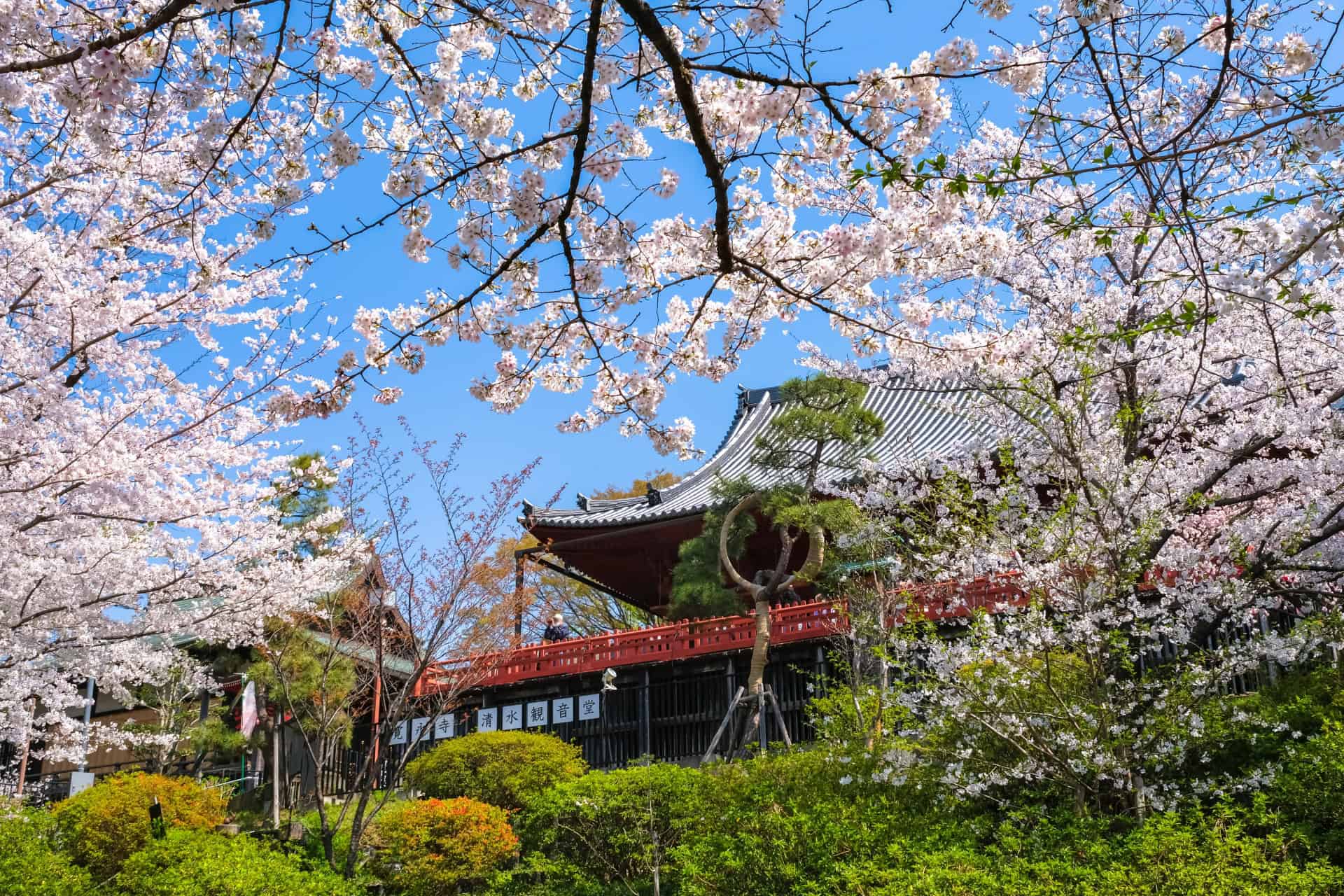
Hanami literally translates to “flower viewing,” a usefully vague term for a Japanese tradition that stretches back centuries, far weightier than simple flower gazing.
It’s an appreciation for ‘mono no aware’, a Japanese phrase describing the awareness of the impermanence of things. This is because the flowers are only in bloom for such a short time. Thus, they are a metaphor for the fleeting nature of life itself.
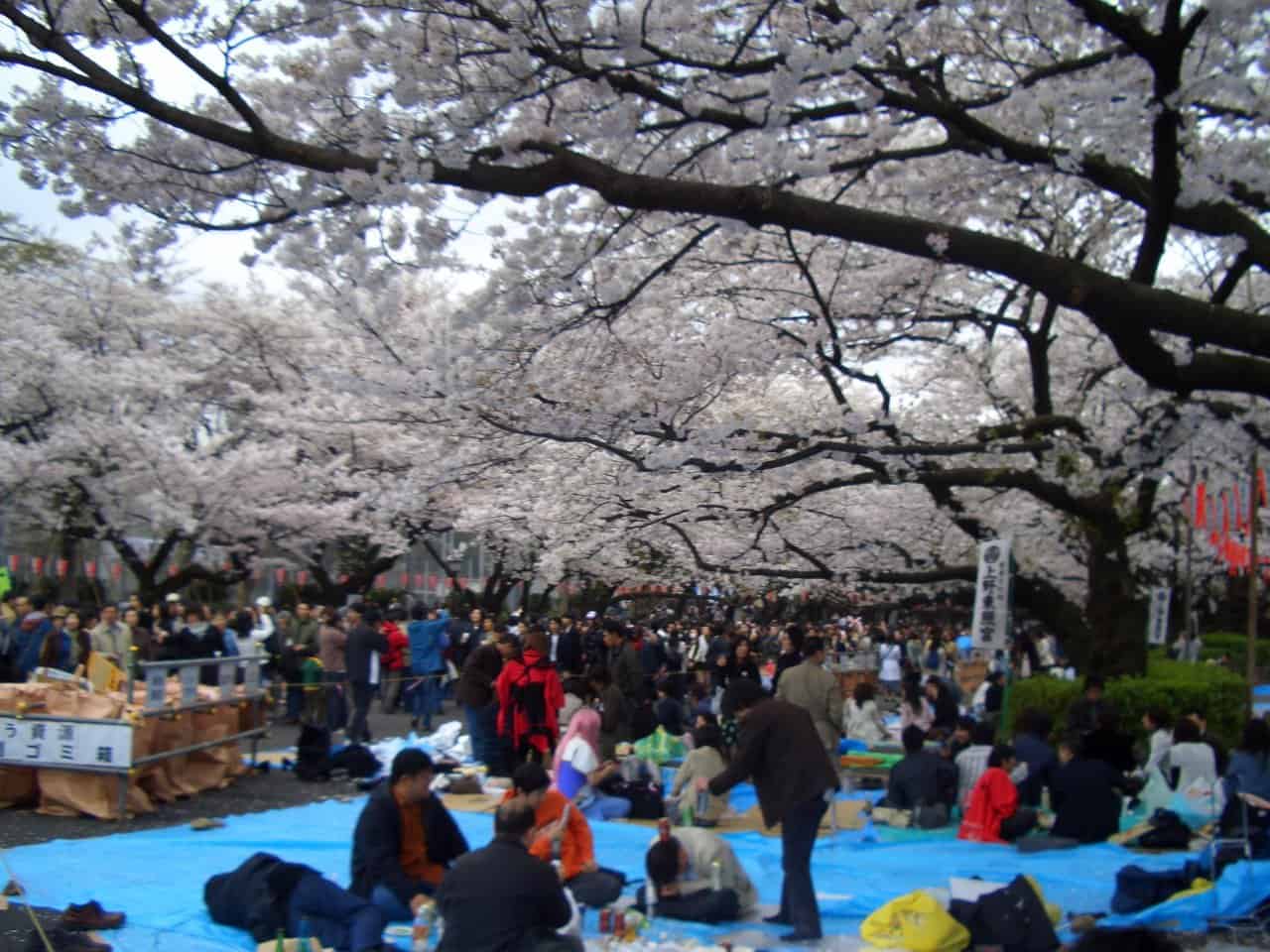
When it comes to Hanami, you’ll find it is the ultimate social equaliser as office workers are seated with their corporate executives in business attire on a blue tarp, right next to young students and families in groups. Hanami is the time to enjoy the “here and now” moment” whether you’re sharing home-cooked Hanami bento boxes with your family or Sakura-flavoured sweets from a convenience store with your friends or co-workers.
The Golden Rules of Hanami Etiquette
To enjoy the Tokyo Sakura experience like a local, you should follow these “Golden Rules” when visiting the park. In Japan, it is highly recommended that you maintain harmony, or “Wa,” as parks can often become crowded, making it essential to observe these “Golden Rules.”
- Respecting Nature (Look, Don’t Touch): This is Rule Number One. Cherry blossoms are so delicate; you should never consider hanging bags from trees or shaking a tree to get a “petal shower” look in a picture. I’ve experienced this before, when park rangers approached visitors and told them to stay back. It’s always a good idea to keep a certain distance.
- “Blue Sheet” Picnic Protocol: If you are planning on having a sit-down, you will need a blanket or a blue plastic tarp. Due to limited space, try not to take a large area if there are only two of you. People usually lay out their blankets very early in the morning at Yoyogi or Ueno Park. No park will allow you to keep a spot for several hours or more without attending, so make sure someone stays with your blanket.
- Alcohol and Park-Specific Rules: Not all parks operate under the same rules. Shinjuku Gyoen has a zero tolerance policy for alcohol, and the park staff inspect bags at the gate to maintain a peaceful atmosphere. If you’re looking for a more party-like vibe, choose parks like Yoyogi and Ueno, as they allow social drinking and feel more festive. You should always check the specific park’s policy before you visit.
- Extreme Trash Management: The volume of trash sometimes exceeds the capacity of the park bins in high season. Often, park employees remove bins entirely to promote the “carry-in, carry-out” principle. I always keep a few extra plastic bags in my pack. If you see the bins are full, please don’t pile trash beside them; carry it back to your hotel or home.
- General Courtesy & Noise: When gathering with your friends and family under blooming Sakura trees, you should keep your voice and music at a respectful level. Everyone is there to enjoy a pleasant Hanami atmosphere, so be mindful not to disturb those around you.
Tokyo’s Top Sakura Spots & Hidden Gems
I’ve spent several Tokyo Sakura seasons immersed in cherry blossoms and have developed a mental map of the locations to go and those to avoid to maximise the Hanami experience in Tokyo.
The following are three must-visit Tokyo Sakura locations, followed by one of the local gems that tourists often miss, which I highly recommend based on my personal experiences.
Must-Visit Famous Spots:
Shinjuku Gyoen National Garden
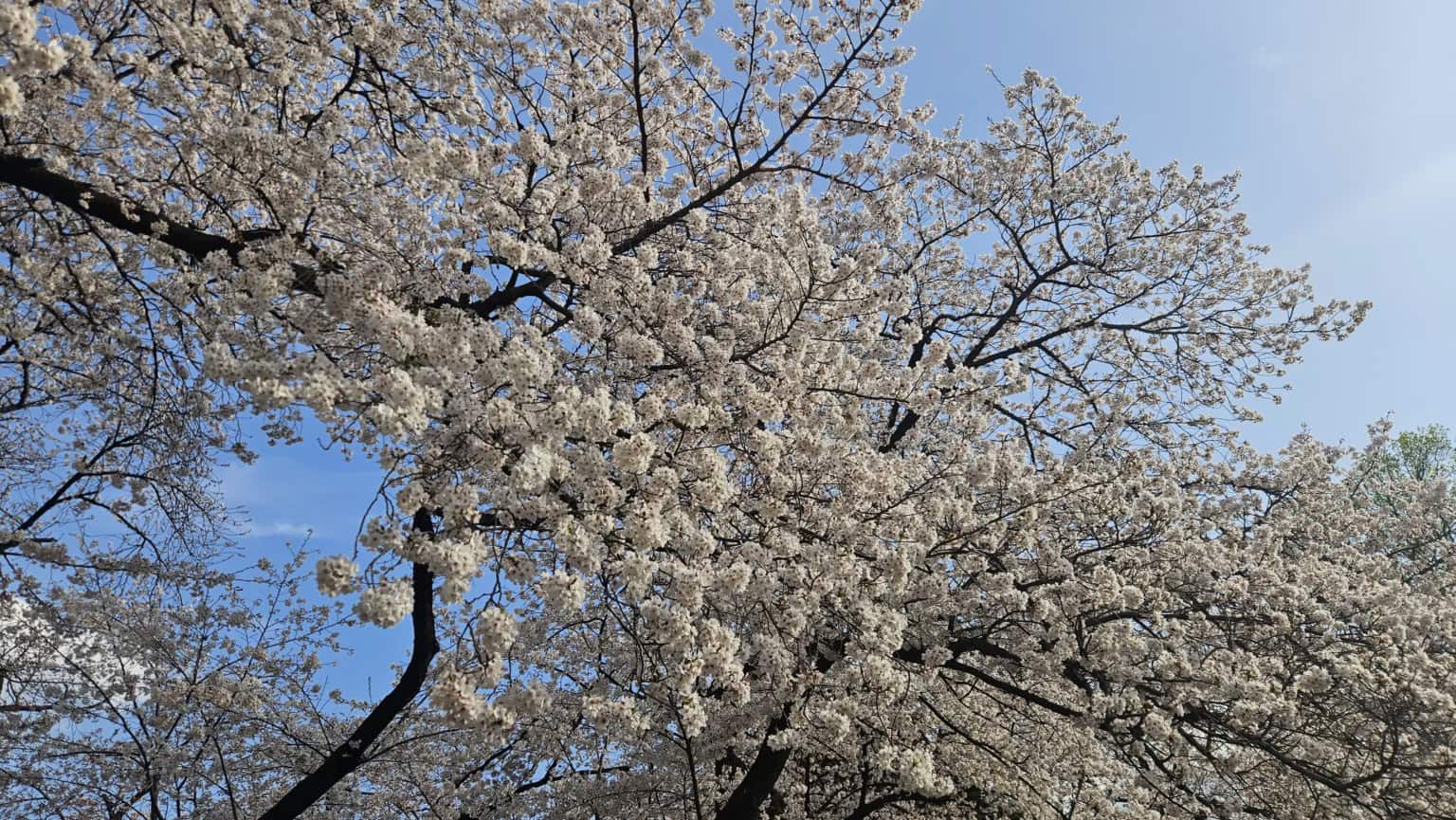
Just a short stroll away from busy Shinjuku Station, this urban escape is my favourite spot to enjoy a refined Hanami.
Unlike other parks, Shinjuku Gyoen has a nominal entry fee, and the consumption of alcoholic drinks within the park premises is prohibited, which makes ideal for a family gathering or for people interested in the appreciation of flowers.
The garden is an artwork of landscape architecture, incorporating three different styles: “Japanese Traditional, English Landscape, and French Formal.” During the Tokyo Sakura season, a sea of pink fills the ‘English Landscape’ area, offering ample space to spread a picnic mat.
Chidorigafuchi Moat (Greenway)
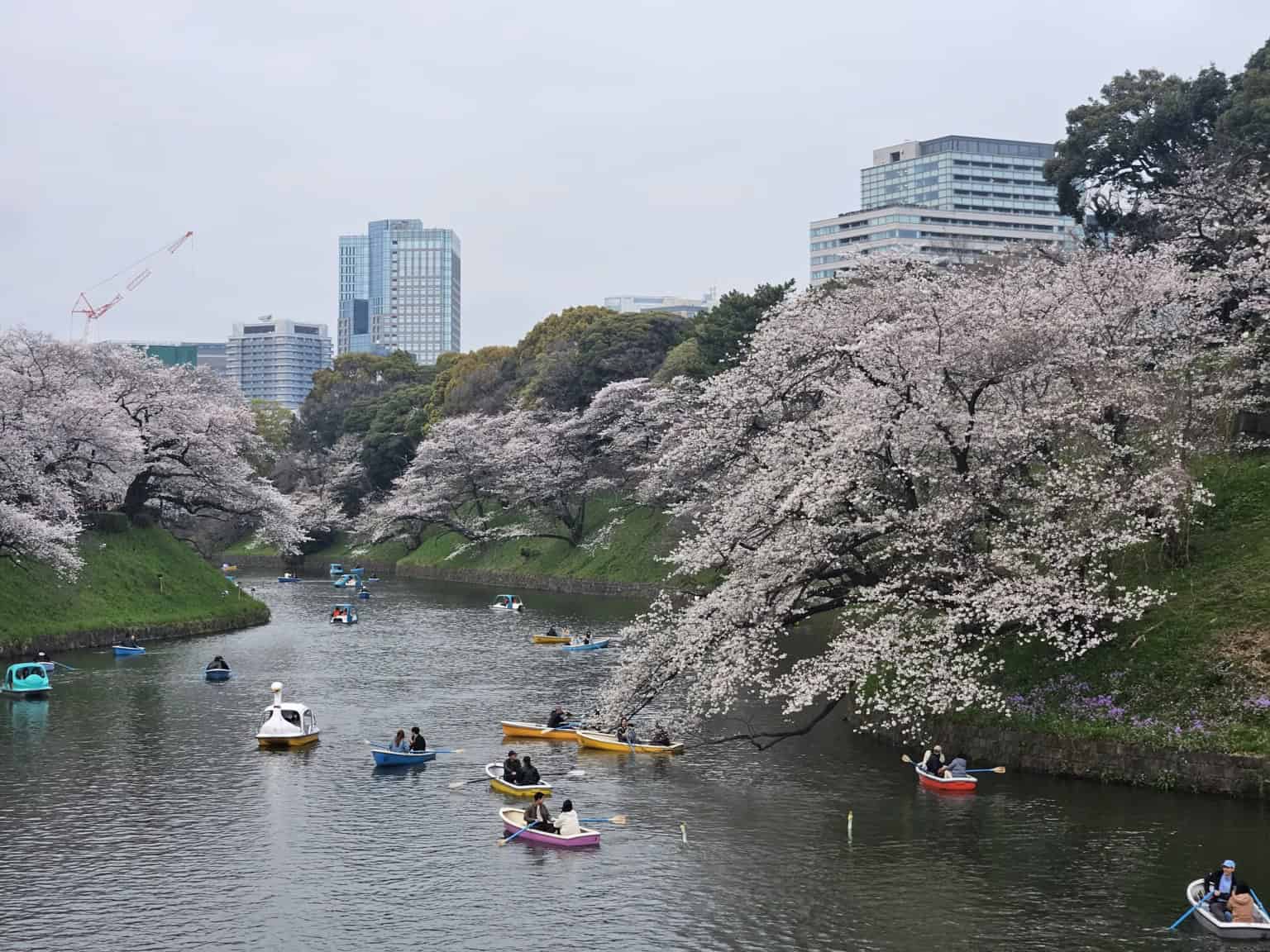
In the north-west part of the Imperial Palace, there is the Chidorigafuchi Moat Greenway (Walkway). This is possibly one of the most photogenic spots to see Sakura in Tokyo, as many cherry blossom trees lined along the moat create the breathtaking Tokyo Sakura views.
One of the most in-demand things to do in this spot is to rent a rowboat. To avoid waiting in line for quite some time, you should get to the rental boat site early in the morning before it opens. Or you can book a boat in advance, but note that this online reservation will cost 10,000 yen per hour per boat for up to three people.
A nearby place to see beautiful Tokyo Sakura includes Kokyo Gaien National Garden, which is free to enter. If you’re interested to know more about Kokyo Gaien, why not check it on my blog, max on the move?
Sumida Park
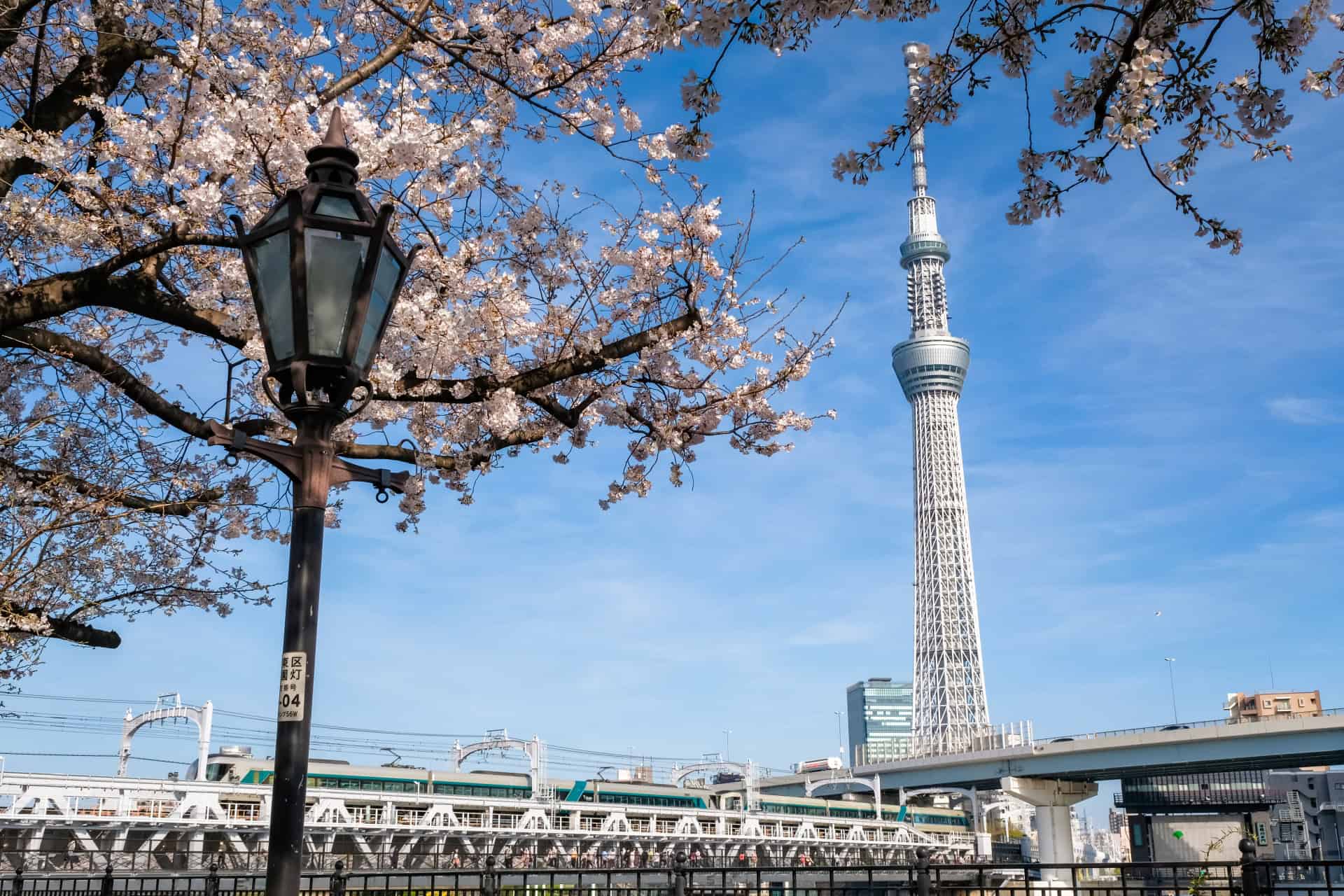
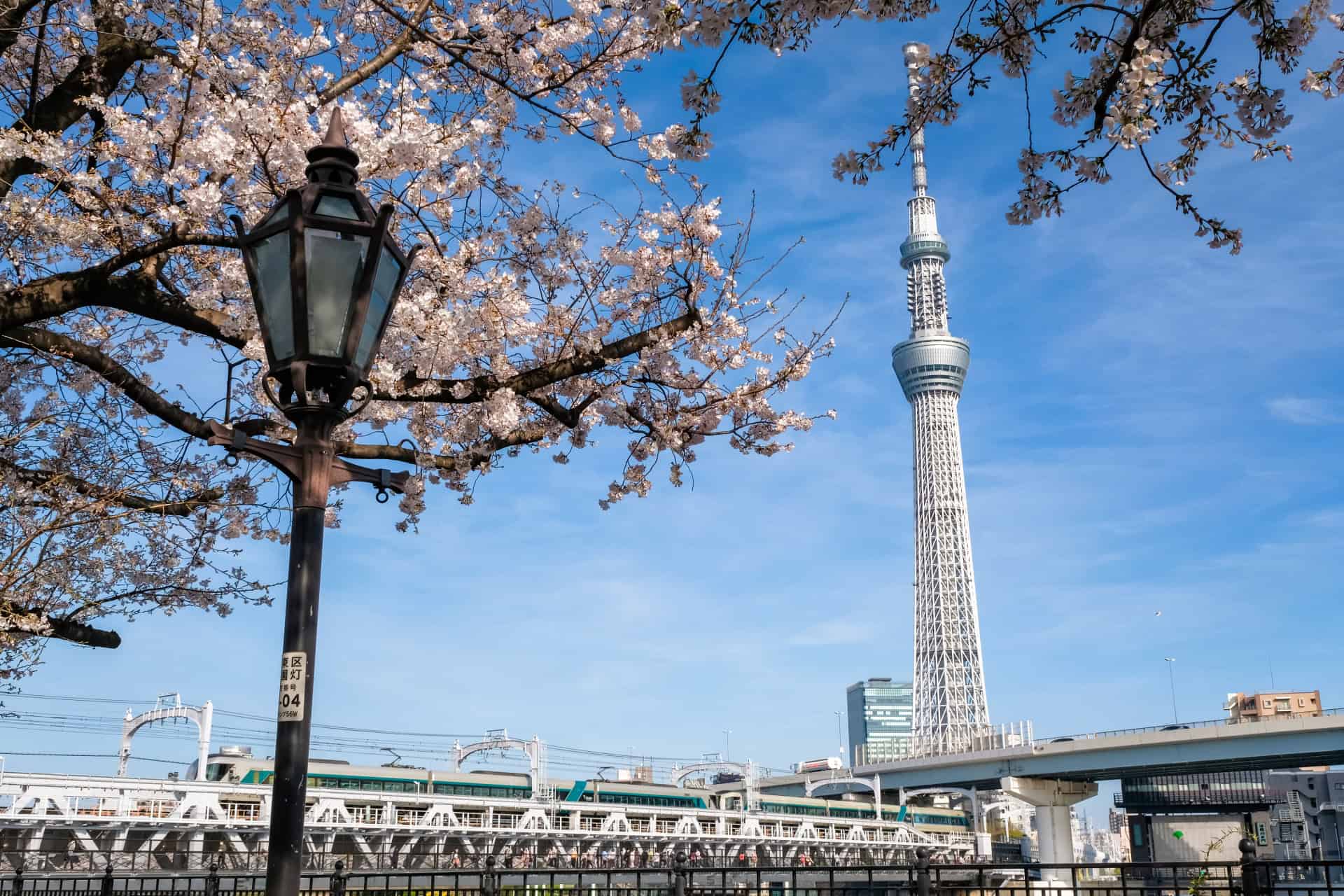
Across the Sumida River from historic Asakusa lies Sumida Park, offering perhaps Japan’s greatest “New & Old” contrasting vista. This section of the river features hundreds of cherry blossom trees, which frame Tokyo Skytree, a popular modern landmark, perfectly in the backdrop.
Last year, when my fiancé and I visited this area, we rented kimonos for the day to experience the traditional Japanese Hanami and we had the best Tokyo Sakura experience.
If you take a Hanami stroll by the riverbank, you’ll see street vendors selling “seasonal snacks,” which makes the ambience quite festive, and you definitely feel more open than the gardens in Shinjuku around here.
To capture your “postcard perfect” shot, the best time will be in the afternoon or after the sun sets, when the Skytree gradually lights up in different colours.
Local Favourites & Lesser-Known Spots:
Inokashira Park
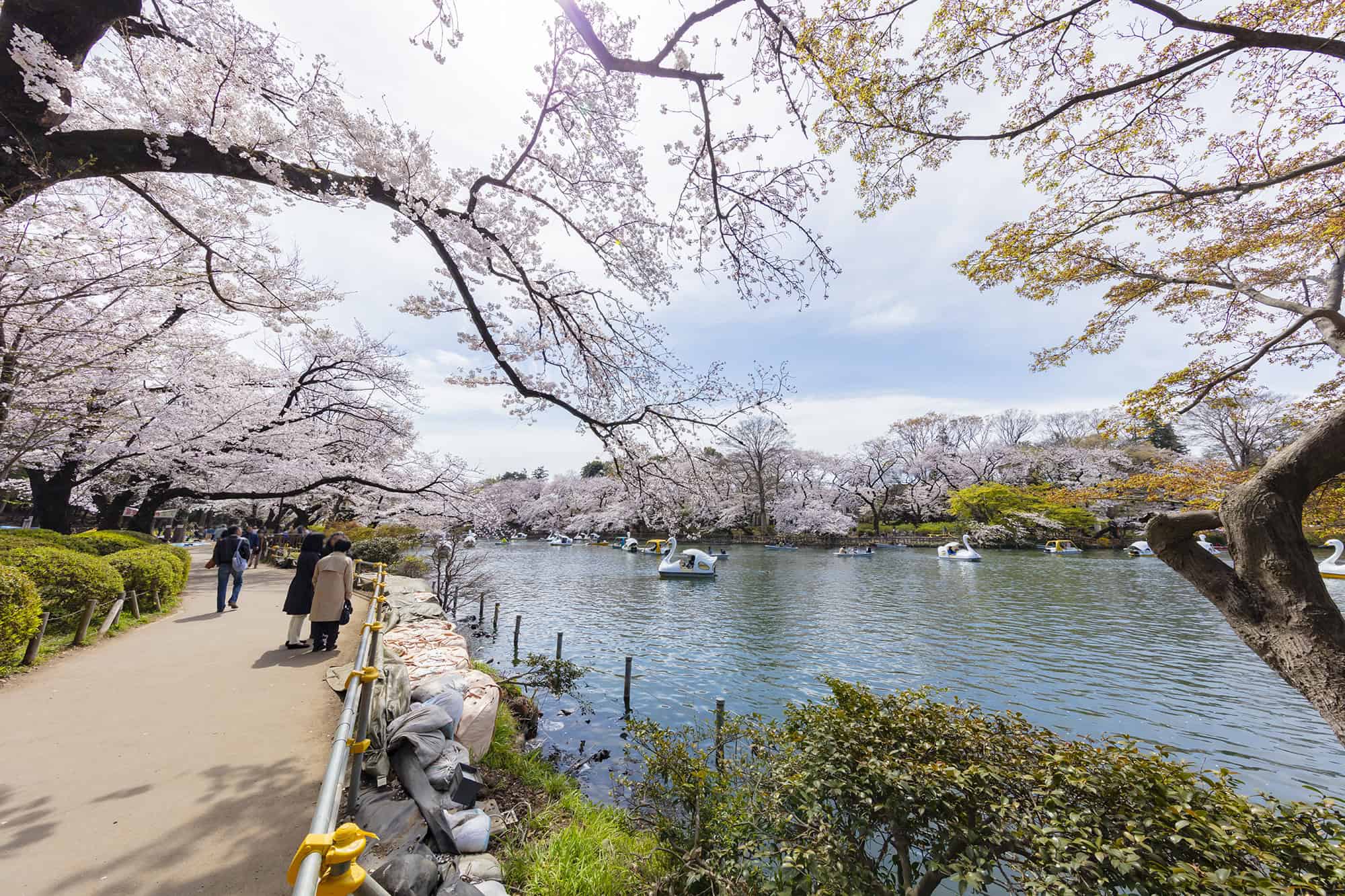
This is my personal favourite, and it’s located in the trendy Kichijoji district, which is west of Tokyo.
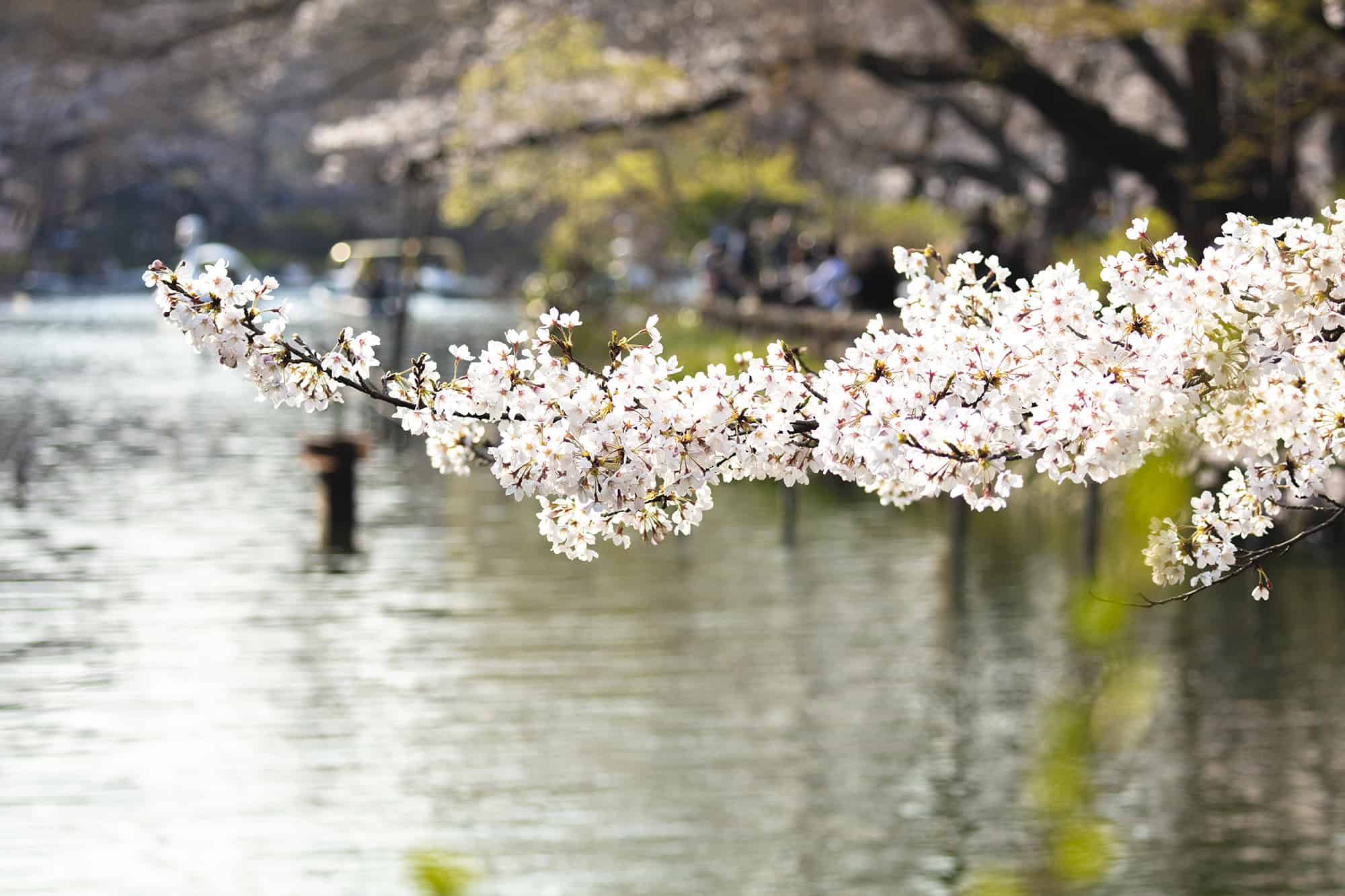
This park is centred around a pond, where the cherry blossom trees lean low over the pond, creating a beautiful mirror-like reflection.
The atmosphere at Inokashira Park is truly different from the bustling crowds of Ueno Park or Yoyogi Park.
Here, you’ll spot more local residents enjoying the Tokyo Sakura blossoms; some having picnics in small groups with friends and family, others talking while enjoying a drink or taking a swan-shaped puddle boat. You might even see some musicians playing.
Tokyo Sakura Famous Must-Visit Locations Compared
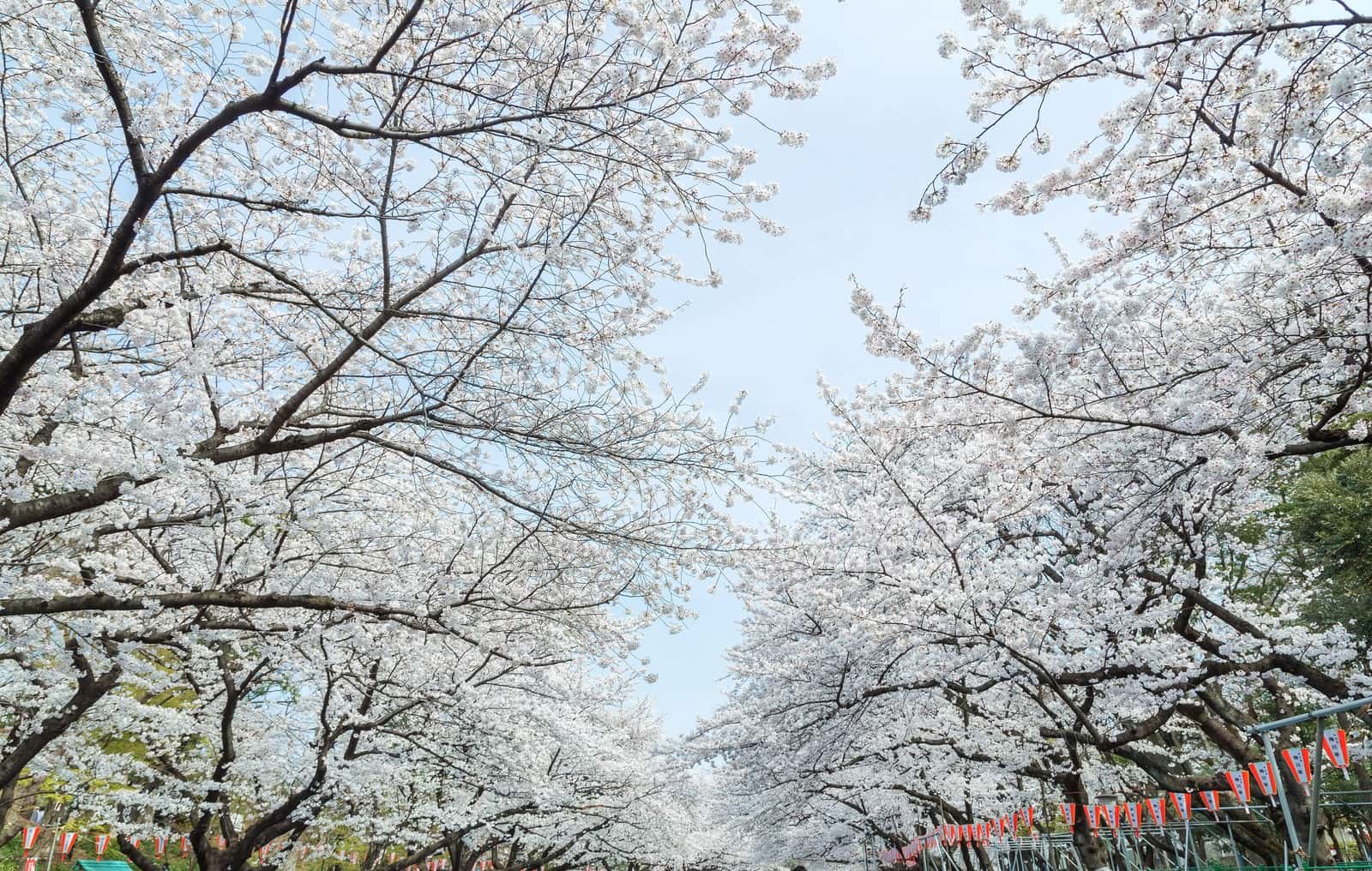
| Hanami Spots | Best For | Vibe & Atmosphere | Unique Feature |
| Chidorigafuchi Moat (Walkway) | Iconic Views & Boat Rowing | Dramatic, historic, and breathtaking | Hundreds of Sakura trees line the moat; stroll along the walkway or see the best view from a rowboat. |
| Meguro River (Promenade) | Yozakura & Sakura Canopy | Chic, festive, and amazing | Sakura tunnel stretches over 4 km. especially popular around Nakameguro with magical night illuminations. |
| Shinjuku Gyoen | Photography & Landscape | Peaceful, refined, and picturesque | No alcohol allowed; features over 1,000 Sakura trees of different species; a very long blooming season. |
| Sumida Park (Near Skytree) | Cityscapes & Evening Walks | Traditional, vibrant, and scenic | Perfect views of the Tokyo Skytree framed by cherry blossoms; great street food stalls & boat cruises |
| Ueno Park | Festival & Picnics | Celebrated, lively and spectacular | Home to famous cultural and historical attractions with over 1000 Sakura trees; ideal for exploring art, history & nature. |
| Yoyogi Park | Activities & Parties | Dynamic, bustling and splendid | Sprawling open lawn; relaxation, outdoor activities & parties in a diverse, contemporary social atmosphere. |
Strategies for Stress-Free Sakura in Tokyo: Outsmarting the Crowds
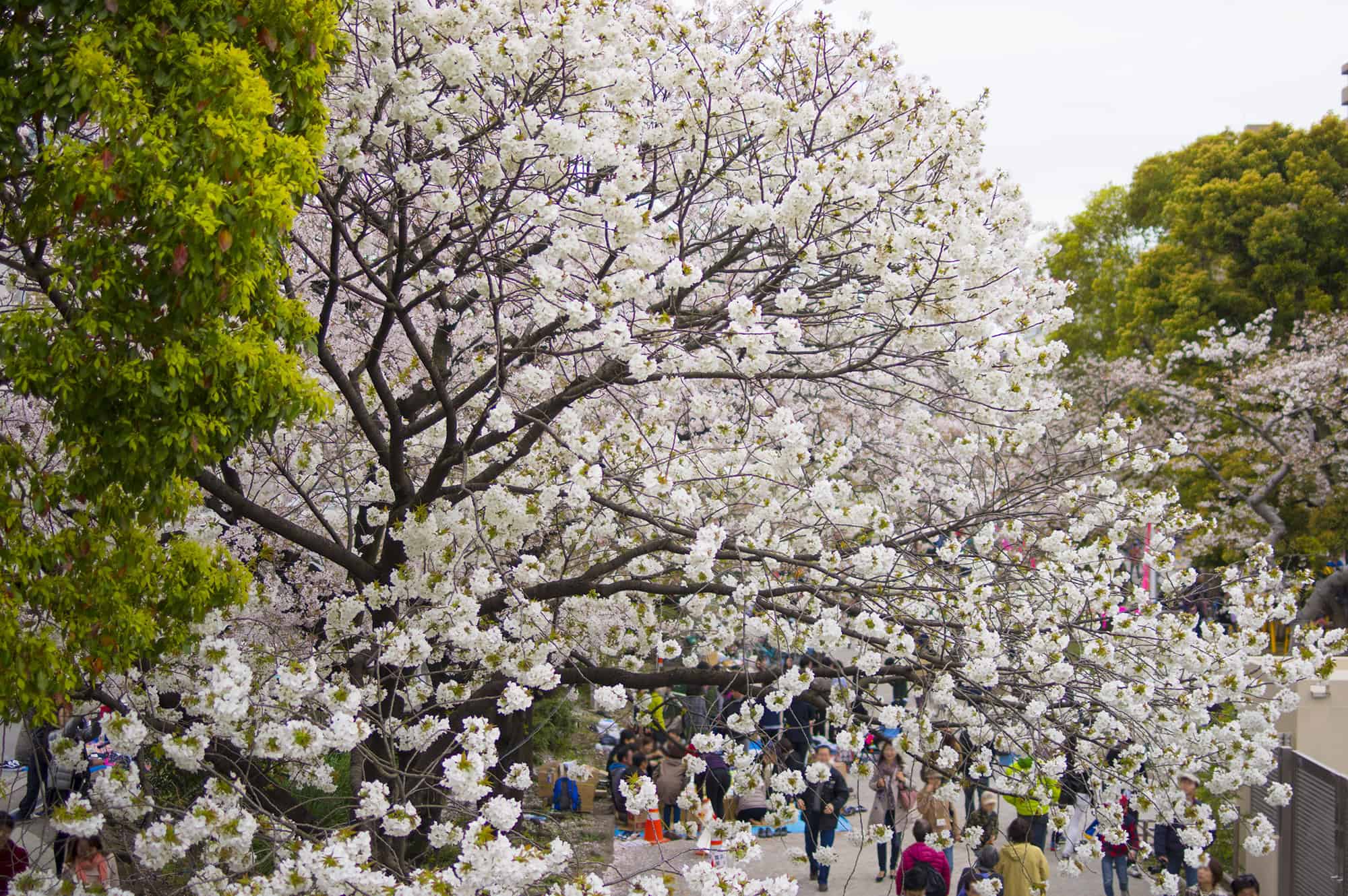
- Timing: Visit in the early morning for better lighting and peacefulness. During the peak Tokyo Sakura season, popular spots can be very crowded after midday. If possible, go on a weekday instead of a weekend.
- Spot Selection: Whether or not the popular places are packed with visitors, a great alternative is the likes of Inokashira Park.
- Transportation: Train stations such as Shinjuku or Ueno can become very congested. Consider getting off at one stop earlier; you can walk along the route to see some cherry blossoms.
- Back-Up Plan: If the park is too crowded and you can’t find a place to sit, look for an alternative spot, possibly along a riverbank close by or a rooftop café.
Practical Tips for a Perfect Hanami Day
- What to Bring: A picnic blanket or mat (blue tarp), wet wipes, a portable charger, and a jacket (The Tokyo springs get quite chilly when the sun sets).
- Food & Drink: Try a “Depachika” (food hall in a department store’s basement) or a convenience store for a seasonal Hanami bento box and Sakura-flavoured sweets. Often cafés and restaurants are available at the park or a nearby area.
- Footwear: Wear comfortable walking shoes; you will be on your feet most of the day.
- Restroom Access: Lines at park restrooms can be quite lengthy during the peak Tokyo Sakura season. Try to use a restroom at a department store or a rail station before going to the park.
- Money: Though you can use credit cards at most places, it is essential to carry cash for food and drink from such as Yatai food stalls.
Final Thoughts: Embrace the Beauty of Tokyo’s Sakura
While the beauty of Hanami is that it is fleeting, the beauty of the experience is that every year is different. Each year that I have been in Tokyo has been unique depending on the weather, the crowds, or the timing.
With a little planning and a lot of understanding of the culture and the traditions that are a part of Hanami, it is easy to have a meaningful Tokyo Sakura experience.
Whether you seek the quiet reflections at the pond of Inokashira Park or a traditional Japanese Yakatabune boat cruise experience to admire the scenic views along the Sumida River, the blossoms will guide you through a beautiful Tokyo Sakura experience!
If you want to know more about Sakura cherry blossoms in Japan, check out our article of Sakura Cherry Blossom Guide to find out the secret behind the “600 degrees rule”, which Sakura cherry blossom tree is known for the most beautiful or is the oldest, as well as what are the legendary Three Great Sakura Trees of Japan and much more.
For those who are interested in Japanese food, check out our food category, which includes Hanami and Sakura-flavoured foods. Meanwhile if you’re looking for more travel related posts, try exploring our travel section. Or you can head to our Instagram account for posts of delicious restaurants, fantastic festivals, and travel experiences.

