
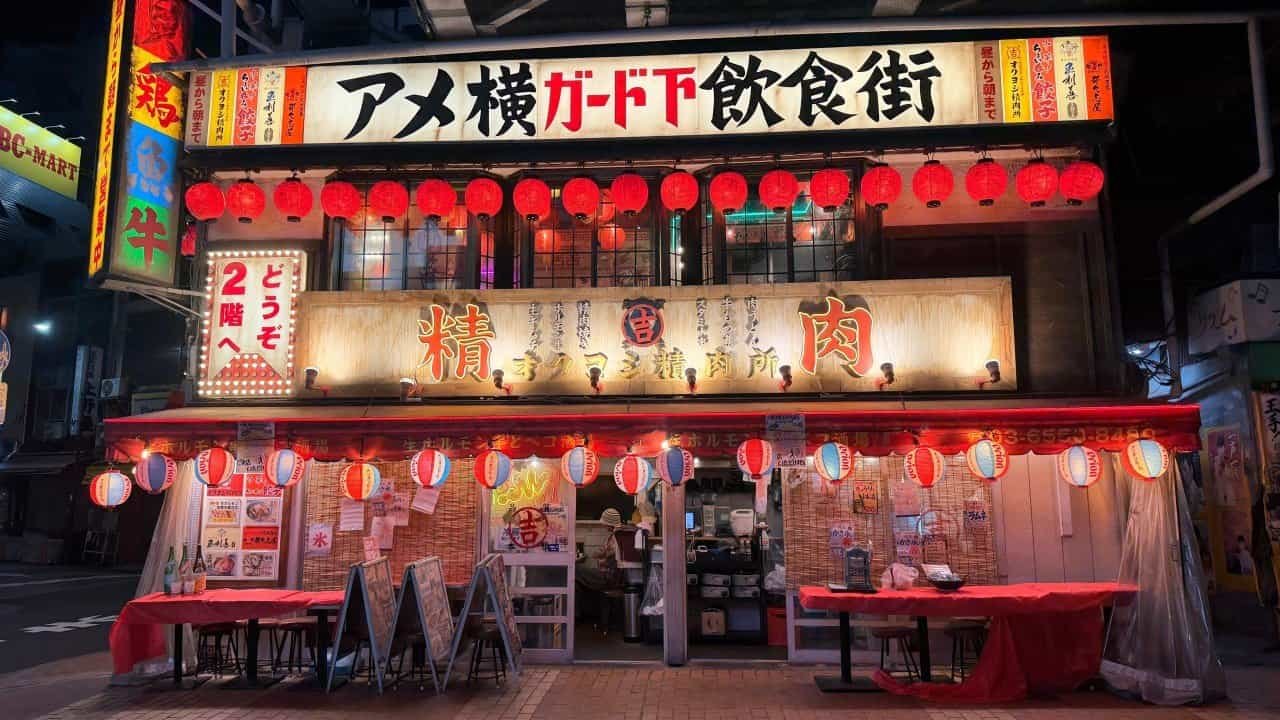
When considering iconic images of Japan, a Japanese lantern may well be one that come to your mind. Typically, it’s a paper lantern or a stone lantern that people think of first.
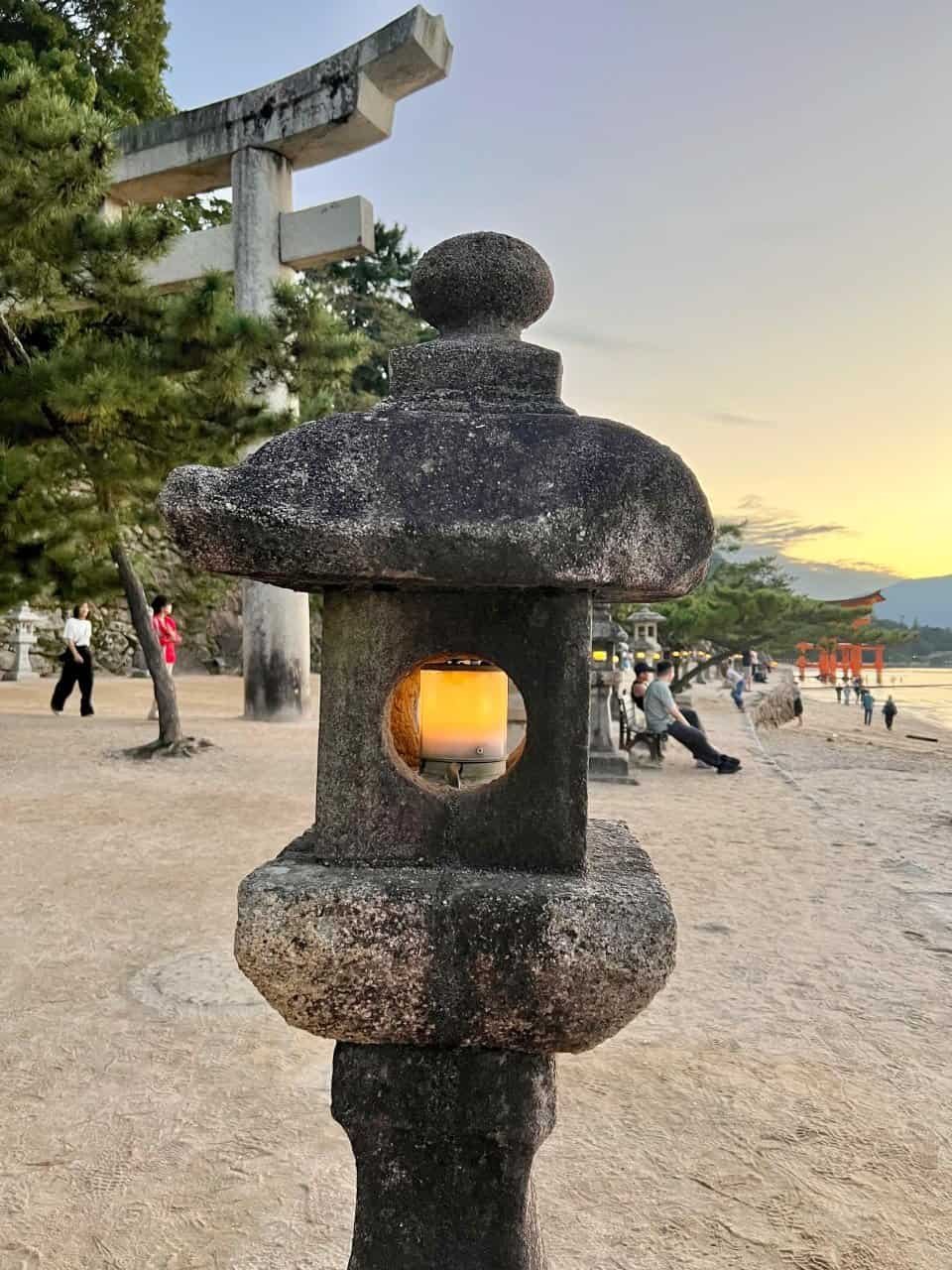
I often saw both during the time I lived in Japan. Red paper lanterns hang outside izakaya to show they’re open for the evening, while stone lanterns line the approaches to temples and shrines. On a recent trip to Hiroshima, I visited Itsukushima Shrine on Miyajima and stayed until after sunset. Then walking back to the ferry, seeing how the stone lanterns along the path by the sea were all lit, I couldn’t help but admire the beautiful atmosphere they created.
In this guide, I’ll go through the main types of Japanese lanterns and what the writing on them means. I’ll also cover where to buy Japanese lanterns in the UK, whether you want a hanging lantern or a granite one for outside.
Types of Japanese lanterns
There are five main types of Japanese lantern you’re likely to come across. Four are made from paper or similar light materials, and one is carved from stone.
Chochin (Japanese paper lanterns)
The quintessential round paper lantern hanging outside a restaurant, is a chochin (提灯). Wrapped around a thin bamboo or wire frame is washi paper covering it. As the frame is a spiral, what you may not have seen is that the lantern folds flat when you’re not using it.
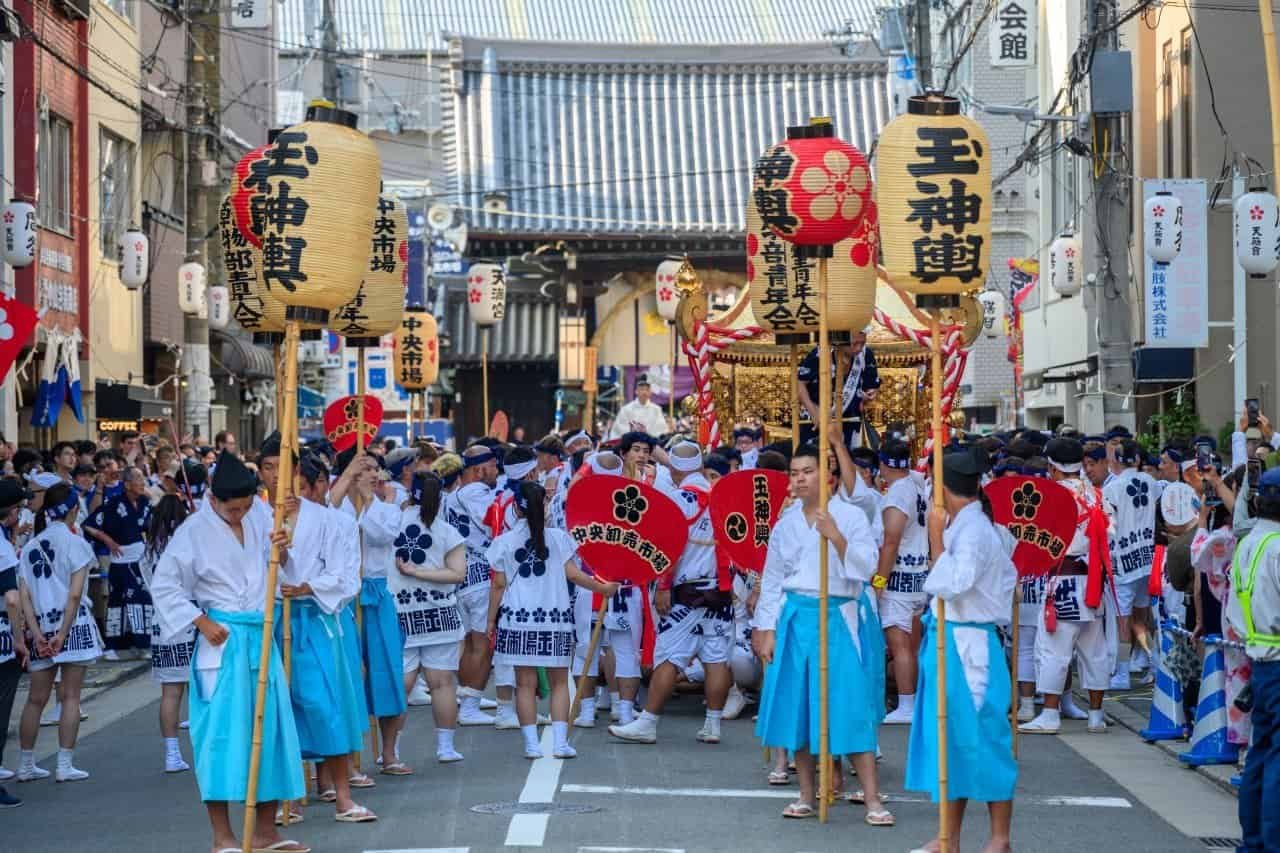
During festivals, you may also see them hanging out in a long row. Written on each one is the name of a local shop or company that paid for it, so it’s a type of advertisement but also shows how the local community tries to continue traditions. These days most have an LED bulb inside not a candle so you can hang one without worrying about causing a fire.
Akachochin (red lanterns)
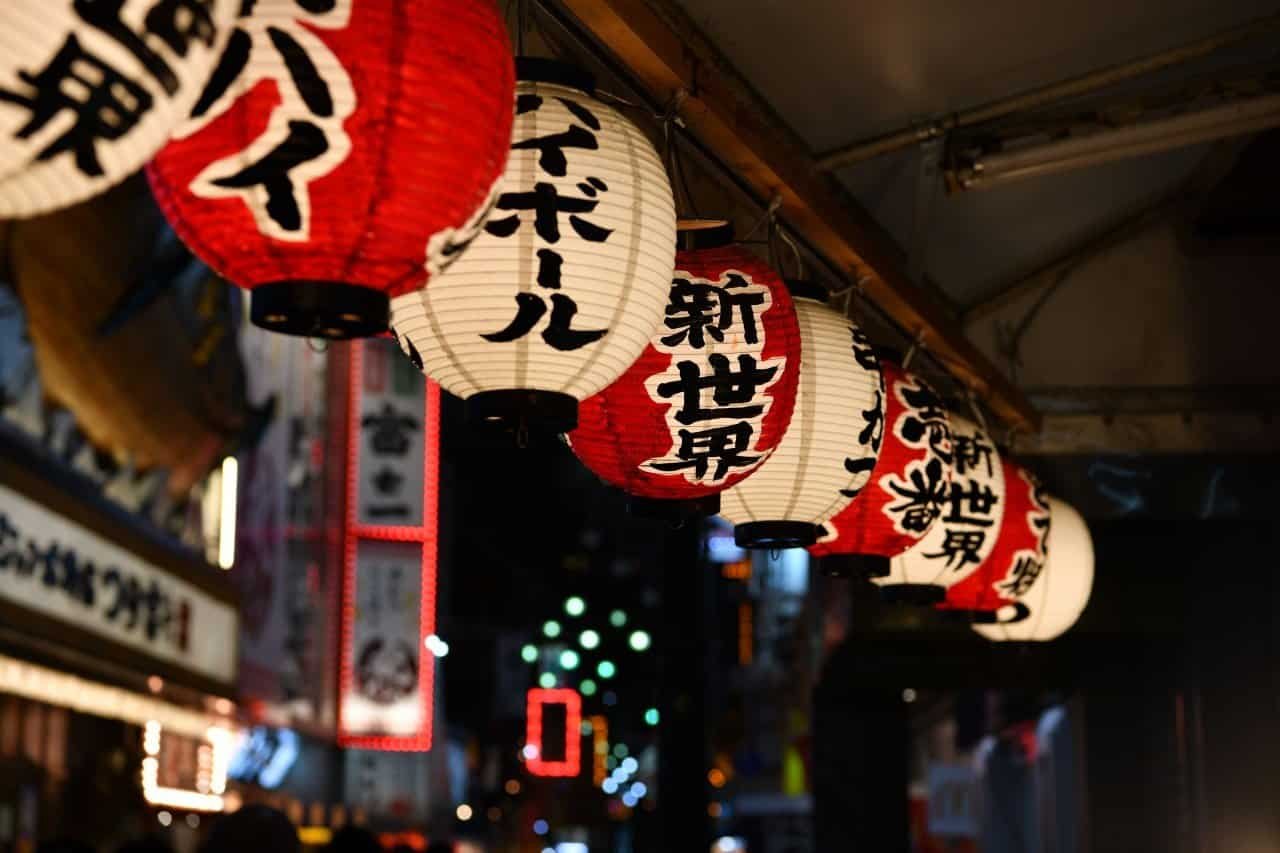
A red chochin is called an akachochin (赤提灯). Since you nearly always find them outside izakaya, people in Japan often say akachochin when they mean a casual local pub.
Andon (Japanese floor lamps)
Before electric light, most homes back in the Edo period lit a room at night with an andon (行灯), which was a paper box on a wooden frame, with a small oil lamp inside. Today they use regular light bulbs, and you will find them listed online as Japanese floor lamps.
Bonbori (lanterns on a stand)
If you’ve seen a Hinamatsuri doll display, the two small lamps on either side of the dolls are bonbori (雪洞). They have paper stretched over a six-sided wooden frame, with the top left open.
Unlike a chochin, a bonbori stands on legs instead of hanging from a hook. Tsurugaoka Hachimangu in Kamakura even holds a Bonbori Festival every August, where there are hundreds of them on display in the shrine grounds.
Toro (stone lanterns)
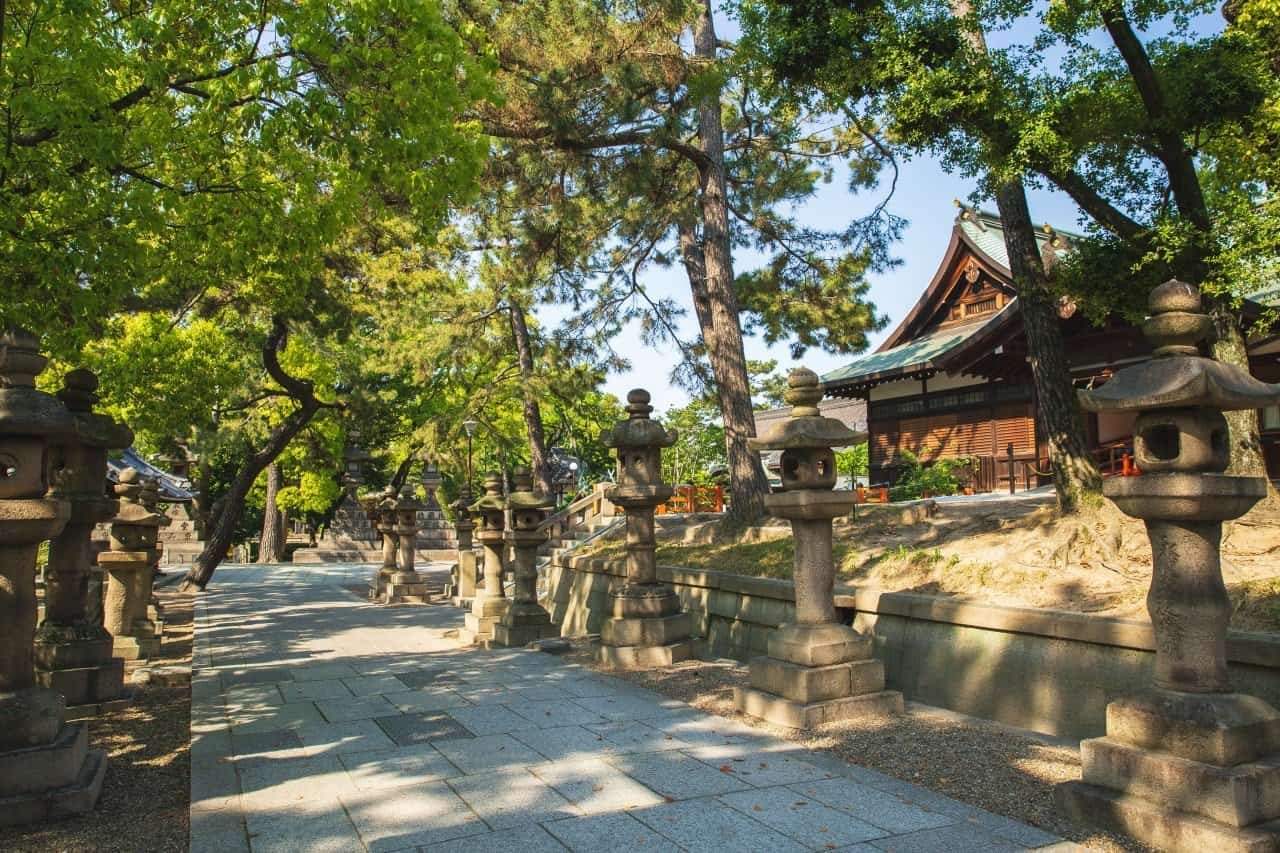
Toro (灯籠) arrived in Japan with Buddhism in the 6th century, and temples typically placed them along the path leading up to the main hall. While most are granite, you’ll find bronze examples at some shrines. Kasuga Taisha in Nara has around 3,000 of them, and only lights them all on a handful of nights during the Mantoro festivals in February and August.
Tea masters later started placing stone lanterns in their tea gardens. Over time, they became a standard feature of Japanese gardens, and this practice is now seen outside of Japan, where stone lanterns are becoming a popular addition to UK gardens.
Types of Japanese stone and garden lanterns
There are four Japanese garden lanterns that are good to know, with each one suiting a different area of a garden.
Kasuga doro (tall pedestal lanterns)
This is probably the style most people picture first. It’s named after Kasuga Taisha (Shrine) in Nara, where there are dozens on the approach to the shrine. This lantern has a light box that sits with a pointed roof, at the top of a long post, with some having decorations like deer carved into the sides. Deer are sacred at Kasuga Taisha, and that’s also why you see so many wandering freely around Nara Park.
Yukimi doro (snow viewing lanterns)
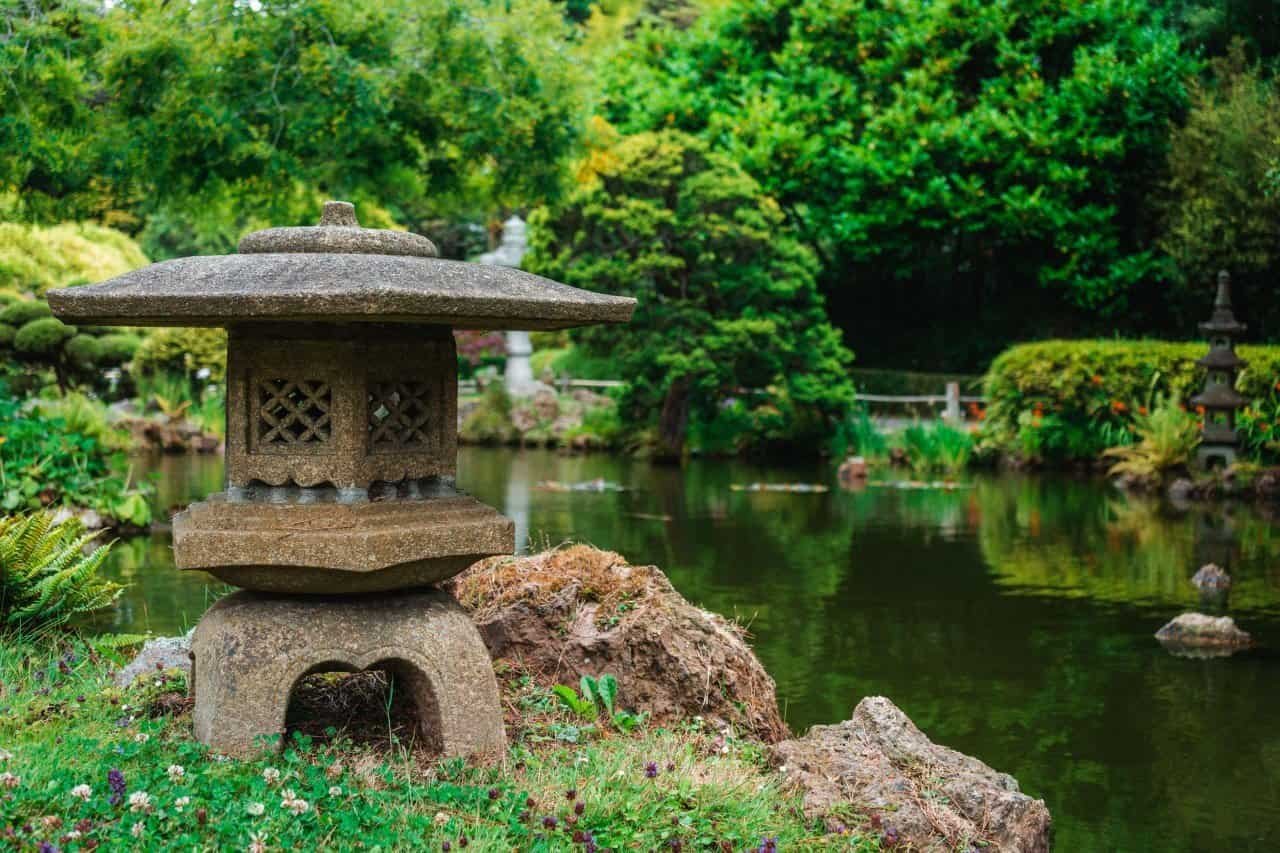
Yukimi means snow viewing. These lanterns have a wide, low roof that holds a layer of snow in winter. Instead of a post, they stand on three or four curved legs. In Japan, they’re usually placed beside a pond or stream.
Oki doro (placed lanterns)
Oki doro are the smallest of these four garden lanterns. They’re light enough to move around, and in Japan, people often put one on a flat rock beside a pond. This also makes them easy to fit into a small garden or on a patio.
Ikekomi doro (buried lanterns)
Ikekomi roughly means “planted in”, and instead of a base, the post is pushed straight into the soil. As it doesn’t take up much space, it can be a good choice for a narrow flower bed or the edge of a path.
What the writing on Japanese lanterns means
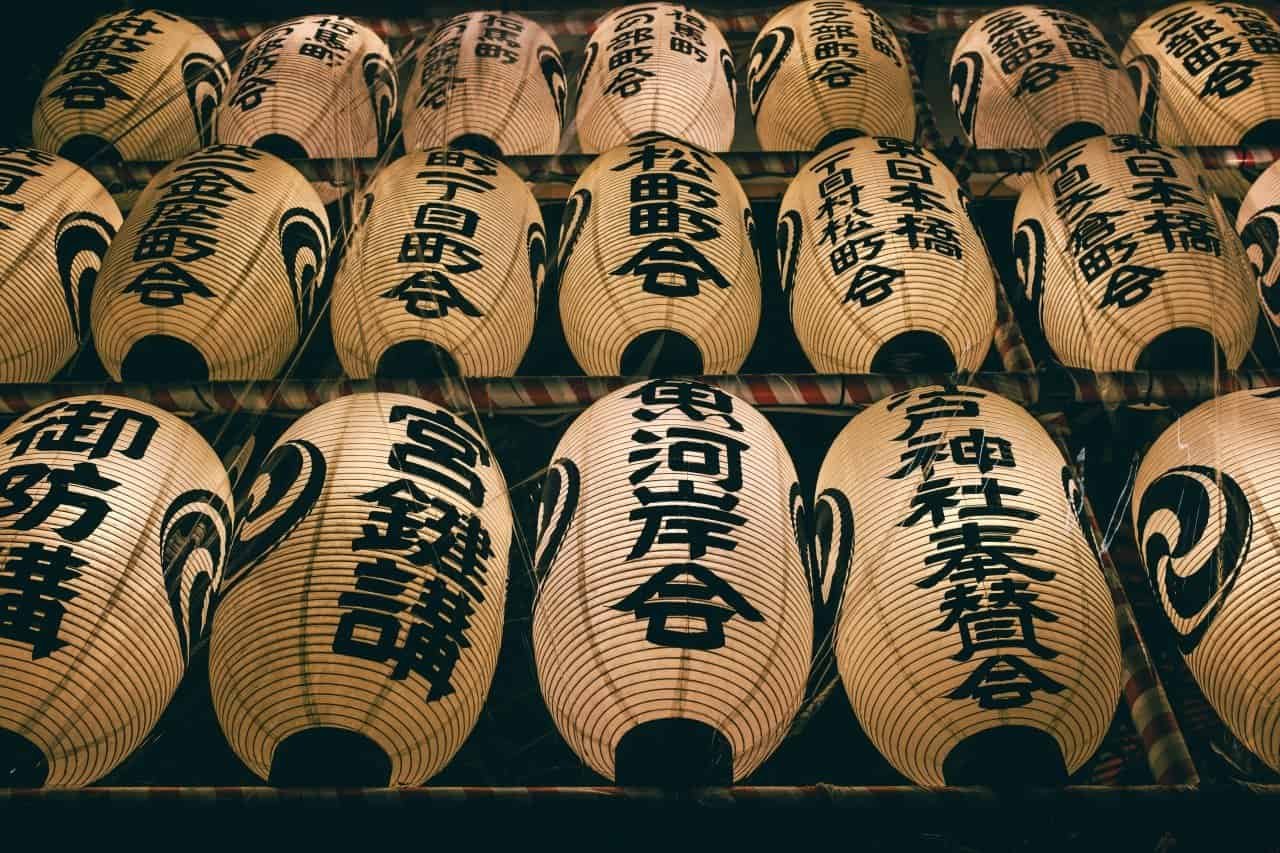
Walk past an izakaya at night and the lantern outside indicates what you can order inside. 酒 means sake, while 焼き鳥 means yakitori chicken skewers. Others might just show the name of the shop.
At shrines and temples, lanterns often carry the name of a person or local business that donated money to them. As some shrines have hundreds of them hanging in rows, it can be a good way to understand who are the big players in the local area.
Then at summer festivals you see another design. Some lanterns are printed with a kamon, a family crest, which is often a round symmetrical design.
Decorative lanterns sold outside Japan tend to use a single word with a positive meaning. Two popular ones are 福 (fuku), meaning good fortune, and 和 (wa), meaning harmony. Before giving one as a present, it’s a good idea to check the meaning.
Where to buy Japanese lanterns in the UK
We’ve picked two UK sellers that each cover a different need. One is for hanging lanterns with original designs, and one is for genuine granite garden lanterns.
KATA-RU (hanging lanterns)
Based in London, KATA-RU’s lanterns are made in Japan, with each design applied by hand in London. The brand’s aim is to light up everyday life in London with traditional Japanese light, so their lanterns are designed for homes and everyday spaces, not just restaurants and events. Their first collection is already in stock in London, so there’s no wait for shipping from Japan.
Their new Series 2 collection comes in both red and white, and you can order it alongside their first collection. From Series 2, what catches our eye is Sakura (桜), a large red lantern with cherry blossoms sweeping across an open folding fan. Also from Series 2 is Fuji (富士), a white design that has Mount Fuji rising in front of a large sun. Each design comes with its own meaning, like En (縁), meaning connection, which can also make them a thoughtful gift for a special occasion.
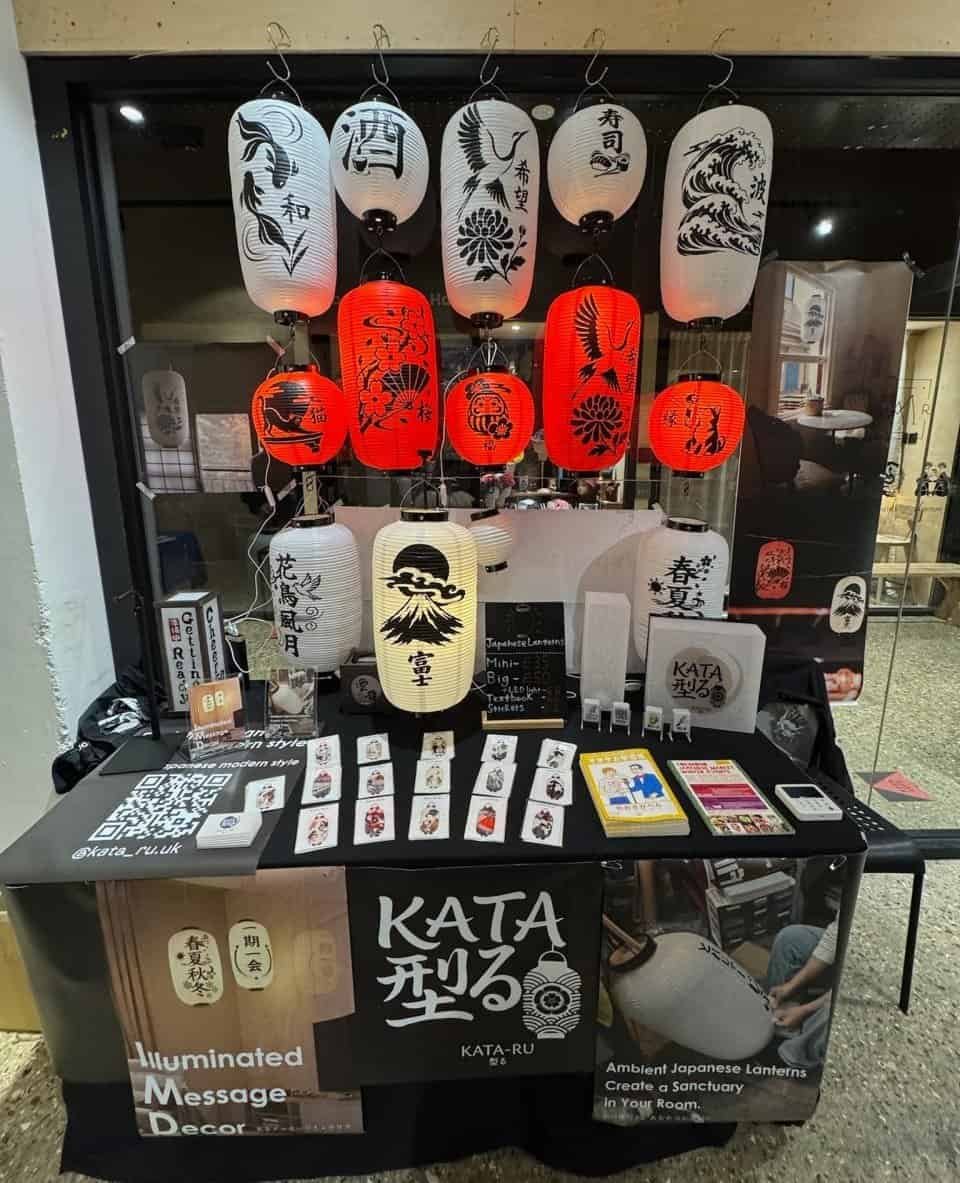
KATA-RU also sells their lanterns at London markets and pop-up events, where En, Neko (猫, cat) and Fuku (福, good fortune) are among their most popular designs.
Unlike traditional paper lanterns, KATA-RU lanterns are made from a water resistant vinyl, so you can hang them outside. They’re lit with a separate LED light rather than a candle, and as it’s a waterproof camping light, it’s safe to use outdoors as well as indoors. According to the manufacturer, lanterns like these are often used outside restaurants and at events in Japan, and some have even lasted around three years in the rain and sun. To get yours to last longer, it’s best to hang it somewhere sheltered, like under a porch or awning.
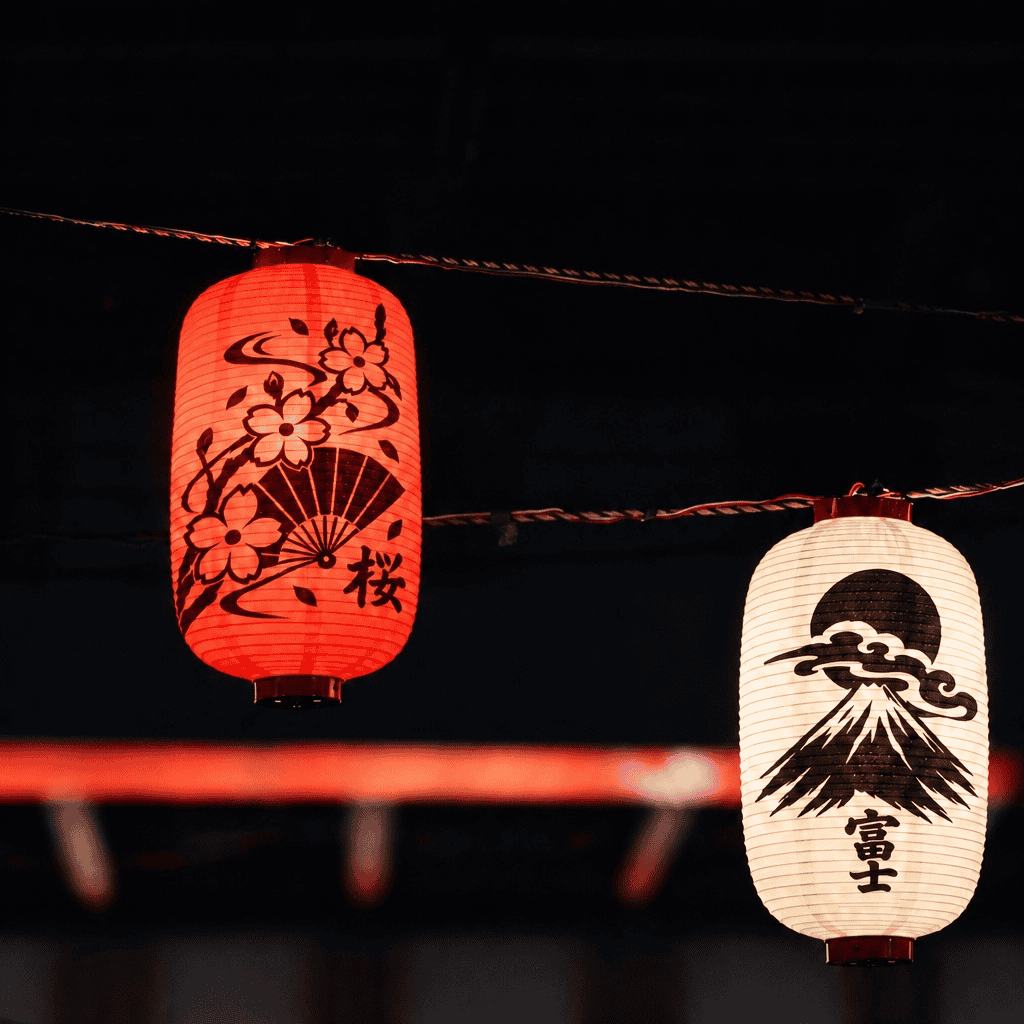
There are two sizes you can choose from: a bigger lantern at 48 cm tall and 25 cm wide, and a smaller one at 26 cm tall and 24 cm wide, both with an extra 8 cm hanging fitting. They also fold flat to around 5.5 to 7 cm thick, which makes them easy to store away when you’re not using them.
If you’d like one for your own home, we now sell KATA-RU lanterns in the Best Japanese shop. To find out more about the story behind the brand, visit the KATA-RU website.
The Japanese Garden Centre (stone lanterns)
For a stone lantern, The Japanese Garden Centre in Kent is a top place to start. The family run business has specialised in Japanese gardens for over 30 years, and you can visit their garden centre near Tonbridge to see the lanterns in person. Their lanterns are hand carved from silver grey granite, and the range goes from tall pedestal designs down to small lanterns that can be placed straight on a rock.
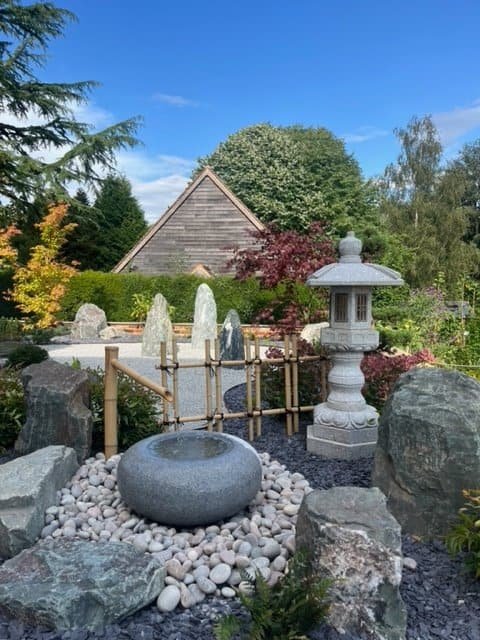
The Kitasage Nara is one of their taller lanterns, and can become the main feature of a Japanese style garden. If you don’t have as much space, the Sumo San is a smaller lantern that comes in four pieces and two sizes, priced from £190 to £245. In Japan, you’d usually see this style beside a stream, but it also suits a patio or can even be used as a table centrepiece.
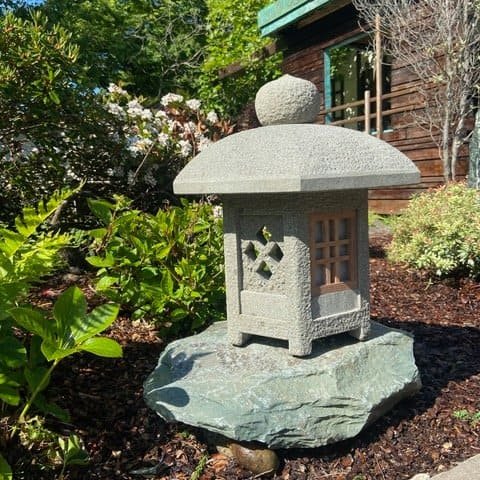
For something even more traditional, their Edo Collection includes sandstone and lavastone lanterns hand carved in Japan by two master craftsmen from different regions. Their work has official traditional craft status in Japan, which is only given to crafts made by hand using techniques that go back over 100 years.
You can browse their full range of stone lanterns on The Japanese Garden Centre website.
Japanese lanterns FAQs
What are Japanese lanterns called?
It depends on the type. Paper lanterns are called chochin, and the red ones you see outside izakaya are akachochin. Stone lanterns are known as toro, and a paper floor lamp is an andon.
What do Japanese lanterns symbolise?
Lanterns in Japan are closely linked with light guiding the way, whether that’s along the path to a temple or for the spirits of ancestors during Obon. Many decorative ones today also carry a word with a positive meaning, like good fortune or harmony.
What’s the difference between Japanese and Chinese lanterns?
Paper lanterns first came over to Japan from China, so as paper lanterns they do share some things in common. Differences however include Japanese lanterns being usually a plain cylinder or oval shape that may have writing on them. Chinese lanterns are often rounder with gold trim, and during the Chinese Lantern Festival, you’ll see some more decorative ones that are shaped like dragons or lotus flowers.
Can you use Japanese lanterns outdoors?
Paper ones should be kept inside, as the washi paper will quickly get damaged by rain. If you want to get one for outside, a vinyl lantern like KATA-RU’s can be used under a porch, while a granite lantern can stay outside in the garden in all seasons.
What do red Japanese lanterns mean?
In Japan, a red lantern hanging by the door usually means you’ve found an izakaya, a casual place for a drink and something to eat. They are also used for decoration at festivals, or at a shrine or temple, the writing you see on them shows which person or organisation has made a donation.
What are Japanese floating lanterns?
Floating lanterns are part of toro nagashi, a summer ceremony where paper lanterns are set on a river to guide the spirits of the dead. People often write a message on their lantern before letting it go. The best known one takes place in Hiroshima every year on 6 August, in memory of the victims of the atomic bombing.
If you’d like to see Japanese stone lanterns in person, you don’t have to go far. The Kyoto Garden in Holland Park has several, set around its waterfall and koi pond in West London. If you’re already planning a trip to Hiroshima and Miyajima, have a look at our guide on whether Hiroshima is worth visiting.
All information is accurate at the time of publishing. Please check the relevant websites for the latest details.
Disclosure: This is a sponsored article written in partnership with KATA-RU, and KATA-RU lanterns are sold in the Best Japanese shop.

