
Hakone is often added into Japan itineraries as it’s close to Mt. Fuji, you get to enjoy the wonderful onsen hot springs, and have a chance to experience the Japanese countryside after the hustle and bustle of Tokyo. Having experienced a couple of hours spent getting there from Tokyo when I went to Hakone, I would recommend stopping off in Mishima City as an alternative route, as you can make your first day a little less travel packed, and you can enjoy some off the beaten path locations and local food too!
Since Mishima is a stop on the Tokaido Shinkansen Line, you can get there from Tokyo in one hour and without needing to transfer. Once you’re there, spend time at the spiritual Mishima Taisha Shrine, and don’t forget to pop into the Treasure Hall for a closer look at relics including a lacquered box reproduction of a national treasure. Another big draw for the city is the nearby Mishima Skywalk for views of Mt. Fuji, or getting on their zipline across the valley for the more adventurous out there. Finally, if you’re a foodie, you have to try the local unagi (freshwater eel), and check out the famous Mishima potato croquettes!
When you plan this two-day route, your options on where to stay depend on how much you value staying at a ryokan (traditional hot spring inn), your budget, and your food preferences. We would recommend either staying in Mishima on the first night then moving to Hakone on the second night, or if you really want both nights at a ryokan, you could give yourself a relaxing stop over in Mishima and then heading to Hakone in the afternoon. Remember that ryokans will generally be a more expensive option than a hotel stay, especially as they often come with meals included.
Day 1: Mishima City Itinerary & Numazu Port
After a few days in Tokyo with its busy streets and crowded trains, you may be ready to spend some time out in the countryside and for some relaxing hot spring experiences in Hakone. Instead of rushing to try and get to Hakone and fitting everything all in one day, I’d suggest first getting off at Mishima Station after less than an hour on the Shinkansen.
Mishima City: Exploring the City of Water
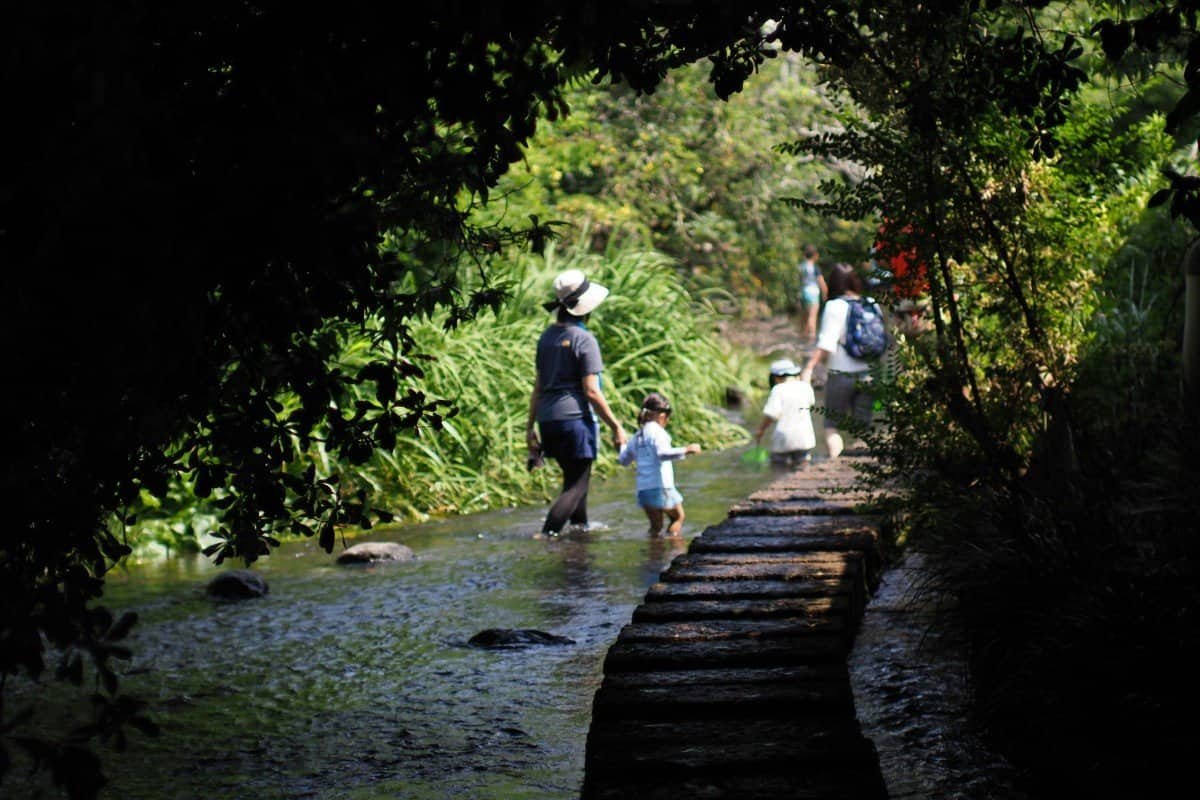
From Mishima Station, head out of the south exit and through Rakuju-en Park with its beautiful garden and pond. After following the path past the pond, exit the park and you’ll spot the start of the Genbe River trail, with signposts pointing the way after you turn left at Edokawari Soba restaurant. What’s quite different about the Genbe River trail is that you can walk on the wooden boardwalks and stepping stones right down at water level next to crystal-clear flows fed by Mount Fuji snowmelt, which somehow stays a crisp 15 to 16 degrees year-round no matter the season.
Walk along those river stepping stones until you hit Kamakura Kodo Street, then turn left. If you’re hungry you can start thinking about lunch. Suminobo Honmachi does excellent unagi if you fancy something a bit more upscale, or there’s Mizunoto just up the road for soba, and you can’t really go wrong with either to be honest.
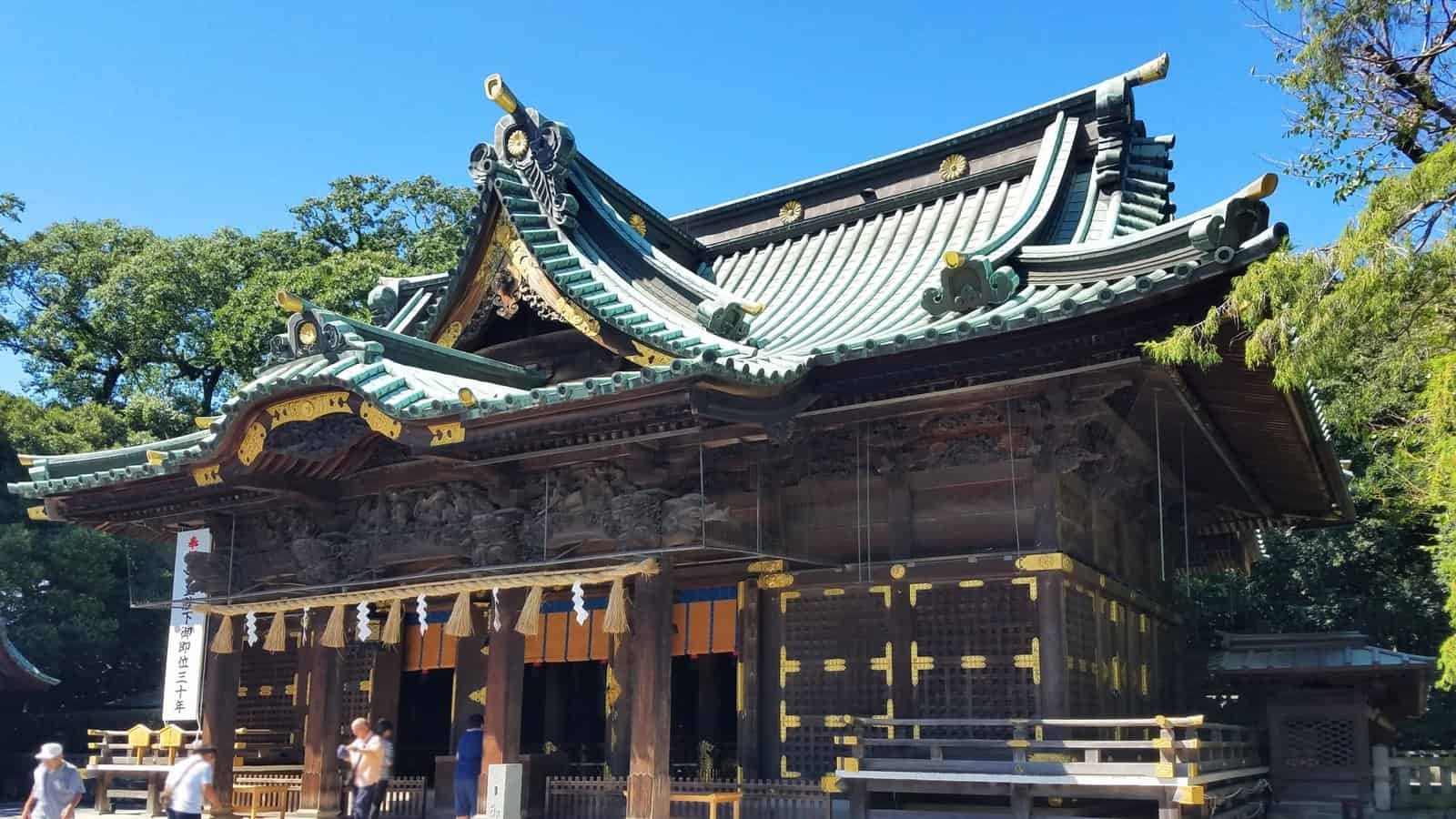
Keep going straight and the street leads you up towards Mishima Taisha Shrine. This has a link to the start of Japan’s samurai era, as it’s said a young Minamoto no Yoritomo prayed here for a hundred days straight before rising to power as the first Shogun of Japan. There’s also a 1200 year old osmanthus tree on the grounds that perfumes the whole place come autumn, and a treasure hall worth visiting with a collection of relics and swords. Just outside the shrine gate, make sure to stop at Yamamoto Shokuten Monzen Seseragi for their famous wasabi soft-serve ice cream.
Numazu Port & Senbon Matsubara Pine Grove
From the shrine, walk back to Mishima Station and hop on the JR local train to Numazu Port, only a five minute ride away. Take the N45 bus from outside the station and get off at Senbonhama Koen, then walk down to the beach and Senbon Matsubara for a stretch of pine groves along the coast with views out across Suruga Bay, including Mount Fuji, which can be fantastic at sunset on clear evenings.
For dinner, head back towards the port near the aquarium, where Uogashi Maruten, Isoharu, and Kyomaru serve great sushi, seafood and unagi. While many market stalls and seafood shops close by the afternoon, these 3 restaurants are running until 8pm with some open up until 10pm, or try Shofuku Ramen nearby if you fancy something different, and their Yokohama-style Tonkotsu is a local favourite.
Day 2: The Hakone Loop Itinerary
From Mishima Station, take the direct bus over the mountain pass towards Hakone-machi and Moto-Hakone stops. This bus runs roughly once an hour, taking about 50 minutes, and you can save money for the journey by buying the Hakone Free Pass (which you’ll use for various local transport in Hakone) at Mishima Station. As the bus climbs towards Hakone, the road winds through forests and along switchback turns, with the valley opening up below, and I remember the excitement building as we got closer to Hakone. It’s also a direct run to Lake Ashi, so you don’t need to head to Odawara first, however the option is there if you’re not a fan of buses.
The Classic Hakone Mountain Loop
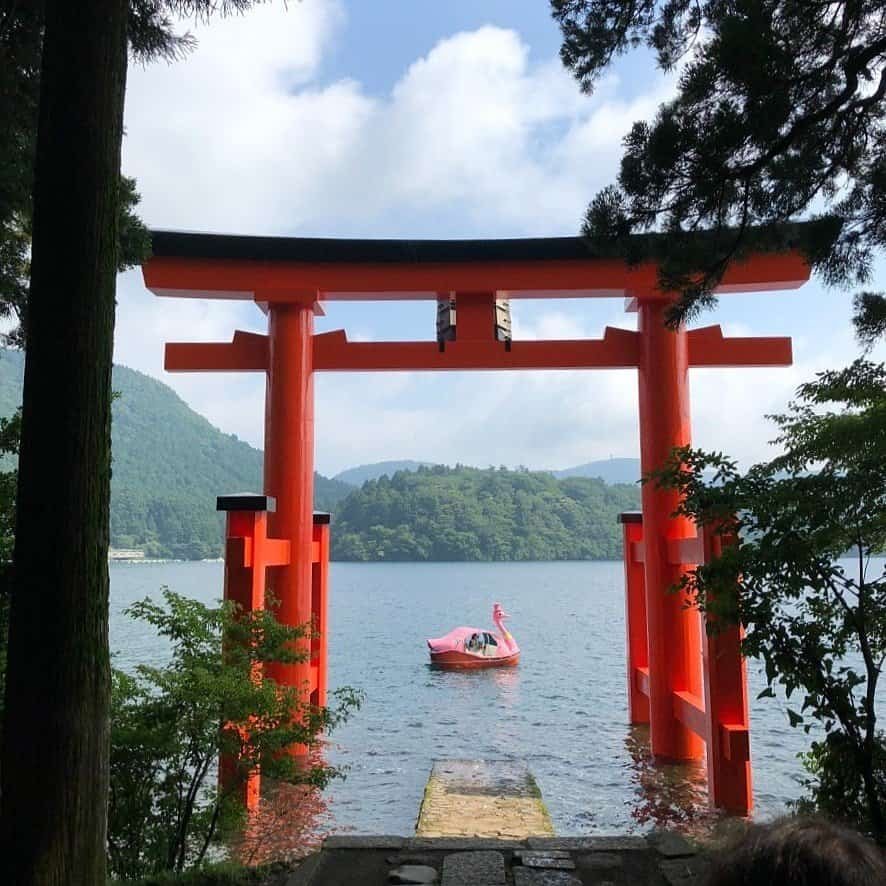
From Moto-Hakone, walk 10 minutes along the lakeshore to Hakone Shrine, which is easy to spot with its bright red Torii gate rising above the water. The Torii gate is one of the most photographed spots in the region, and I got lucky with a short wait when I visited, however some people have said the queues can last more than 30 minutes. While the Torii gate is beautiful, I’d recommend to take the path back through the stunning tall cedar trees by the fourth Torii of Hakone Shrine.
Once you get back to Moto-Hakone Port, hop on the Hakone sightseeing cruise across Lake Ashi to Togendai, where you can take in views of the surrounding hills and, when weather conditions are right, Mount Fuji too. At Togendai, switch to the Hakone Ropeway, which climbs up over Owakudani, a volcanic valley which still vents sulphurous steam from the ground. The views stretch out across the caldera, and if you can, definitely try the famous kuro tamago, which are eggs boiled in the valley’s hot springs until the shells turn black, and apparently add years to your life!
After Owakudani, continue by ropeway down to Sounzan, then pick up the Hakone Tozan cable car and switchback railway back towards Gora and Hakone-Yumoto, weaving through cedar forest and past small hillside towns along the way. It’s a full loop by cruise, ropeway, cable car and railway, and while it may feel a little touristy, the views make it all worth it.
Day 2 Alternative: Hakone Open Air Museum
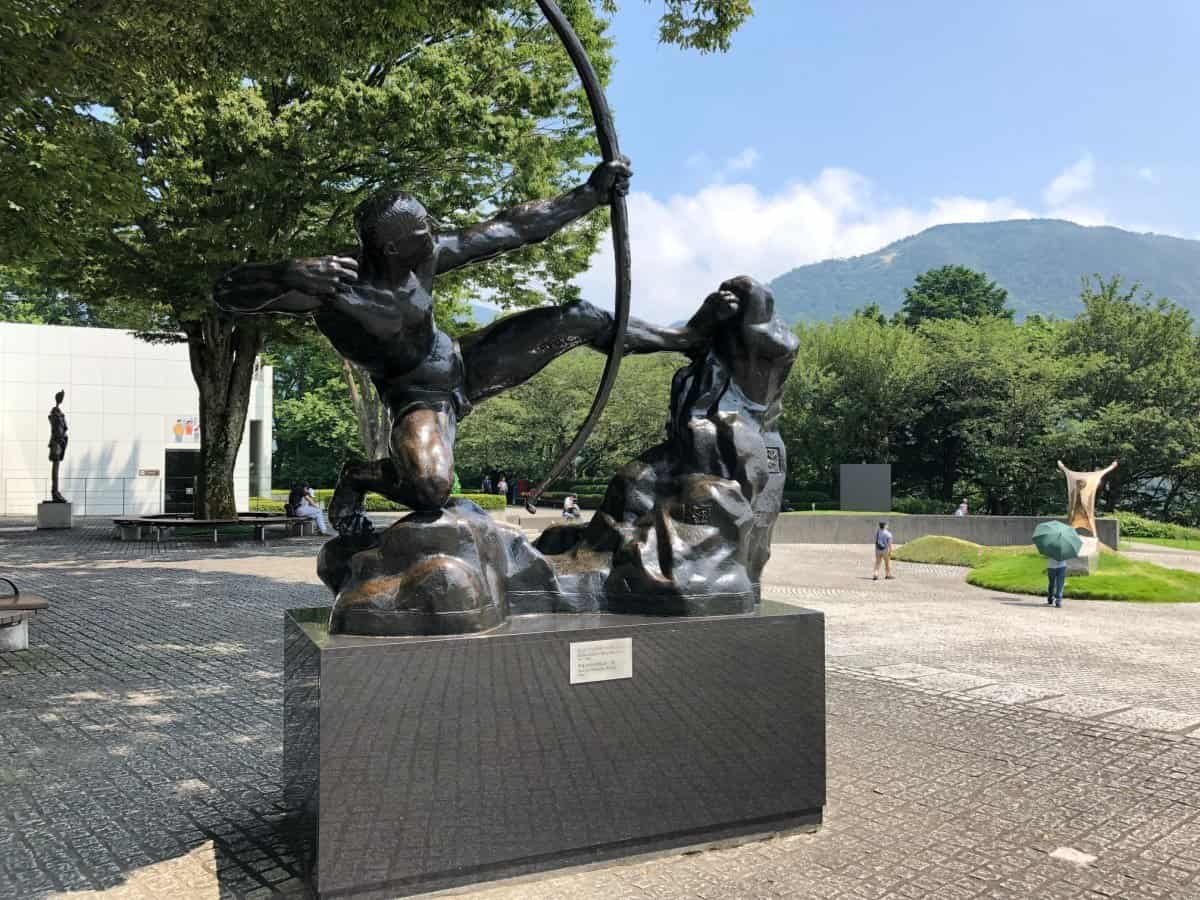
If the weather turns grey or is too hazy for Mount Fuji views, keep the Hakone Open-Air Museum in mind as a back up, and it’s just one stop after Gora on the Hakone Tozan Railway. From Gora, take the train and get off at Chokoku no Mori Station, which is only a few minutes’ walk from the museum entrance. Set among the hills, I really enjoyed wandering around the outdoor sculptures dotted around the slops of the museum, before heading into the indoor galleries, with works by artists including Henry Moore and Picasso.
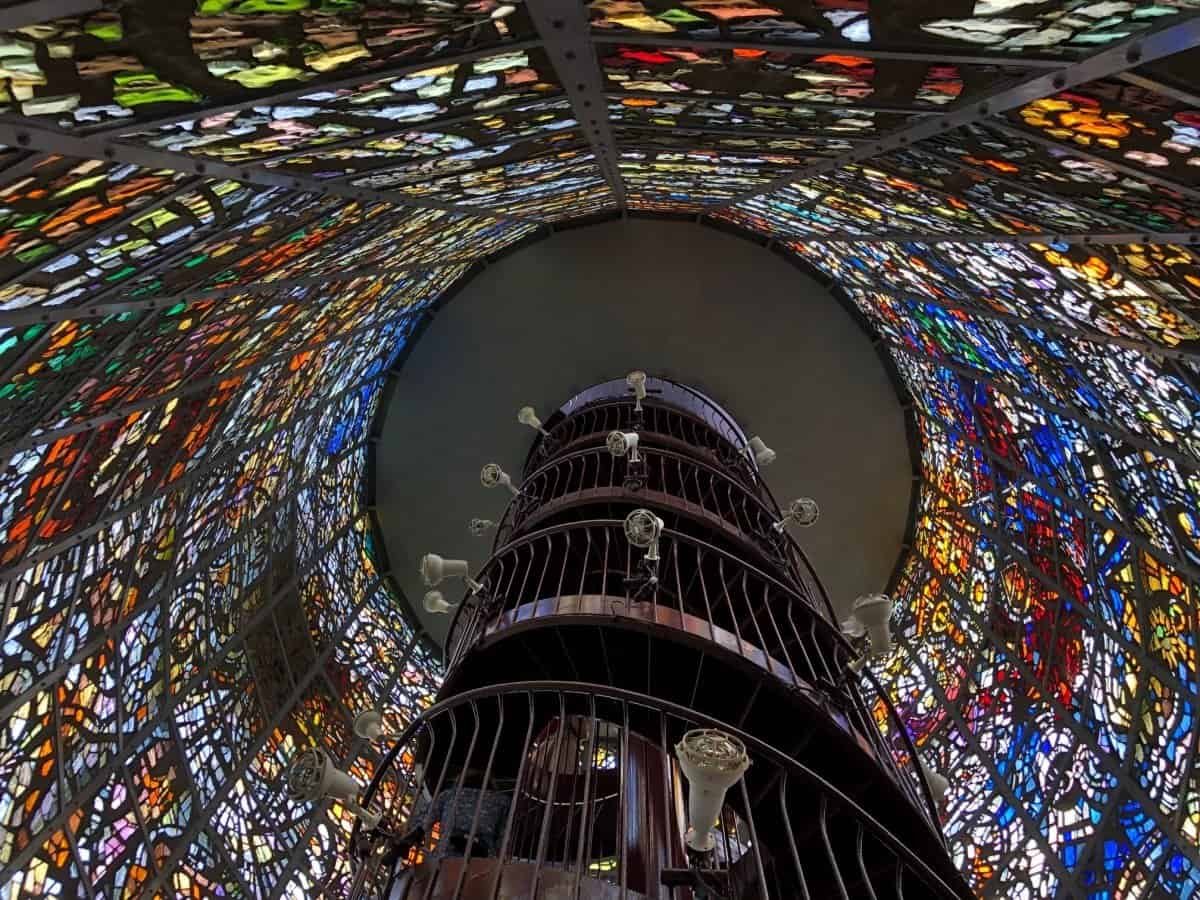
One of my highlights was seeing the Symphonic Sculpture, a huge stained-glass tower that you can actually walk up inside. Even on a rainy day, it’s a great place to spend a few hours, and if you’re a Picasso fan, you’ll love the Pablo Picasso collection, which has more than 300 works of art.
Where to Stay: Mishima Hotel vs Hakone Ryokan
Option A: Both nights at a Mishima Hotel
If keeping costs down and skipping the hassle of switching hotels matters to you, base yourself in Mishima for both nights. There’s no shortage of hotels around the station, so you can drop your luggage once and explore the area without repacking on day two. Mishima also tends to be better value than Hakone, especially once you start comparing hotel prices against Hakone’s traditional ryokans. Spend day one around Mishima and Numazu, then treat Hakone as a day trip on day two before heading back to Mishima for the night.
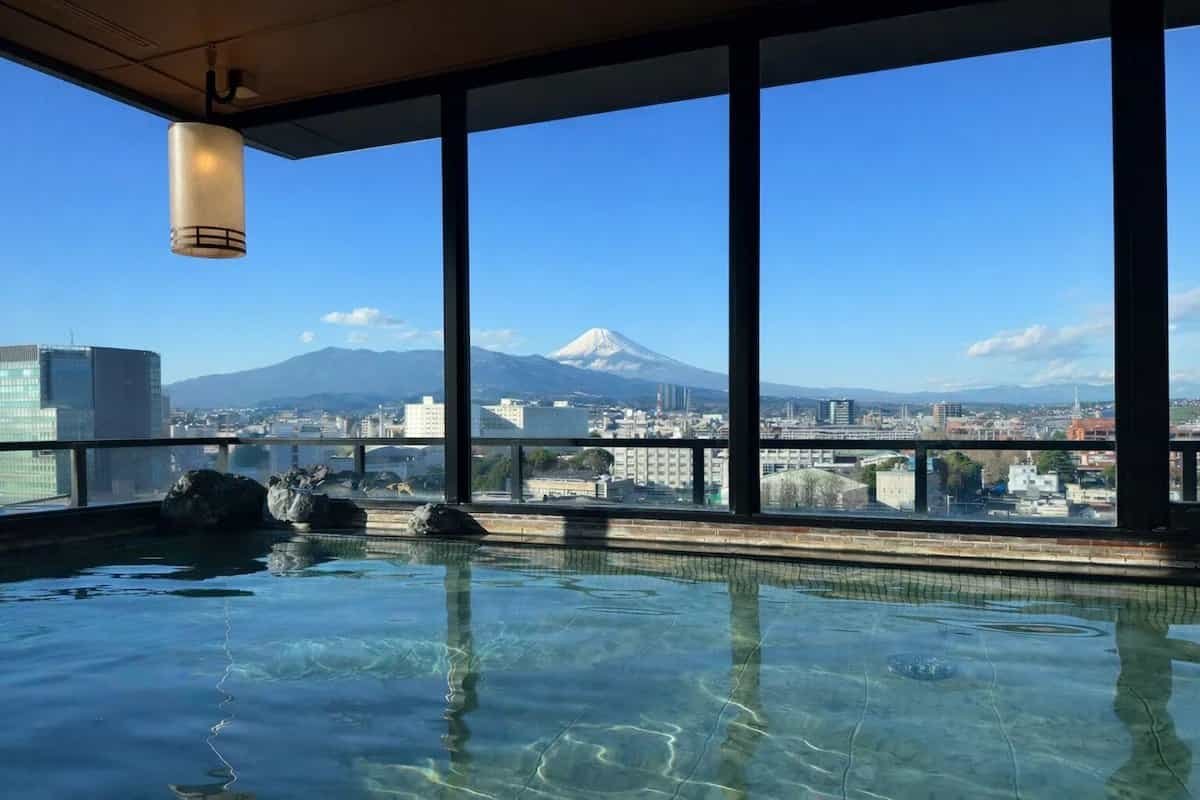
The food’s another reason to stay put. Mishima’s known for its unagi, and there are plenty of good spots for it in the city centre or head to Numazu Port for the sushi and seafood. For somewhere to stay, I’d go with the Dormy Inn Mishima as it’s five minutes on foot from the station, some rooms even look out towards Mount Fuji, and you’re looking at just over £100 a night, which is solid value for what you get. This route makes sense if you’re on a tighter budget, want the ease of one base for the whole trip, or just don’t see a ryokan stay as essential.
Option B: One night in Mishima City, the second at a Hakone Ryokan
If staying in a traditional Japanese ryokan and enjoying an onsen is high on your list, then I’d choose this option. Spend your first night in Mishima, giving yourself plenty of time to explore the city and Numazu, then head to Hakone on the afternoon of Day 2. This gives you the chance to experience two quite different sides of the area. Mishima offers a more local feel, with its rivers, shrine and food, while Hakone gives you the traditional hot spring experience that many visitors come to the area for.
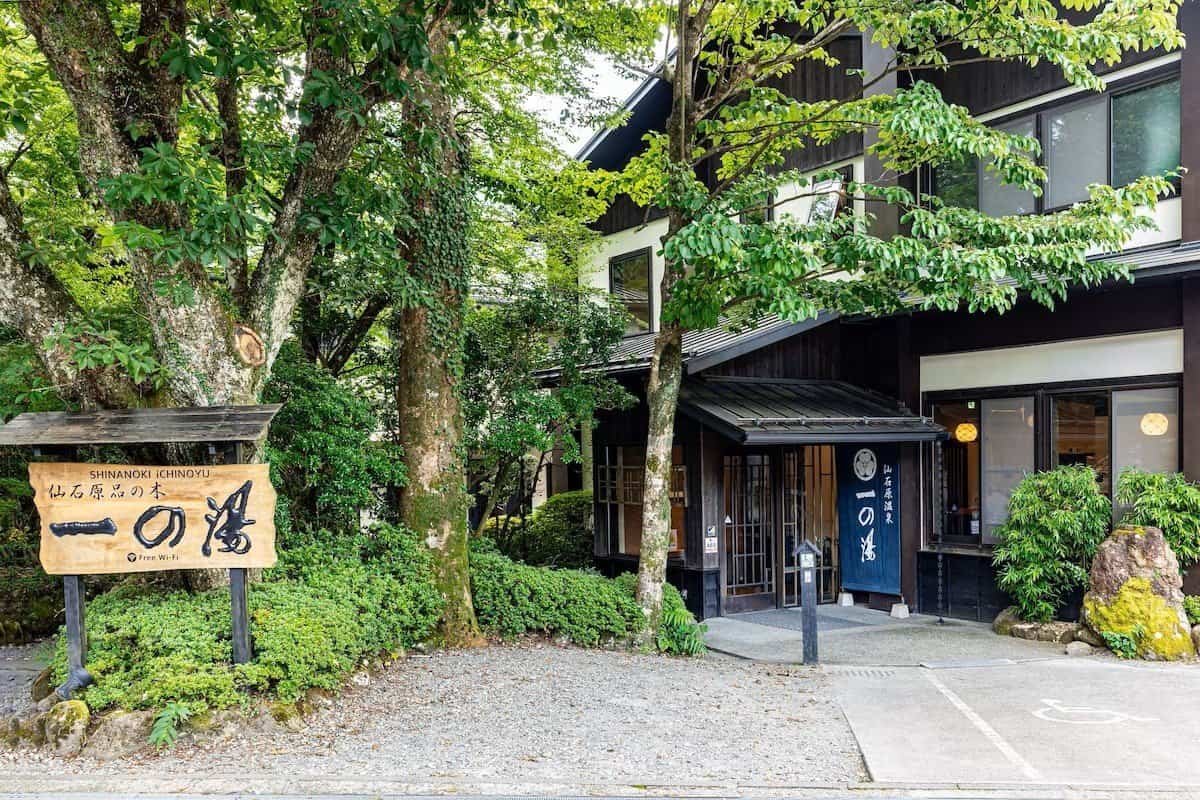
My recommendation for Hakone is Sengokuhara Shinanoki Ichinoyu, which is about 25 minutes from Hakone-Yumoto Station. Rooms for two with a private hot spring bath are around £230 per night with half board, so you can enjoy traditional cuisine as part of the experience, and when I stayed this was definitely a highlight.
Just remember to check the ryokan’s check-in and meal times before booking, as they can be more restrictive than a standard hotel.
Day 3 Add-On: Mishima Skywalk & Izu
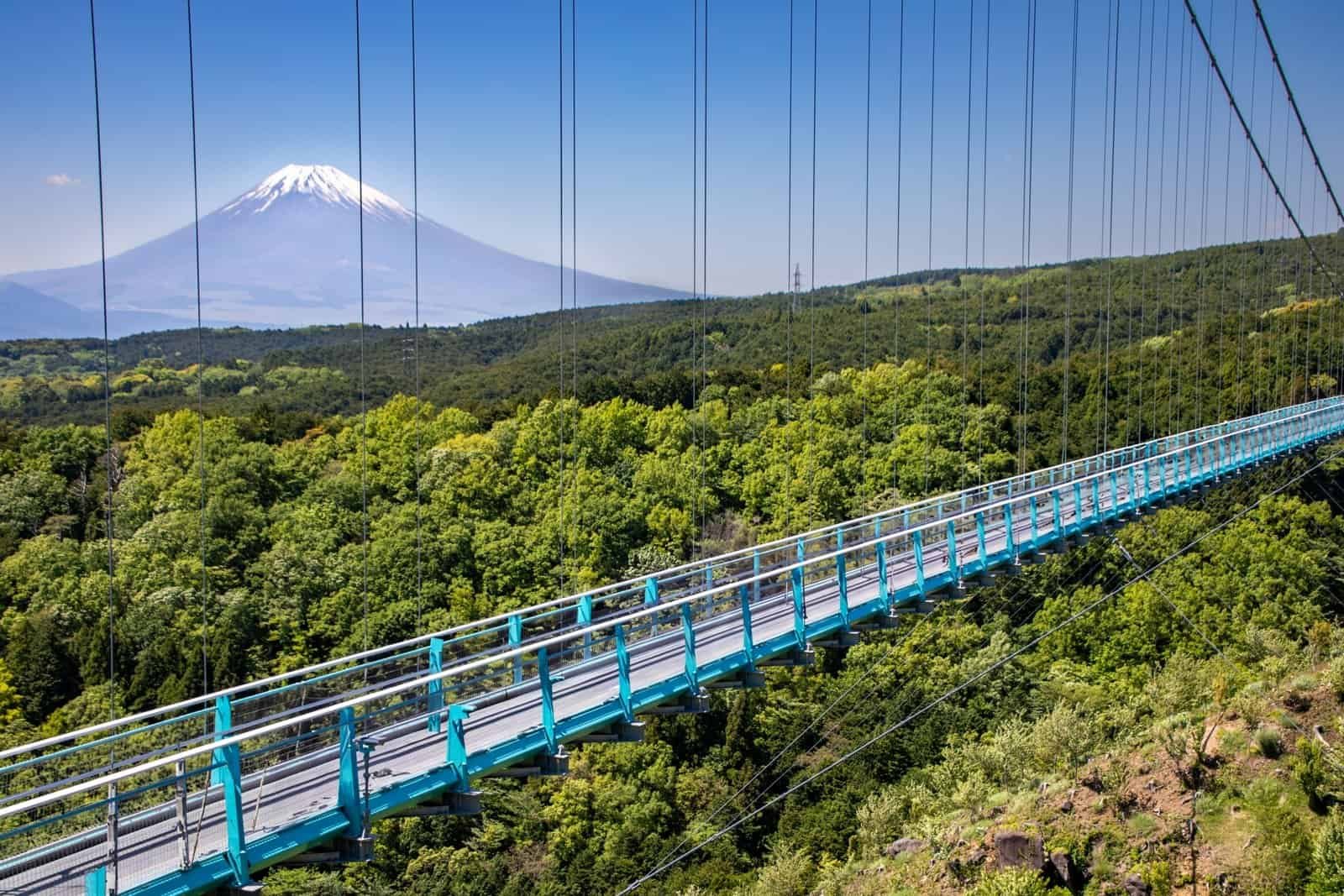
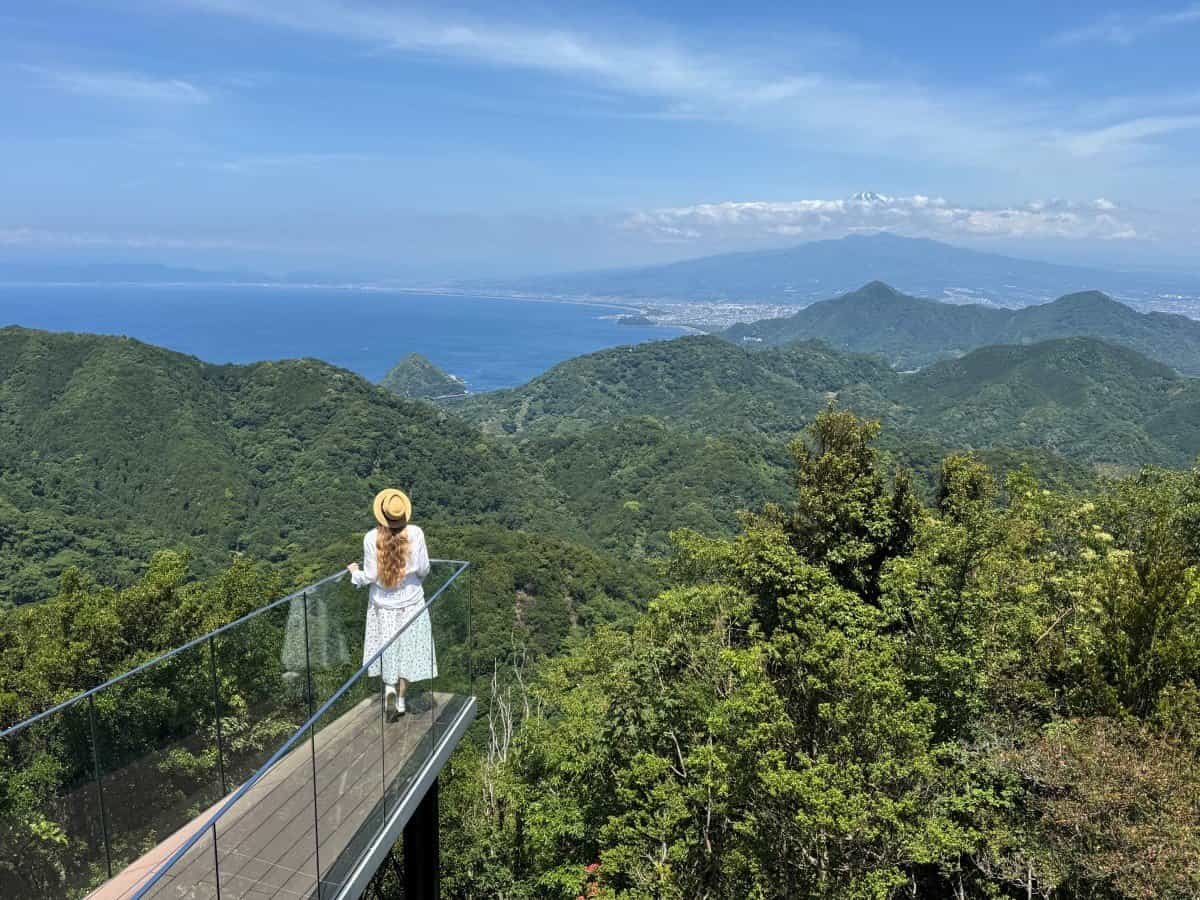
If you stayed overnight in Hakone, it’s about a 30-minute ride from Moto-Hakone Port on the N65 bus straight to the 400 metre long Mishima Skywalk, which is Japan’s longest pedestrian suspension bridge. While that’s impressive, the reason most people come out here is for the views of Mount Fuji which are stunning especially in the morning when there is less haze. If you are in need of more physical activity, there’s also a long zipline that stretches across the valley, as well as a forest adventure course to test your balance with ropes and bridges through the trees!
As a natural extension to your trip, after the 30-minute bus back down to Mishima Station, you might want to add a stay in Izu or a day trip out there. Shuzenji Onsen, one of the closest onsen towns to Mishima, is the easiest option, and you can get there on the Izuhakone Railway in about 35 minutes. If you’ve got the time, you can take a bus from Izu-Nagaoka Station and then hop on the cable car for a quick journey up to Izu Panorama Park. There’s an observation deck at the top with stunning views across Suruga Bay with Mt. Fuji in the background, and we found comfortable seating along with some attractive water features.
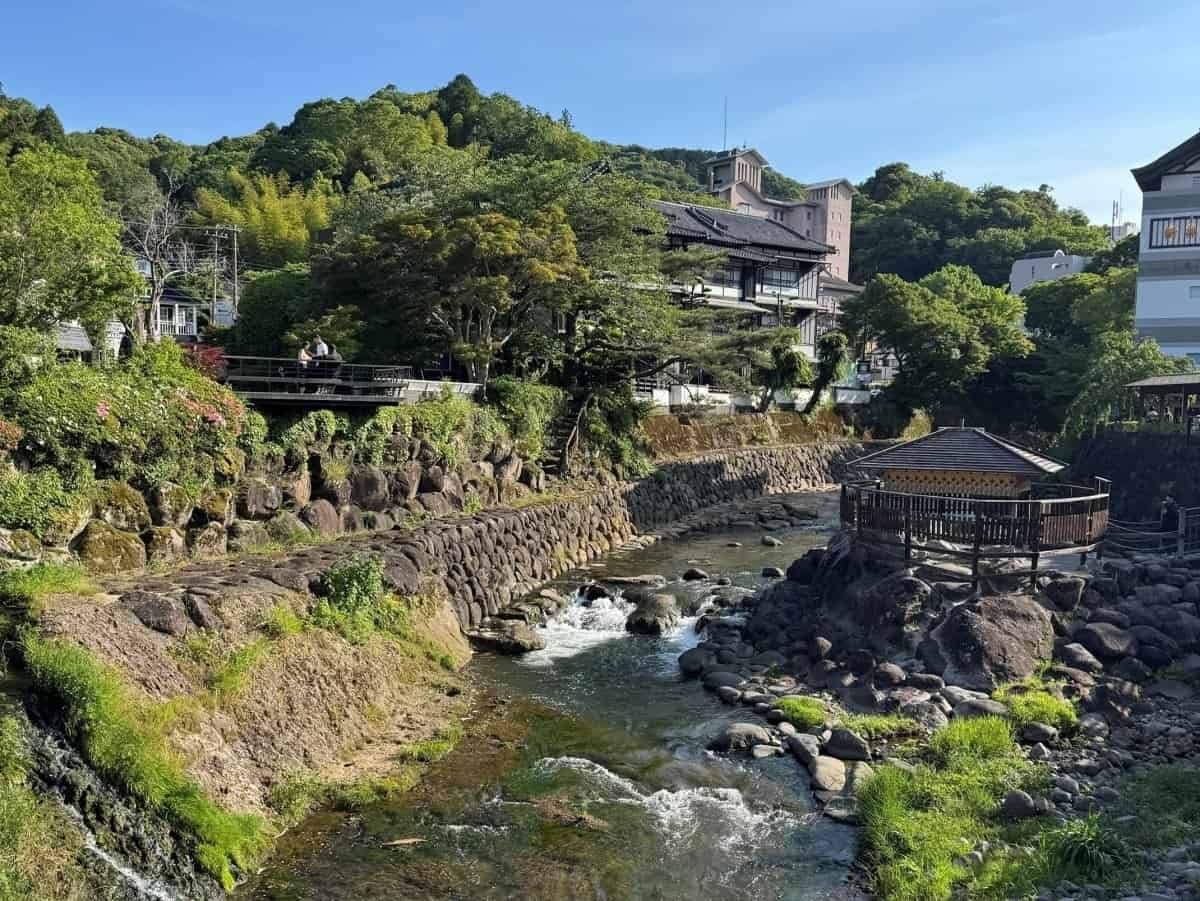
Shuzenji Onsen itself has the kind of old hot spring town feel to it. The paths through the bamboo groves are truly something else, being quiet and peaceful, and give off those Ghibli film vibes. Pop into Shuzenji Temple while you’re there, and try to see if you can cross all five of the town’s matchmaking bridges, as local legend says it brings good luck.
For lunch, I’d suggest a bowl of soba made with freshly grated Izu wasabi, or try the wasabi ice cream if you’re curious. Then find one of the traditional bathhouses and wrap up the afternoon with a soak in one of the hot springs. There are also two free foot baths opposite each other down by the river worth trying while you’re in the area, close to Shuzenji Temple and Kokei Bridge. One is called Kawara no Yu while the other is called Sugi no Yu. It’s a nice little novelty and relaxing to use them, just bring a small towel with you so you can dry your feet off afterwards.
Practical Tips & Transit Guide
Getting around this route is fairly straightforward, but there are a few things worth knowing before you set off. From Tokyo, the Tokaido Shinkansen takes under an hour to reach Mishima Station, and you don’t need to change trains. Just make sure that you either board a Hikari or Kodama service that stops at Mishima, and remember that Nozomi Shinkansen services do not stop at Mishima Station.
Once you’re in Mishima, most of the city can easily be explored on foot, although you’ll need local buses and trains for places such as Numazu and Mishima Skywalk. If you’re heading further into the area, it’s worth checking the Tokai Bus routes before you leave, as services can be less frequent than you’re used to in Tokyo. Having the route and timetable saved on your phone can save you some waiting around.
For luggage, Mishima Station has coin lockers, which are useful if you’re arriving in the morning and can’t check into your hotel yet. If you’re staying overnight in Mishima, I’d also recommend asking your hotel if they can store your bags before check-in or after check-out. When you’re heading from Mishima to Hakone, don’t assume that the fastest-looking route on a map will always be the easiest. The journey involves local transport and can take longer than you might expect, particularly if you’re carrying luggage. This is one reason I think spending your first night in Mishima makes sense rather than trying to squeeze everything into one day.
Frequently Asked Questions
Do I need the Hakone Free Pass for this route?
If you plan to complete the full Hakone loop (cruise, ropeway, cable car, and train) on Day 2, the Hakone Free Pass is well worth it as we found out. You can purchase it right at Mishima Station before taking the bus over the mountain, and it covers your transit across the loop while saving you money overall.
Can I do Mishima or Hakone as a day trip from Tokyo instead of staying overnight?
While you technically can do it as an extremely long day trip since Mishima is under an hour from Tokyo by Shinkansen, attempting to fit in both Mishima City sightseeing and visiting parts of the Hakone loop in a single day is definitely not I would recommend. By staying one or two nights, you get to experience the hot springs at a ryokan and try out the local food at a much more relaxing pace.
Yes, Mishima Station is compact compared to most major stations in Tokyo. You can find coin lockers for temporary storage, and hotels like the Dormy Inn are just a short walk away.
For those who would like to know more about travel related posts in Japan, we’ve got you covered in our Travel section. Meanwhile if you’re looking for locations to get great views of Mount Fuji, make sure to check out our guide on the Best Mt Fuji Views.
All information is accurate as of the date of publishing the article, but we would recommend checking all the relevant websites for the latest information.
For disclosure, this is sponsored content, however the opinion given here are entirely our own from our experience in Japan.

